Brickell Commuter Hospitalized After Dolphin Expressway Sideswipe Raises Questions About Uninsured Motorist Stacking
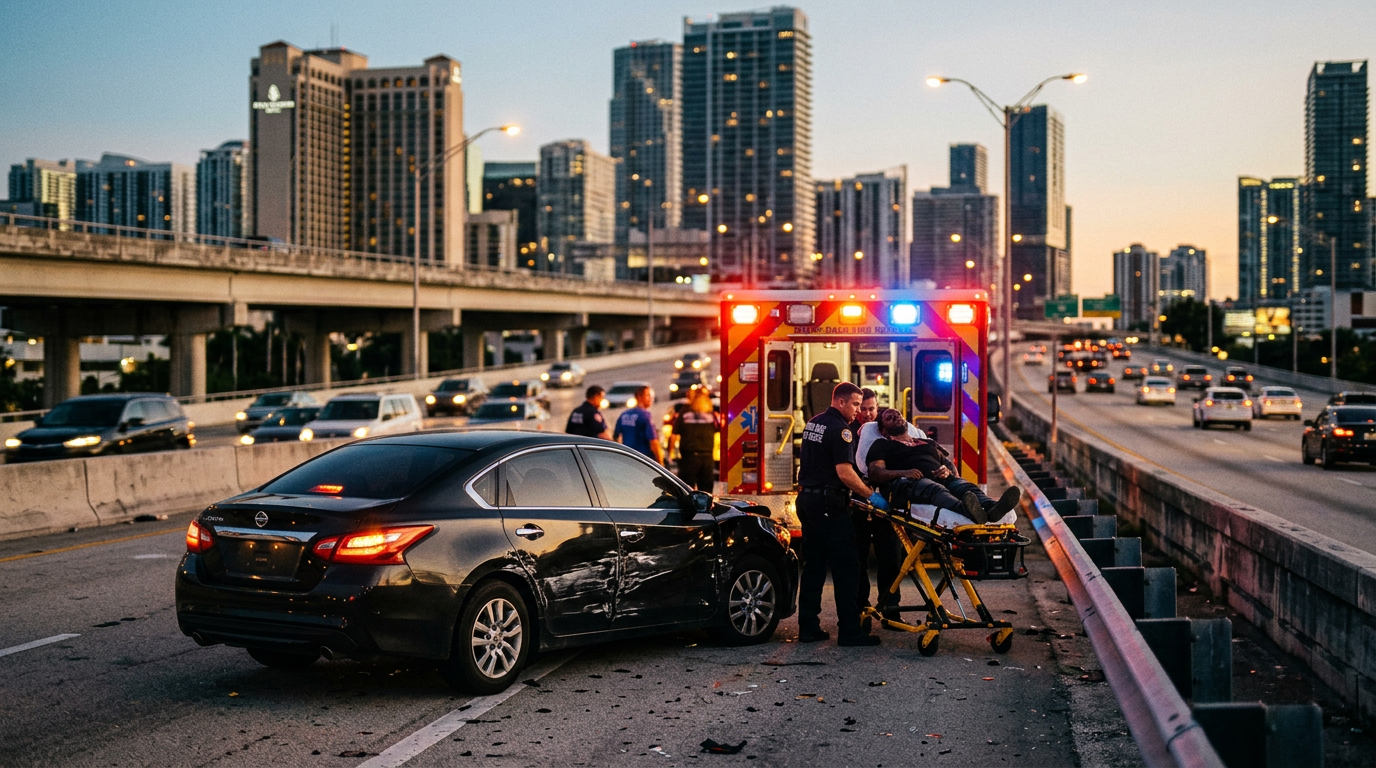
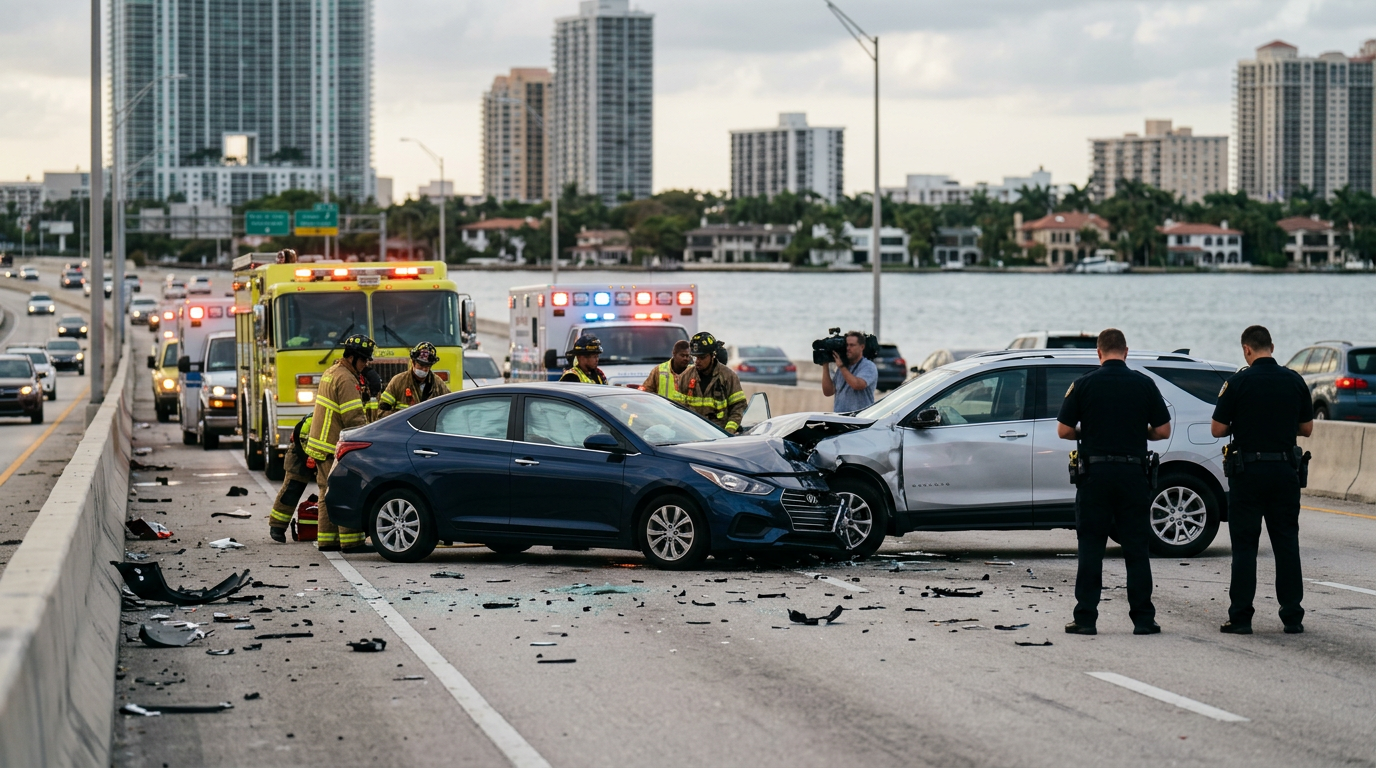
A violent sideswipe collision disrupted the evening commute on the Dolphin Expressway (SR-836) near the Interstate 95 interchange on Tuesday, leaving a silver sedan totaled and its driver in serious condition. The incident occurred when an aggressive driver in a pickup truck attempted a high-speed lane change, clipping the sedan and sending it spinning into the concrete median. Miami Fire Rescue arrived quickly on the scene to extricate the victim, who was subsequently transported to the Ryder Trauma Center at Jackson Memorial Hospital. Preliminary reports suggest the victim suffered significant spinal injuries and multiple fractures that will require extensive rehabilitation.
The aftermath of a major highway accident often reveals a secondary crisis involving insurance limits. In this specific incident, the at-fault driver reportedly carried only the minimum liability coverage required by Florida law, which is frequently insufficient to cover the costs of a multi-day stay at a facility like Jackson Memorial. For the Brickell resident involved, the path to physical recovery is now complicated by a looming financial burden. This scenario is common on Miami roadways, where a high percentage of motorists are either entirely uninsured or significantly underinsured relative to the catastrophic damages they may cause during a high-speed collision.
Florida law provides a vital safeguard for victims in these situations through Uninsured/Underinsured Motorist (UM) coverage. Specifically, Florida Statute 627.727 allows for the 'stacking' of UM biological limits. If a victim or their household owns multiple vehicles insured under the same or different policies, they may be able to combine these coverage limits to increase the total pool of funds available for their recovery. Stacking can effectively double or triple the available insurance proceeds, ensuring that a victim is not left paying out-of-pocket for a collision that was entirely the fault of a negligent third party who failed to maintain adequate insurance.
Navigating the complexities of insurance stacking requires a detailed analysis of the policy language and the relationship between the vehicles in the household. Insurance companies often incentivize 'non-stacked' policies by offering lower premiums, but these selections can severely limit a victim's ability to recover full compensation after a life-altering accident on the 836. Victims must act quickly to preserve evidence and secure a formal review of all applicable auto policies. Determining whether a policy is stacked or non-stacked is a critical step that should be handled by a professional to ensure no potential source of financial recovery is overlooked during the claims process.
Brickell crash hotspots, hospitals & Florida law
Miami's downtown financial corridor — dense traffic, constant construction, rideshare-heavy.
Were you involved in a similar Miami crash?
Talk to a Caraccidentmiami.com attorney now — free, confidential, 24/7.
305-244-5883