
Coconut Grove Resident Injured in Wynwood Rideshare Collision Facing Complex Florida Helmet Law Challenges
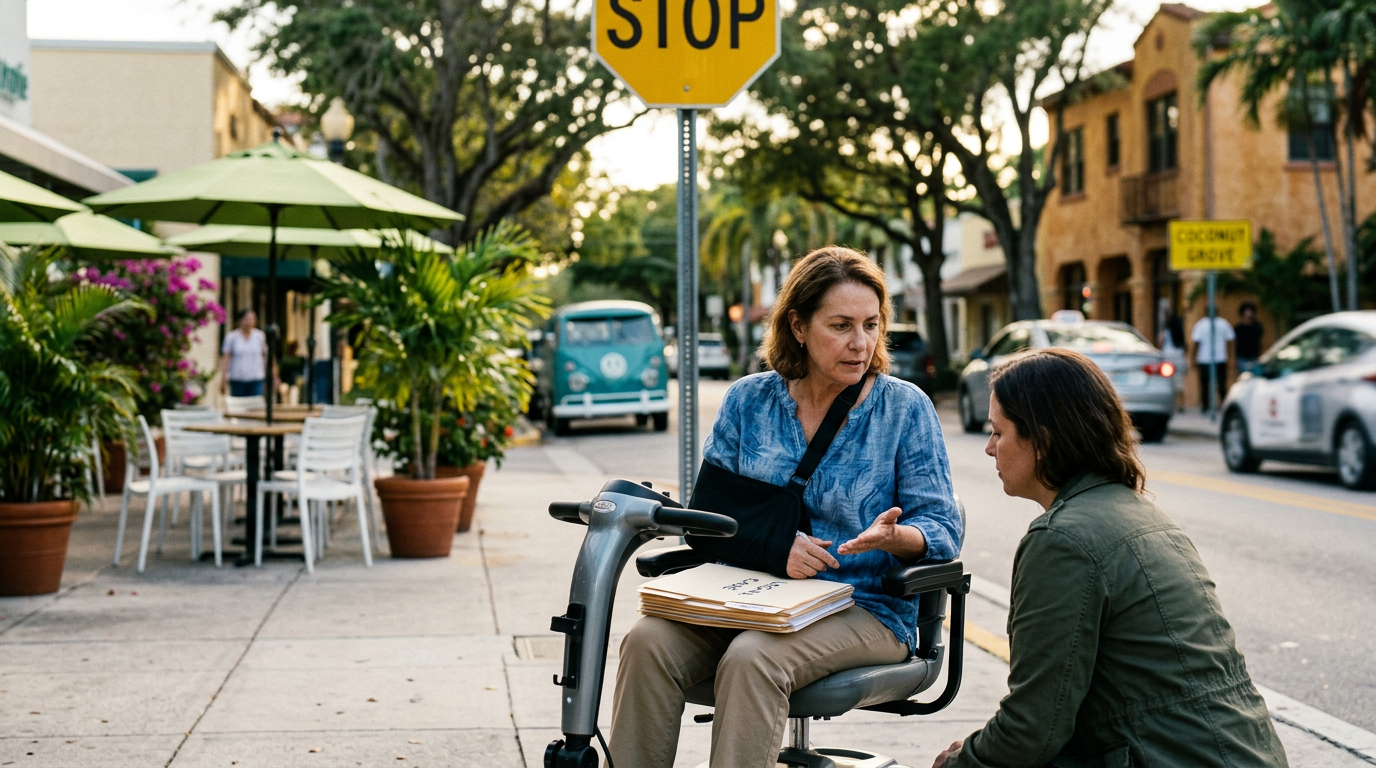
A quiet evening turned into a life-altering emergency on Tuesday when a rideshare driver traveling through the busy Wynwood Arts District allegedly failed to yield the right-of-way at a stop-controlled intersection. The driver, operating a late-model sedan, reportedly T-boned a motorcyclist who was commuting home toward Coconut Grove. The force of the impact ejected the rider onto the pavement near Northwest 2nd Avenue, causing catastrophic head and spinal injuries. Miami Fire Rescue arrived within minutes, stabilizing the victim before an emergency transport to the Ryder Trauma Center at Jackson Memorial Hospital, where the rider remains in critical condition.
Initial reports from the scene suggest that the rideshare driver may have been distracted by a navigation app, a common factor in accidents within the dense, high-traffic corridors of Miami. As the investigation continues, the legal focus shifts to the motorcyclist’s physical condition at the time of the crash. Specifically, authorities noted that the rider, who is over the age of 21 and carries the requisite insurance, was not wearing a helmet. While this is legal under specific conditions in Florida, it introduces a significant hurdle in the pursuit of a personal injury claim when head injuries are the primary source of medical expenses.
Under Florida Statute section 316.211, riders over 21 are permitted to ride without a helmet if they carry a minimum of $10,000 in medical benefits coverage. However, in a courtroom, insurance defense attorneys often employ a 'comparative negligence' strategy. They argue that the failure to wear a helmet contributed to the severity of the injuries, regardless of who caused the initial collision. This can lead to a substantial reduction in the total compensation awarded to the victim. If a jury determines the lack of a helmet was responsible for 40 percent of the injury's severity, the final settlement could be slashed by that same percentage, leaving the victim with massive unpaid hospital bills.
Navigating the intersection of rideshare insurance policies and Florida motorcycle statutes requires a precise understanding of how comparative fault is calculated in Miami-Dade courts. The rideshare company’s commercial policy may provide significant coverage, but accessing those funds becomes difficult when the defense uses the helmet law to deflect liability. For residents of Coconut Grove and the surrounding areas, this case serves as a stark reminder that even a legally compliant choice can be weaponized against a victim during the recovery process. Protecting one's rights starts with documenting the scene and ensuring that the physical evidence of the driver’s negligence is prioritized over the rider’s choice of safety gear.
Were you involved in a similar Miami crash?
Talk to a Caraccidentmiami.com attorney now — free, confidential, 24/7.
305-244-5883

