Downtown Miami Motorcycle Crash Raises Questions on Complex Rideshare Insurance Period Classifications

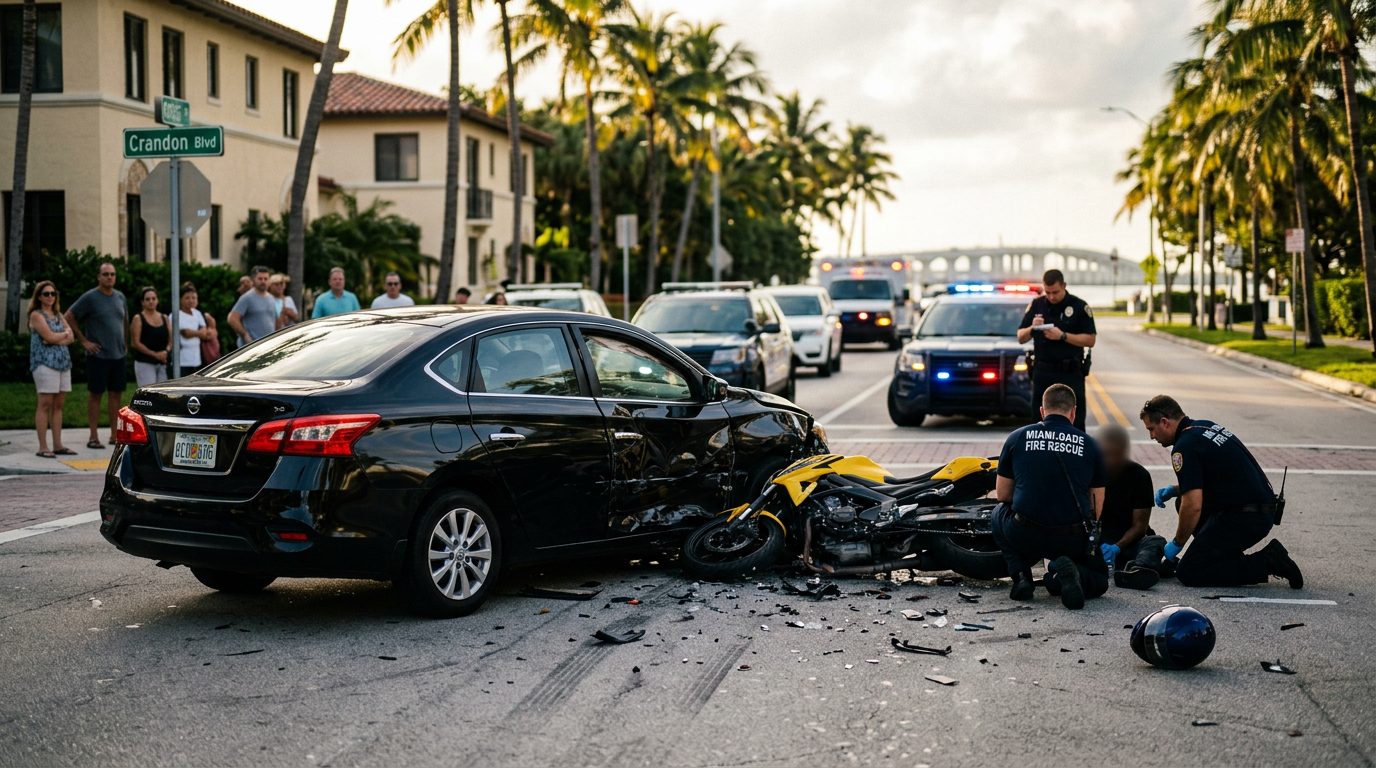
A chaotic scene unfolded Tuesday evening near the entrance to the Rickenbacker Causeway in Downtown Miami when a motorcycle collided with a late-model sedan. Witnesses reported that the motorcyclist was traveling eastbound when the vehicle, reportedly operating on a rideshare platform, attempted a sudden maneuver that led to the high-impact crash. Emergency responders from Miami Fire Rescue arrived quickly, providing immediate stabilizing care before transporting the rider to the Ryder Trauma Center at Jackson Memorial Hospital. The victim remains in serious condition with multiple orthopedic injuries common in such exposed collisions.
The complexity of this case stems from the driver's status as a transportation network company participant. Under Florida Statute 627.748, the available insurance coverage is not static but fluctuates based on the driver's activity at the exact moment of impact. This system is divided into three distinct legal periods. Period 1 occurs when the app is on but no ride is accepted; Period 2 begins when a ride is accepted and the driver is en route; and Period 3 covers the duration when a passenger is physically in the vehicle. The liability limits jump significantly from the first period to the subsequent stages of the transaction.
For the injured motorcyclist, determining whether the driver was in Period 1 or Period 2 is a matter of immense financial consequence. In Period 1, the law typically requires only $50,000 for death and bodily injury per person. However, once a driver accepts a ride request, the coverage requirements typically surge to a $1 million death, bodily injury, and property damage policy. Because rideshare companies often attempt to categorize accidents in the lowest possible tier to minimize payouts, forensic digital evidence from the application's backend is necessary to verify the driver's precise status at the time of the Downtown Miami incident.
Navigating these statutory layers requires an immediate preservation of evidence, including GPS logs and timestamps that the rideshare companies hold internally. Florida’s legal framework is designed to protect victims, but insurance carriers frequently use the ambiguity of these periods to offer settlements that do not reflect the true policy limits available. Victims should recognize that the initial insurance disclosure from a driver may only represent a fraction of the actual coverage mandated by state law. Securing the driver’s digital log is the first step in ensuring that the full weight of the $1 million policy is applied to the rehabilitative needs of the injured party.
Were you involved in a similar Miami crash?
Talk to a Caraccidentmiami.com attorney now — free, confidential, 24/7.
305-244-5883