Evening Commute Pile-Up in Pinecrest Raises Questions Regarding Florida Motorcycle Helmet Laws
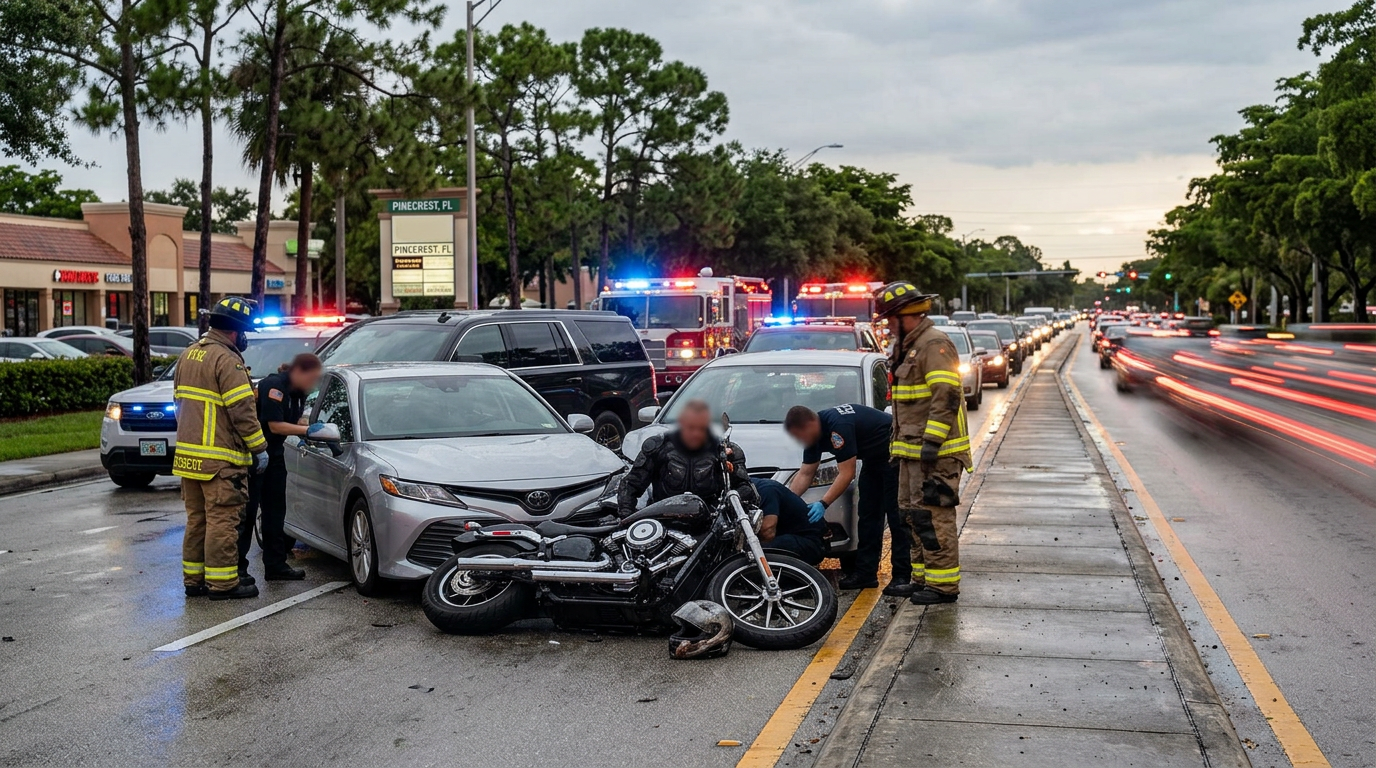
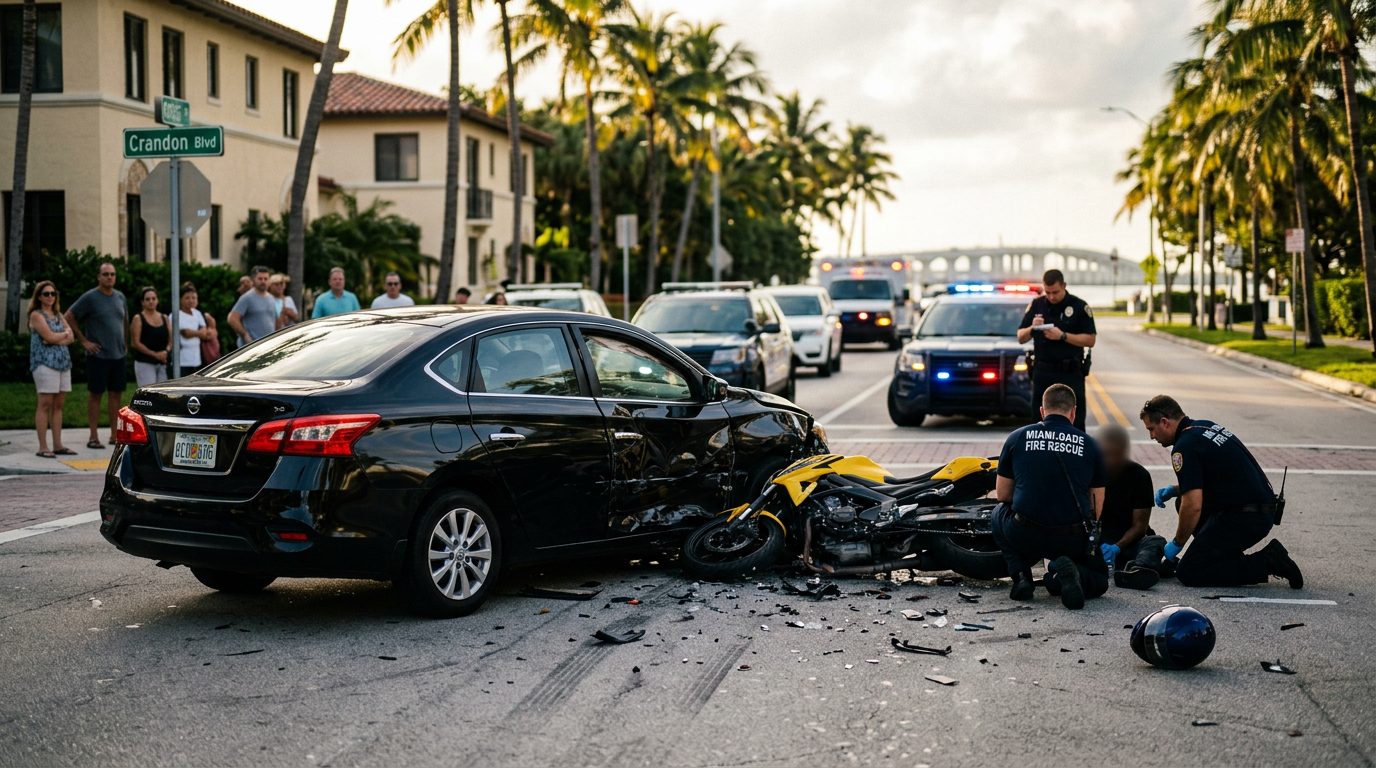
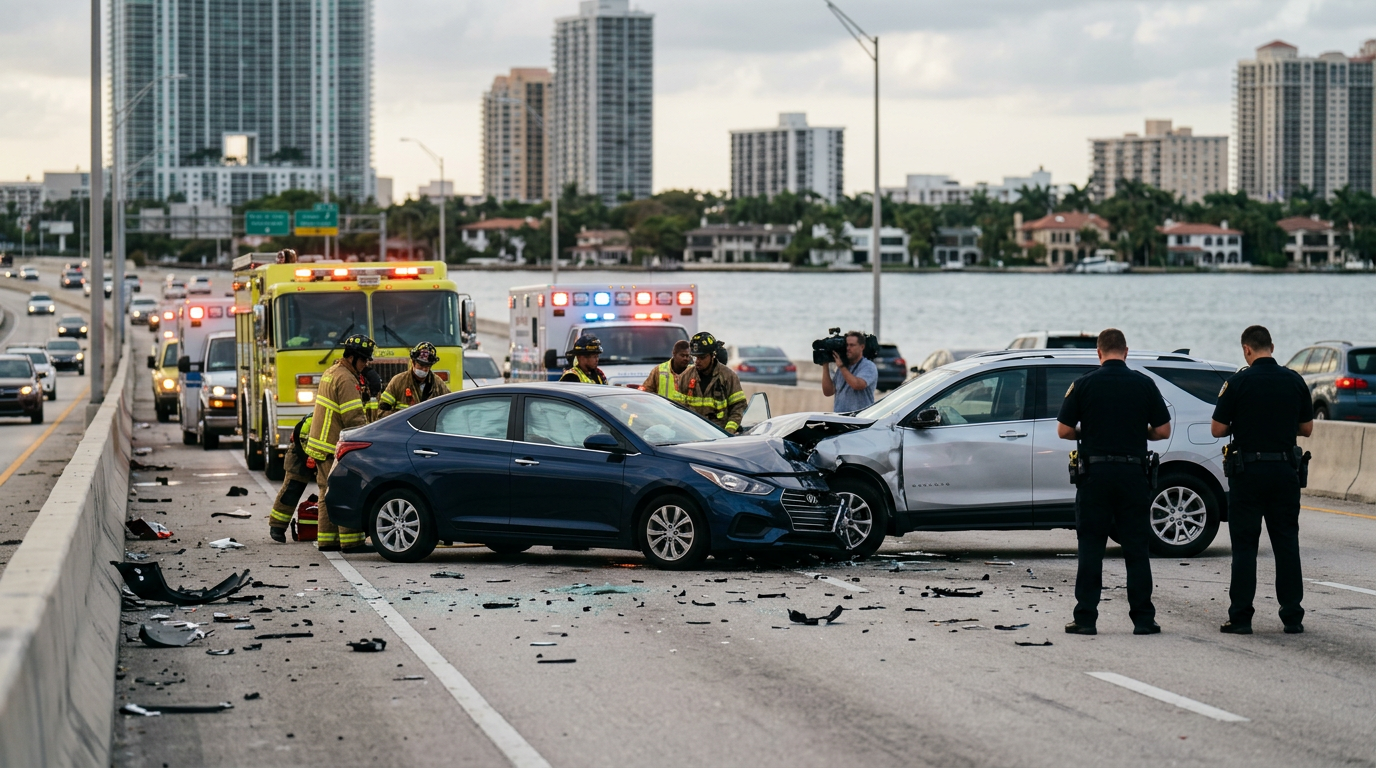
A chaotic scene unfolded during Tuesday evening’s rush hour along the South Dade corridor near Pinecrest as a multi-vehicle pile-up snarled traffic for miles. Local authorities report that the incident began when a passenger vehicle slowed suddenly for merging traffic, triggering a chain reaction that involved four cars and a motorcycle. Emergency responders from Miami-Dade Fire Rescue arrived quickly to the scene near the Palmetto Expressway interchange, focusing their efforts on a motorcyclist who was ejected from his vehicle upon impact. The rider was stabilized and transported to the Ryder Trauma Center at Jackson Memorial Hospital with serious but non-life-threatening injuries.
Witnesses at the scene noted that several drivers appeared to be following too closely, a common factor in the dense stop-and-go traffic that defines the Pinecrest commute. While the initial investigation points toward a primary rear-end collision, the presence of various vehicle types complicates the liability landscape. For the injured motorcyclist, the path to recovery involves not only physical rehabilitation but also a navigate through Florida’s specific insurance requirements and negligence standards. Florida Highway Patrol continues to clear debris and interview drivers to establish a definitive timeline of the initial impact that triggered the secondary collisions.
Central to this case is the application of Florida Statute 316.211, which governs motorcycle safety equipment. Under Florida law, riders over the age of 21 may operate a motorcycle without a helmet if they carry an insurance policy providing at least $10,000 in medical benefits for injuries. However, in a personal injury lawsuit, the defense frequently argues the 'helmet defense,' suggesting that a rider's failure to wear a helmet contributed to the severity of their head or neck injuries. This can lead to a reduction in recoverable damages under the state’s comparative negligence system, even if the other driver was clearly at fault for causing the initial crash.
Navigating these legal nuances is critical for South Florida riders who may find their compensation slashed simply because they exercised their legal right not to wear a helmet. Insurance companies often use the lack of protective gear to devalue claims, arguing that certain injuries were preventable. Even when a rider is fully compliant with the statute and carries the mandatory medical coverage, the tactical use of comparative negligence can significantly impact the final settlement. Victims must ensure that medical evidence clearly distinguishes between injuries caused by the collision impact and those that safety gear could have potentially mitigated.
For those injured in Pinecrest or on the surrounding highways, documentation is the most powerful tool for protecting legal rights. It is essential to secure a copy of the police report, obtain immediate medical evaluations to link injuries to the crash, and refrain from giving recorded statements to adjusters who may use helmet status to minimize the claim's value. Understanding that legal compliance with the helmet law does not automatically protect you from defense tactics is the first step in securing a fair recovery for medical bills, lost wages, and long-term suffering.
Were you involved in a similar Miami crash?
Talk to a Caraccidentmiami.com attorney now — free, confidential, 24/7.
305-244-5883