
Homestead Hit-and-Run Investigation Highlights Critical Need for Uninsured Motorist Coverage Stacking Options
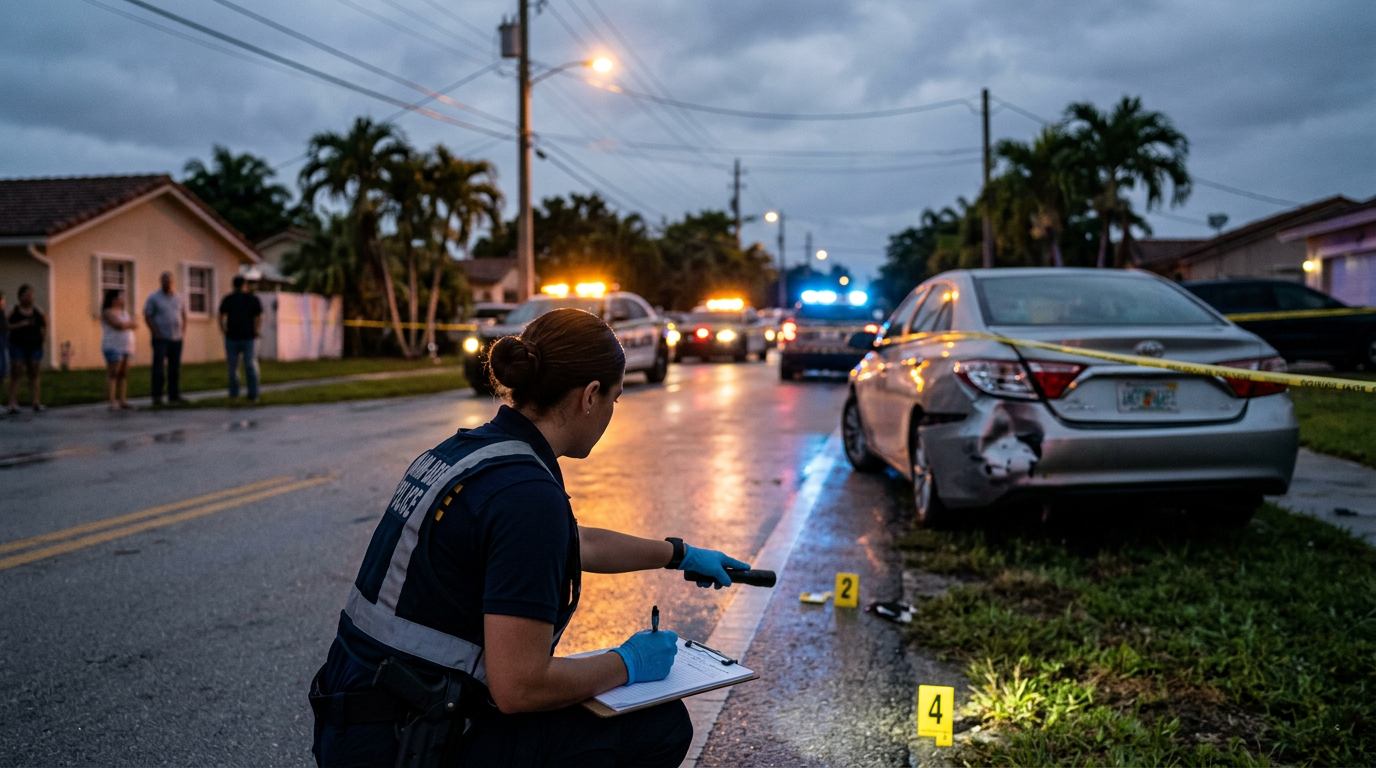
Miami-Dade Police responded to a severe multi-vehicle collision late Thursday night near the intersection of Biscayne Boulevard and Campbell Drive in Homestead. According to preliminary reports, a dark-colored sedan traveling at a high rate of speed struck a local resident's SUV before spinning out and fleeing the scene. The impact forced the victim's vehicle into a concrete barrier, resulting in significant structural damage and traumatic injuries. Paramedics arrived shortly after to transport the victim to the Ryder Trauma Center for emergency treatment of internal injuries and multiple fractures.
While investigators search for the fleeing driver, the incident underscores the financial vulnerability victims face when a negligent party cannot be identified or lacks sufficient insurance. In hit-and-run cases, the victim must often turn to their own insurance policy to cover mounting medical bills and lost wages. Without a suspect to hold accountable, the path to recovery relies heavily on the specific language and structure of the victim's automobile insurance policy, particularly regarding provisions that protect against drivers who are either uninsured or untraceable.
Under Florida law, residents have the option to choose "stacked" Uninsured Motorist (UM) coverage, a critical safeguard in a state with one of the highest rates of uninsured drivers. Florida Statute 627.727 allows policyholders to combine UM limits across multiple vehicles owned by the same household. For a victim in a Homestead collision involving three family vehicles, stacking effectively triples the available coverage limit. This is vital when a hit-and-run driver leaves a victim with catastrophic injuries that exceed a standard policy limit, ensuring that the insurance company provides the full aggregate protection purchased.
Navigating these claims requires a precise understanding of how Florida courts interpret stacking elections and the strict timelines for filing a UM claim after a hit-and-run. Victims should be aware that insurance companies often attempt to limit their liability by citing specific policy exclusions or challenging the stacking status of a household. To protect your rights, it is essential to document the scene as thoroughly as possible and secure a copy of the police report immediately. Recovering full compensation depends on proving that the stacked coverage was legally in force at the time of the impact.
Were you involved in a similar Miami crash?
Talk to a Caraccidentmiami.com attorney now — free, confidential, 24/7.
305-244-5883

