
North Miami Multi-Vehicle Hydroplane Crash Highlights Importance of Immediate Electronic Data Preservation
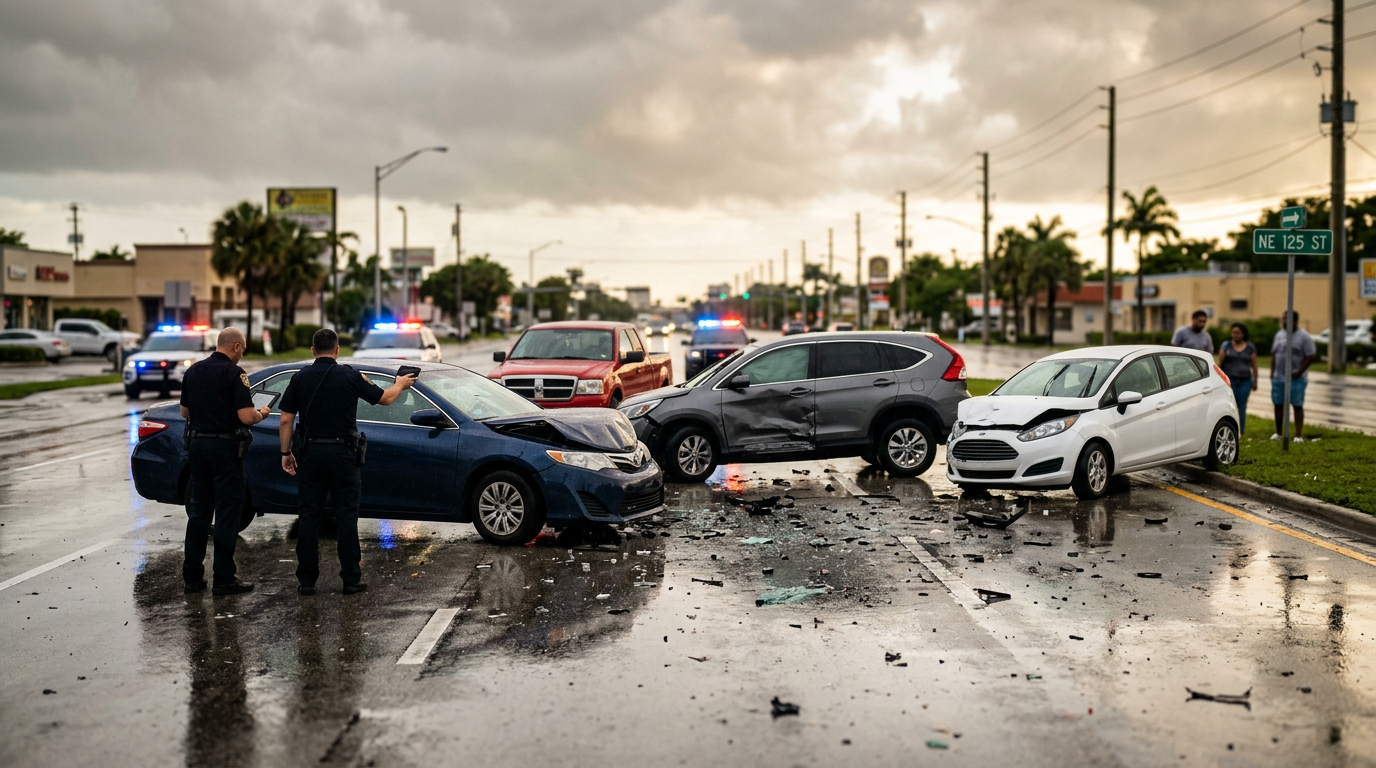
A severe multi-vehicle collision disrupted traffic along the North Miami corridor of US-1 late Tuesday afternoon as heavy seasonal rains turned the roadway into a hazard. Preliminary reports indicate that a northbound SUV lost traction on the slick asphalt, hydroplaning across several lanes near the intersection of NE 123rd Street. The vehicle struck two oncoming sedans before coming to a rest against a utility pole. Local emergency responders arrived quickly to extricate one driver who remained trapped in the wreckage, while two others were stabilized on-site before being transported to a nearby trauma center for further evaluation.
The transition from heavy rain to standing water creates a high-risk environment for Miami motorists, often resulting in high-impact collisions even at moderate speeds. While the immediate focus remains on medical recovery at facilities like Jackson North Medical Center, the legal reality for those involved begins the moment the vehicles are towed. In many modern accidents, the most critical evidence is not found in witness statements but in the digital systems housed within the vehicles themselves. However, this electronic data is highly volatile and can be overwritten or destroyed if not secured through formal legal channels immediately following the incident.
Under Florida law, the concept of spoliation refers to the intentional or negligent withholding, hiding, altering, or destroying of evidence relevant to a legal proceeding. To protect a victim's right to a fair recovery, counsel must issue formal spoliation letters to insurance companies and vehicle manufacturers. These letters serve as a legal mandate to preserve the Event Data Recorder (EDR) information—often called the 'black box'—along with any integrated dashcam footage or sensor logs. This data provides an objective account of speed, braking patterns, and steering angles that can prove a defendant's negligence even when they blame the weather.
Securing this evidence is vital for overcoming the common defense that a crash was an 'unavoidable act of God' due to the rain. Florida's comparative negligence standards require a precise breakdown of fault, and electronic logs can demonstrate that a driver was traveling too fast for the prevailing conditions. Victims should be aware that once a vehicle is sent to a salvage yard or repaired, this data is frequently lost forever. Establishing a chain of custody for the Electronic Control Module (ECM) data is often the difference between a denied claim and a successful recovery for medical bills and lost wages.
For those injured in North Miami, the priority must be ensuring that no evidence vanishes while they are recovering. You have a legal right to demand the preservation of all digital and physical evidence related to your crash. Before speaking with an insurance adjuster who may pressure you into a quick settlement, ensure that a formal notice has been sent to all parties to prevent the destruction of EDR data. Protecting the digital record of the crash is the most effective way to ensure the facts of the accident speak louder than the conflicting testimony of the drivers involved.
Were you involved in a similar Miami crash?
Talk to a Caraccidentmiami.com attorney now — free, confidential, 24/7.
305-244-5883

