Serious Biscayne Boulevard Hit-and-Run Raises Questions Over Florida Helmet Laws and Injury Settlements
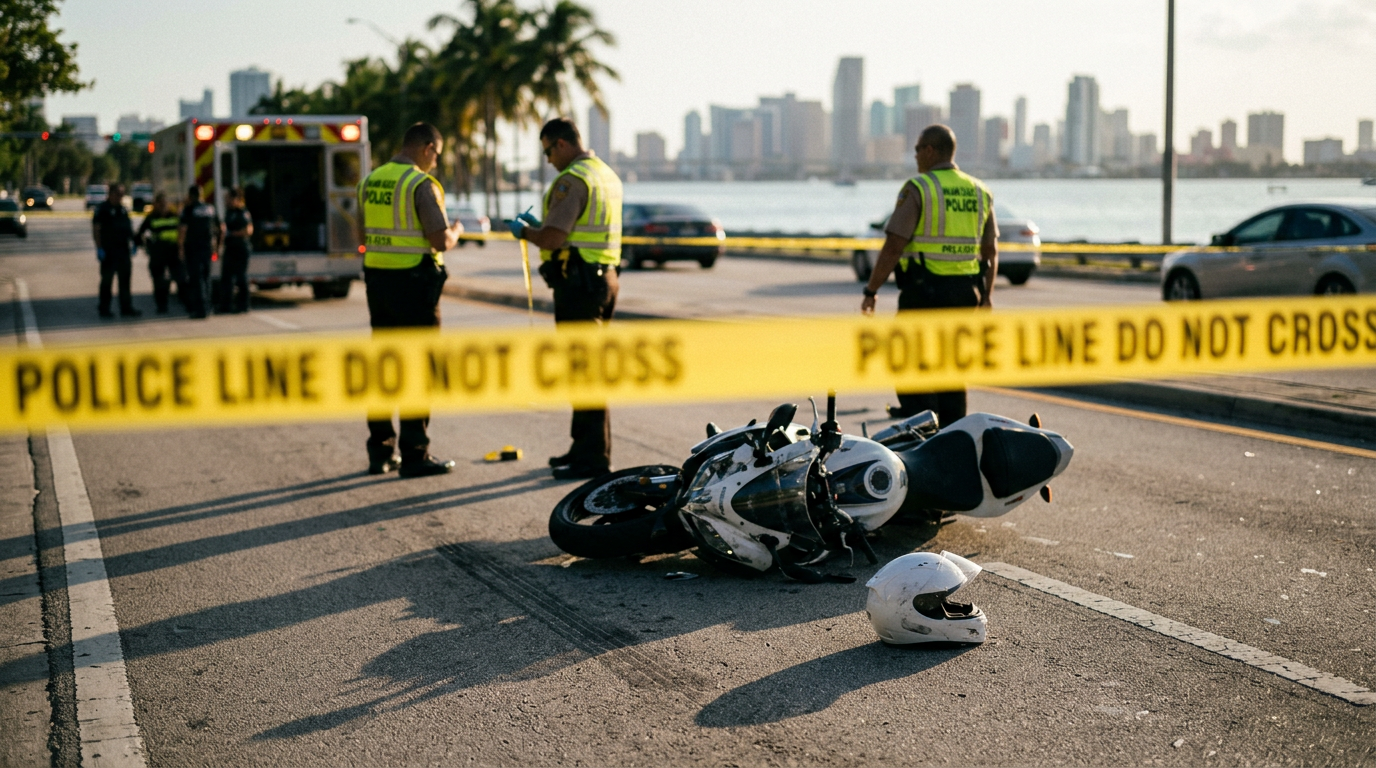
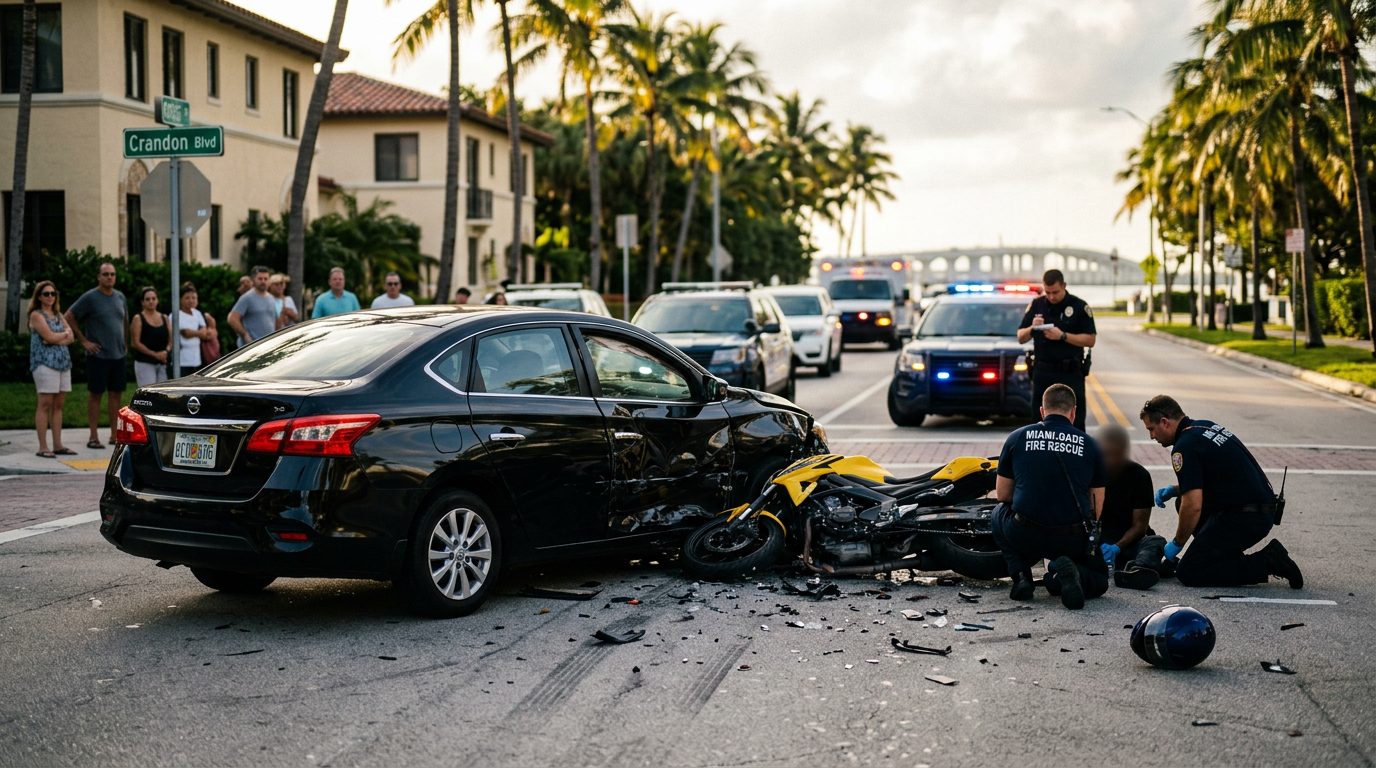
A severe hit-and-run incident late Tuesday evening has left a motorcyclist fighting for their life after being struck while traveling northbound on Biscayne Boulevard near the Julia Tuttle Causeway entrance. Witnesses reported that a dark-colored sedan merged aggressively into the motorcyclist's path, clipping the front tire and sending the rider into a slide that ended near the base of the overpass. The driver of the sedan fled the scene toward Miami Beach without stopping to render aid or provide identification, leaving the injured rider on the asphalt as bystanders rushed to help.
First responders from Miami-Dade Fire Rescue arrived within minutes to stabilize the victim, who was subsequently rushed to the Ryder Trauma Center at Jackson Memorial Hospital with significant head and neck trauma. While the investigation into the fleeing driver continues, legal experts note that the physical state of the rider at the time of the crash often dictates the trajectory of future litigation. In Florida, the presence or absence of a helmet is not merely a safety choice; it is a critical evidentiary factor that insurance companies scrutinize to minimize their liability during the claims process.
Under Florida Statute 316.211, riders over the age of 21 are permitted to ride without a helmet provided they carry at least $10,000 in medical benefits coverage. However, in personal injury litigation, the 'comparative negligence' doctrine allows a jury to consider whether the failure to wear a helmet contributed to the severity of the victim's injuries. Even if the driver of the sedan is 100 percent at fault for causing the collision, a victim might see their total damage award reduced if it is determined that a helmet would have prevented specific cranial injuries sustained during the impact.
Recovering damages after a hit-and-run on Miami’s busy corridors requires a meticulous approach to both the criminal investigation and the civil claim. Victims must document every medical expense and seek witness testimony that establishes the other driver's negligence as the primary cause of the wreck. It is vital for injured parties to understand that Florida law protections still apply even if a helmet was not in use, provided the rider met the statutory insurance requirements at the time of the incident. Residents should focus on securing immediate medical documentation to link all injuries directly to the force of the collision.
Were you involved in a similar Miami crash?
Talk to a Caraccidentmiami.com attorney now — free, confidential, 24/7.
305-244-5883