Serious Doral Turnpike Truck Rollover Raises Critical Legal Questions Regarding PIP Coverage for Bicyclists
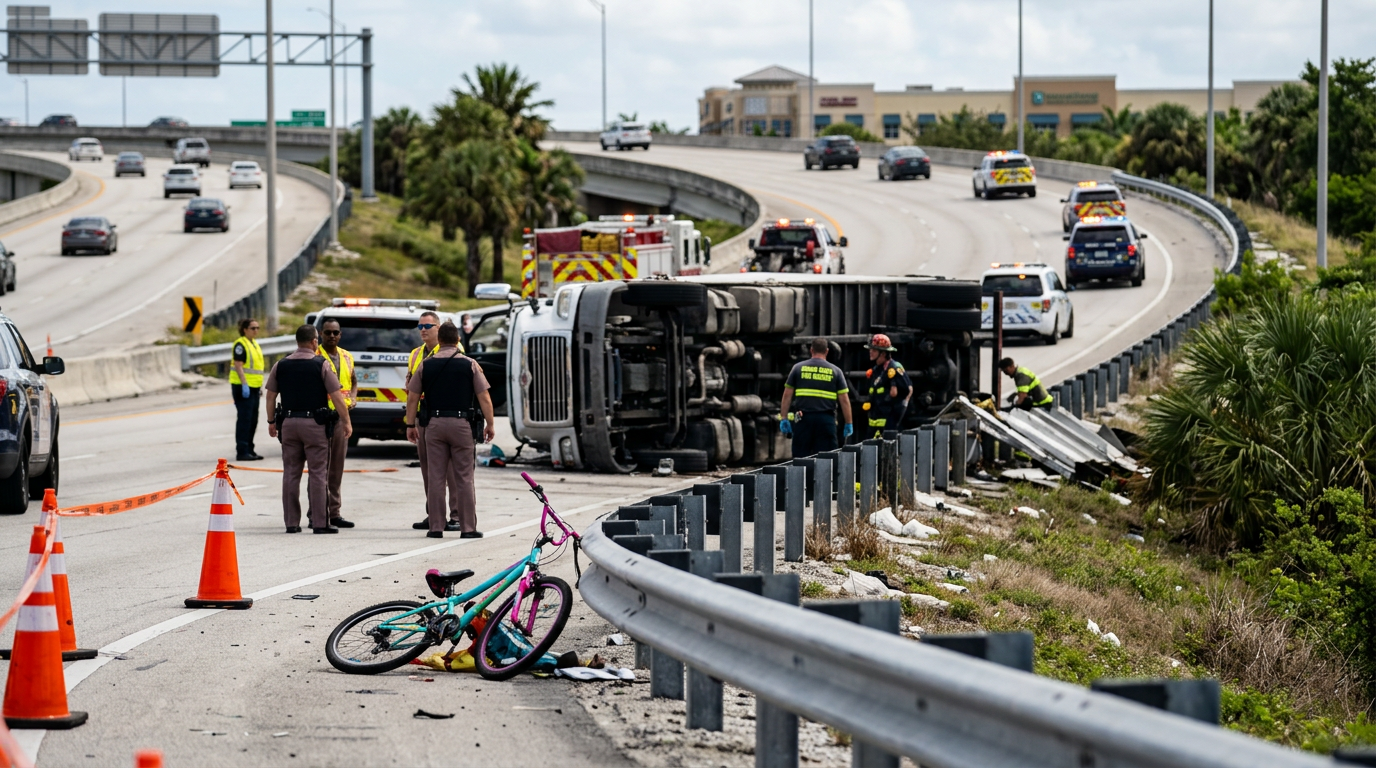
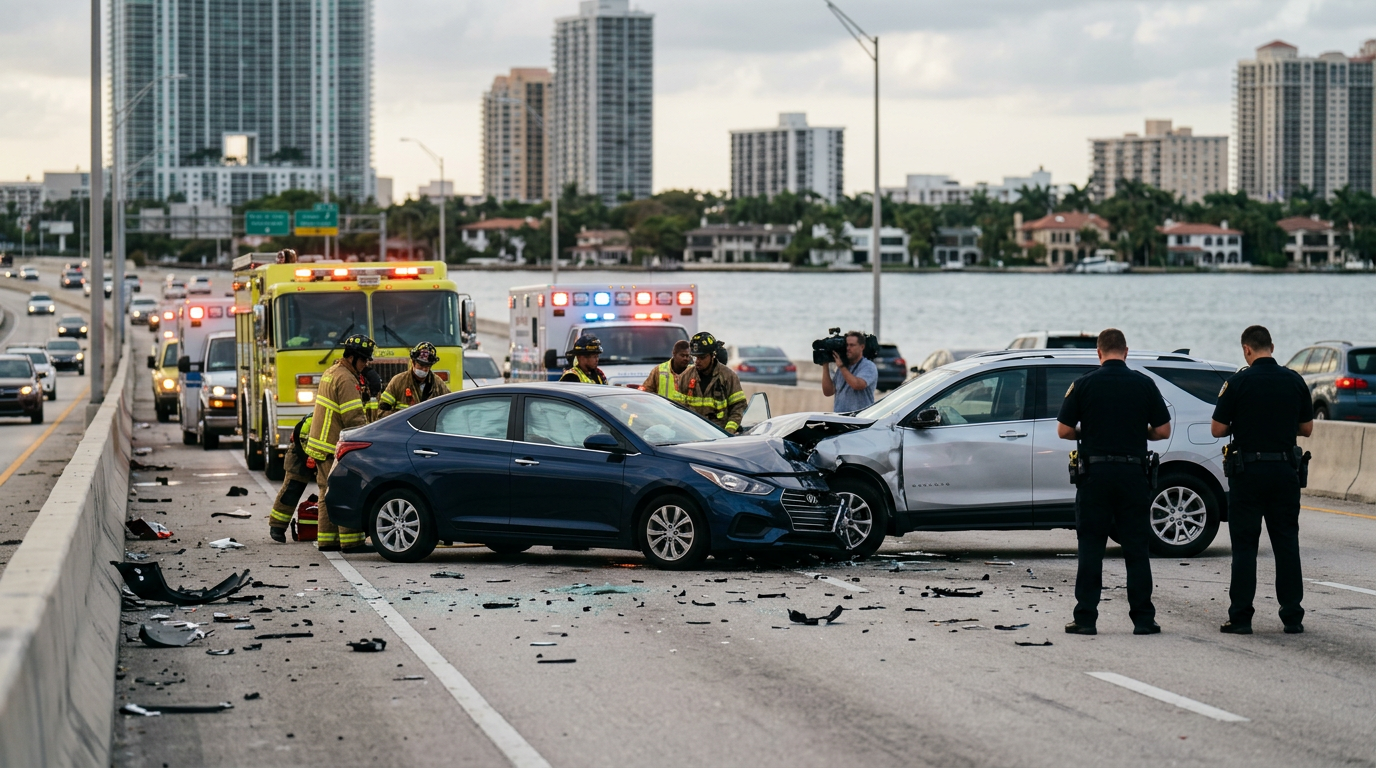
A chaotic scene unfolded Tuesday morning near the Doral exit of the Florida Turnpike when a double-trailer commercial truck lost control while navigating a lane shift. Local authorities report that the vehicle struck a concrete barrier before rolling onto its side, spilling its cargo across several lanes of traffic. The sheer force of the impact forced a nearby bicyclist, who was traversing the access road adjacent to the highway, off their path. Emergency responders from Miami-Dade Fire Rescue arrived shortly after to find the cyclist suffering from significant fractures and trauma, necessitating an immediate transport to the Ryder Trauma Center for emergency stabilization.
Investigators are currently examining the truck's telemetry data and the driver's logbooks to determine if mechanical failure or driver fatigue played a role in the rollover. In high-traffic corridors like Doral, the proximity of commercial trucking routes to pedestrian and cycling paths creates a high risk for catastrophic secondary collisions. While the truck driver remained at the scene and is cooperating with the Florida Highway Patrol, the focus has shifted to the long-term medical needs of the injured cyclist. For many victims in these scenarios, the path to securing immediate medical funding is often misunderstood and can be obstructed by aggressive insurance adjusters representing large logistics corporations.
A critical component of this case involves Florida's No-Fault insurance framework, specifically regarding non-motorists. Under Florida Statute 627.736(4)(d)(1), an insurer of a motor vehicle is required to provide Personal Injury Protection (PIP) benefits to any person who sustains bodily injury while not an occupant of a self-propelled vehicle, provided that the injury was caused by physical contact with such a motor vehicle. This means that a bicyclist or pedestrian in Doral who is struck by a commercial truck can often look to the trucking company's PIP coverage for the first $10,000 in medical benefits, regardless of who was at fault for the initial crash.
The application of this statute is vital because bicycling injuries frequently incur medical costs that far exceed standard policy limits. Navigating the intersection of commercial liability and PIP requirements requires a nuanced understanding of how coverage follows the vehicle and protects the most vulnerable users of the road. Impacted residents must ensure that the specific details of the physical contact are documented meticulously in the police report to satisfy the legal requirements of the statute. Victims should avoid providing recorded statements to insurance investigators until they have secured professional verification of their rights under Florida's complex insurance codes to ensure their medical expenses are fully covered.
Doral crash hotspots, hospitals & Florida law
Logistics & airport corridor — commercial trucks, FMCSR violations, big-rig pile-ups.
Were you involved in a similar Miami crash?
Talk to a Caraccidentmiami.com attorney now — free, confidential, 24/7.
305-244-5883