Serious Hit-and-Run on Biscayne Boulevard Highlights Critical Need for Immediate Evidence Preservation
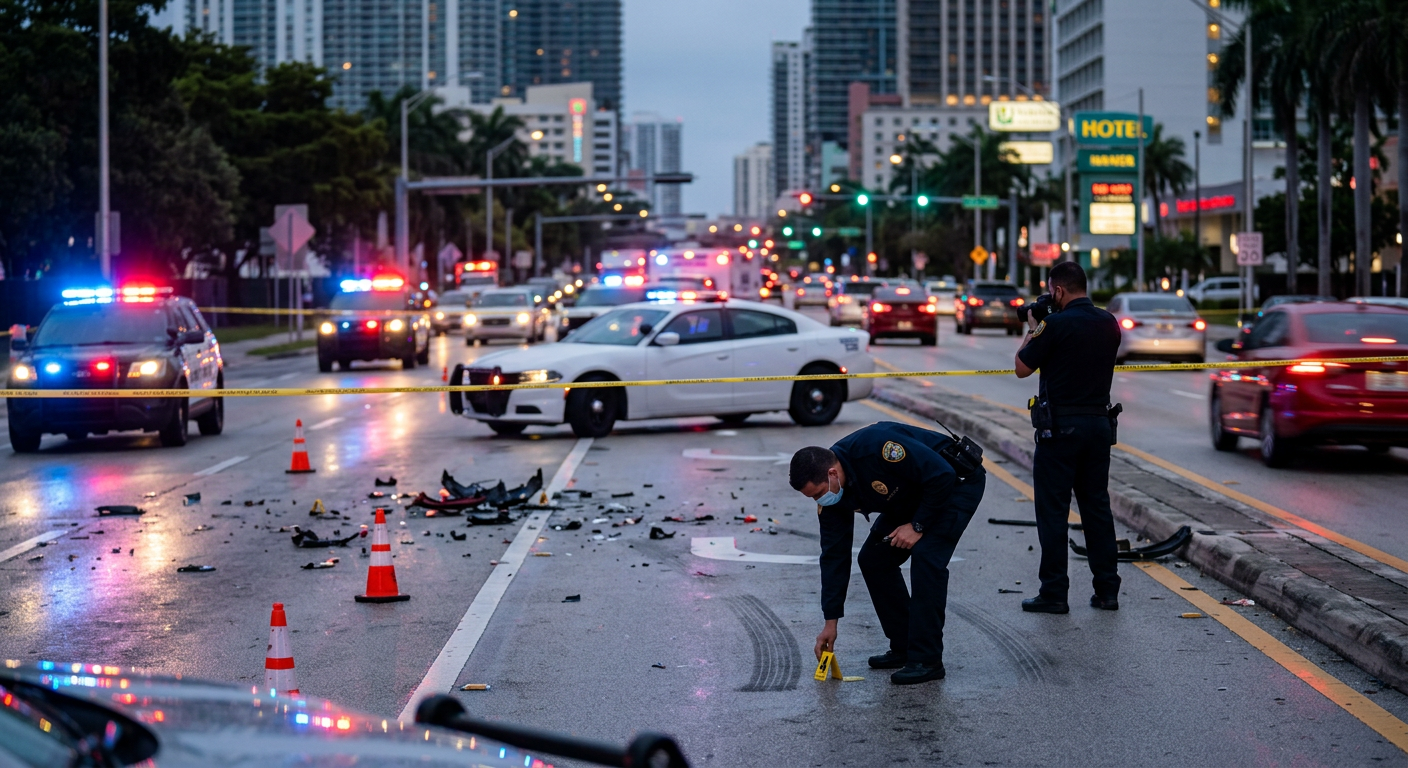
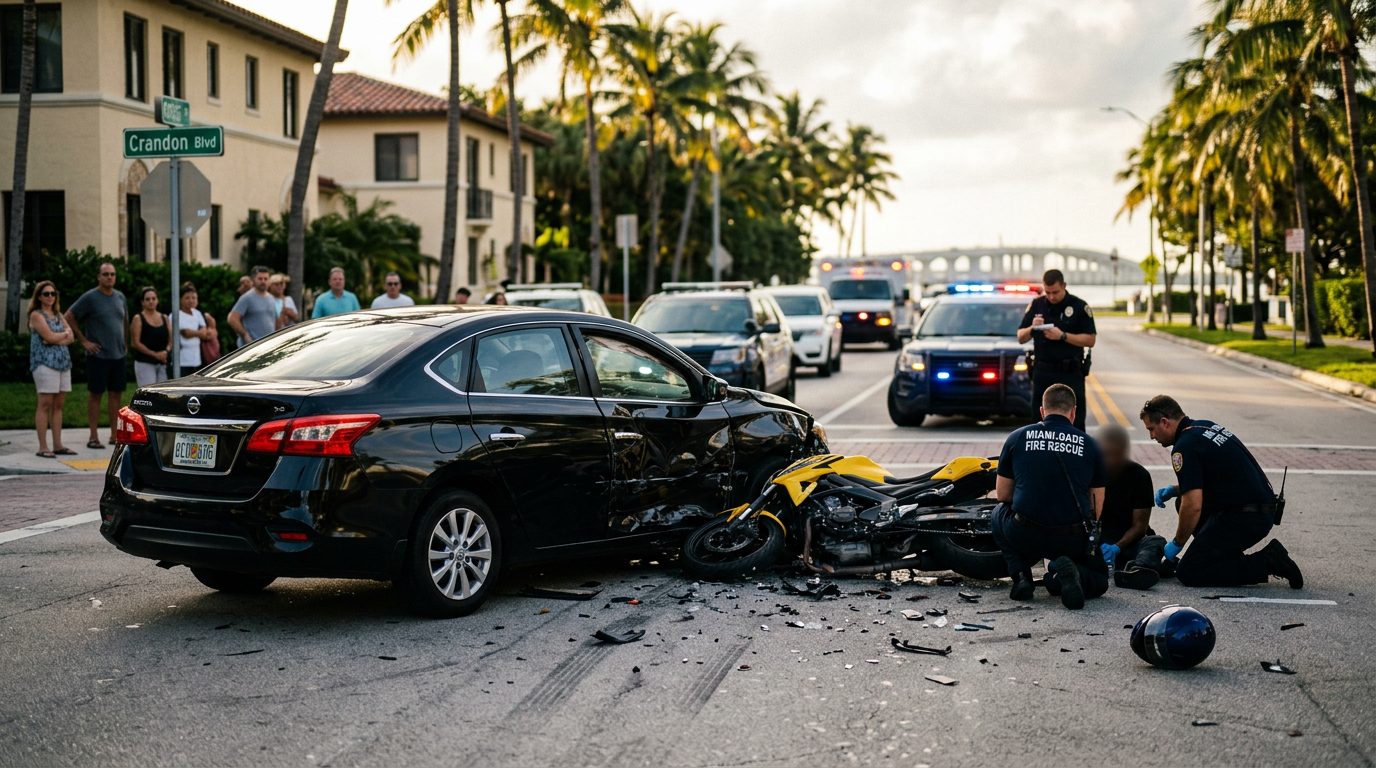
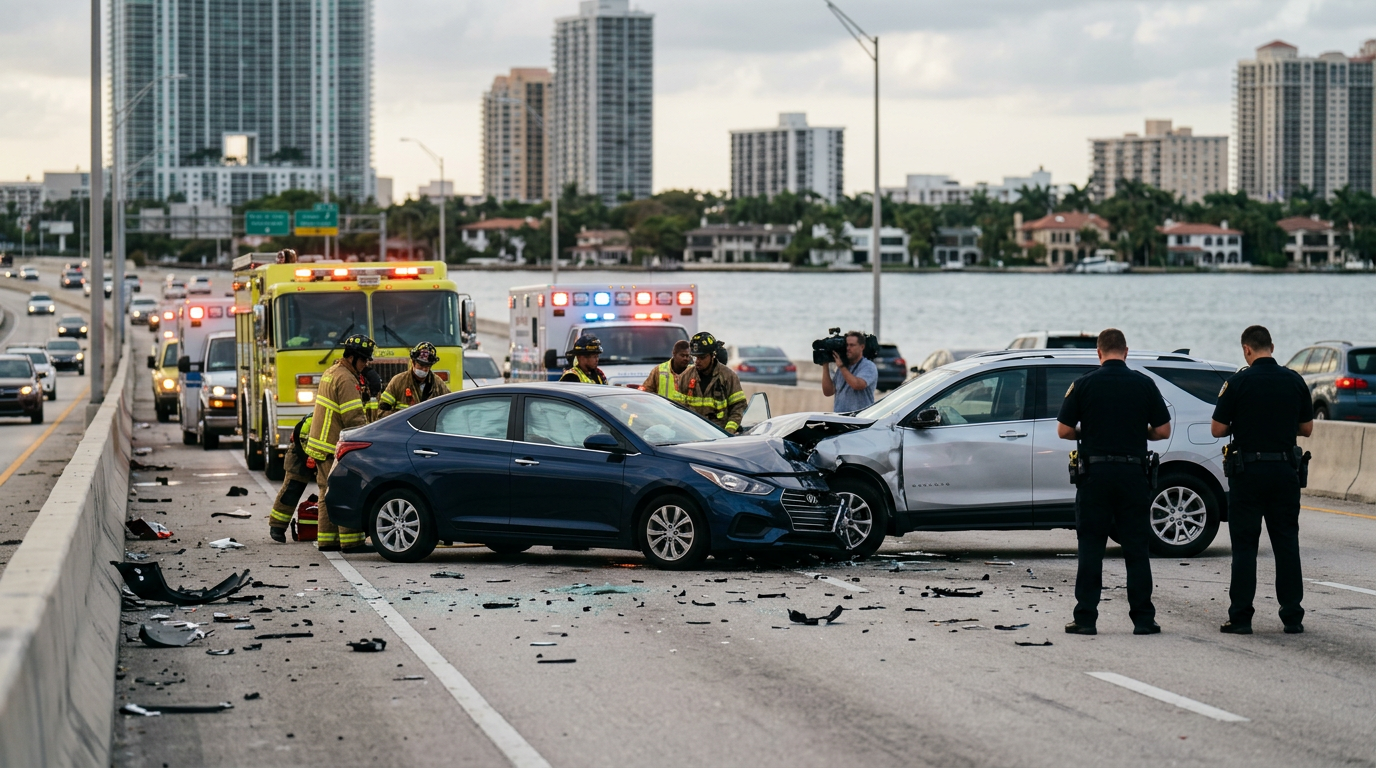
A late-night collision occurred this past Sunday as a silver sedan traveling northbound on Biscayne Boulevard was struck by an unidentified vehicle attempting a high-speed lane change near the entrance to the Julia Tuttle Causeway. The impact sent the victim's car spinning into a concrete utility pole, resulting in significant structural damage and leaving the driver trapped inside. Miami Fire Rescue arrived on the scene shortly after 11:00 PM to extricate the individual, who was then transported to the Ryder Trauma Center at Jackson Memorial Hospital with injuries described as serious but stable.
The offending vehicle did not stop to render aid or exchange information, instead fleeing eastbound toward Miami Beach. In hit-and-run scenarios, the absence of a known defendant initial complicates the recovery process, but legal experts emphasize that the surrounding environment often holds the key to identification. Law enforcement is currently reviewing footage from municipal traffic cameras and private security systems at nearby luxury high-rises. However, for victims pursuing a personal injury claim, the mere existence of this footage is not enough; it must be legally secured before it is overwritten by standard hardware cycles.
A primary focus for legal counsel in these complex cases is the immediate issuance of spoliation letters to third parties and potential defendants. This formal notice creates a legal obligation to preserve specific evidence, such as dashcam recordings and data from a vehicle's Electronic Control Module (ECM), often referred to as the 'black box.' Under Florida law, preventing the destruction of this data is vital, as it records speed, braking patterns, and steering angles at the precise moment of impact. If a party fails to preserve this evidence after receiving a spoliation letter, they may face unfavorable evidentiary presumptions in court.
Beyond external cameras, the ECM data from the victim’s own vehicle can provide an objective account of the crash that contradicts potential defense narratives. In Florida, the collection of this digital forensics is a standard part of a thorough investigation into liability. For those injured on Miami’s busy corridors, these technical details often bridge the gap between a denied insurance claim and a successful recovery. Victims should act quickly to ensure that digital footprints left at the scene are not permanently lost to time or neglect.
If you are involved in a hit-and-run, it is imperative to identify and notify all nearby businesses with surveillance cameras within 48 hours to prevent the deletion of footage. Securing a legal representative to issue formal preservation demands can protect your right to compensation by locking in the physical facts of the accident before they disappear.
Were you involved in a similar Miami crash?
Talk to a Caraccidentmiami.com attorney now — free, confidential, 24/7.
305-244-5883