Serious Hydroplane Collision in Coconut Grove Raises Questions of Federal Trucking Safety Compliance
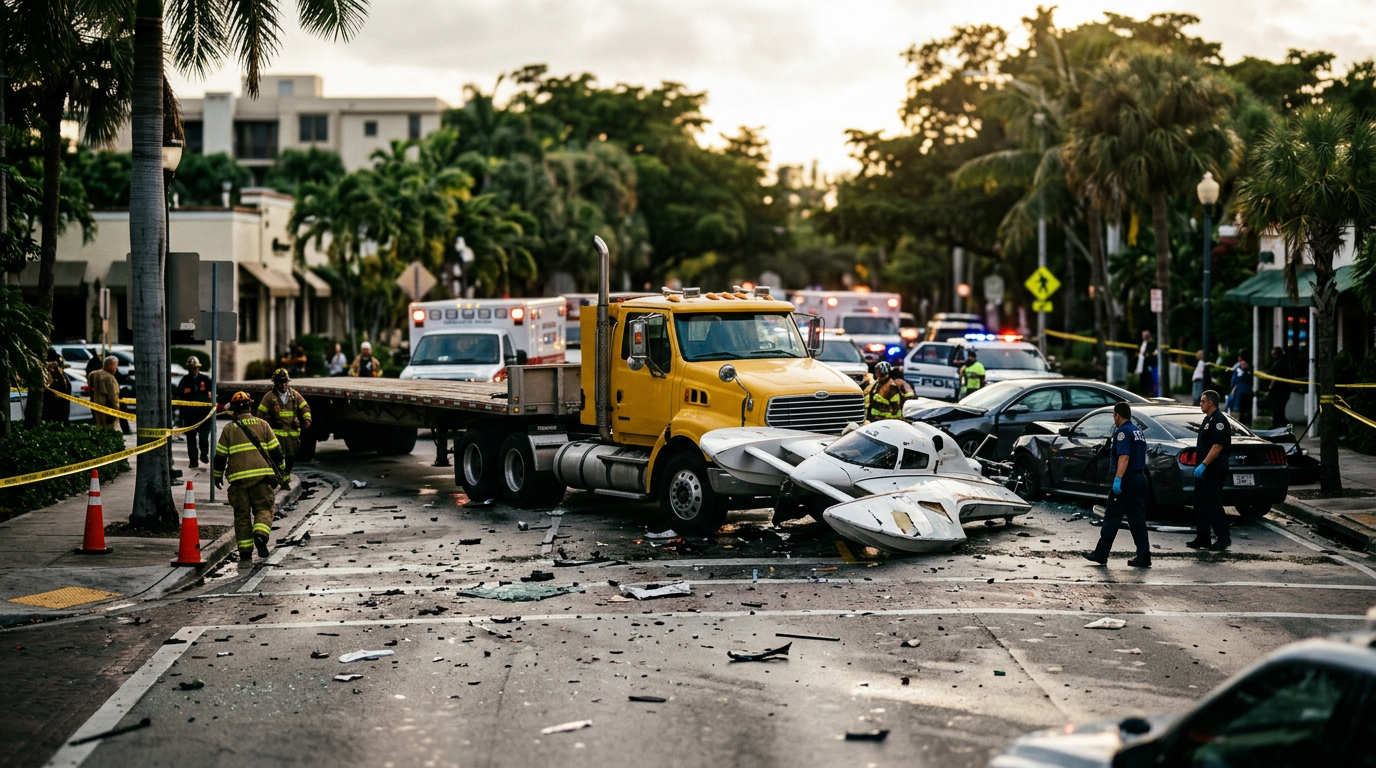
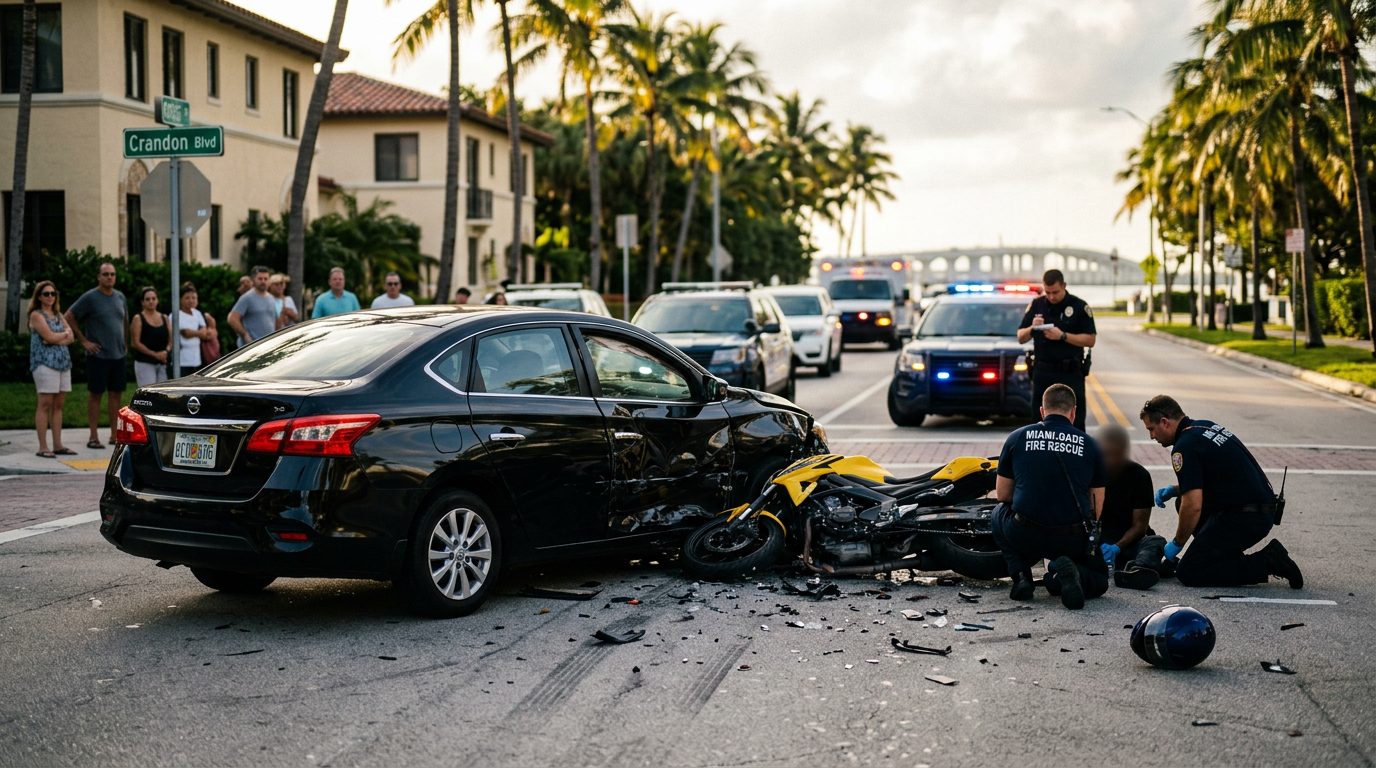
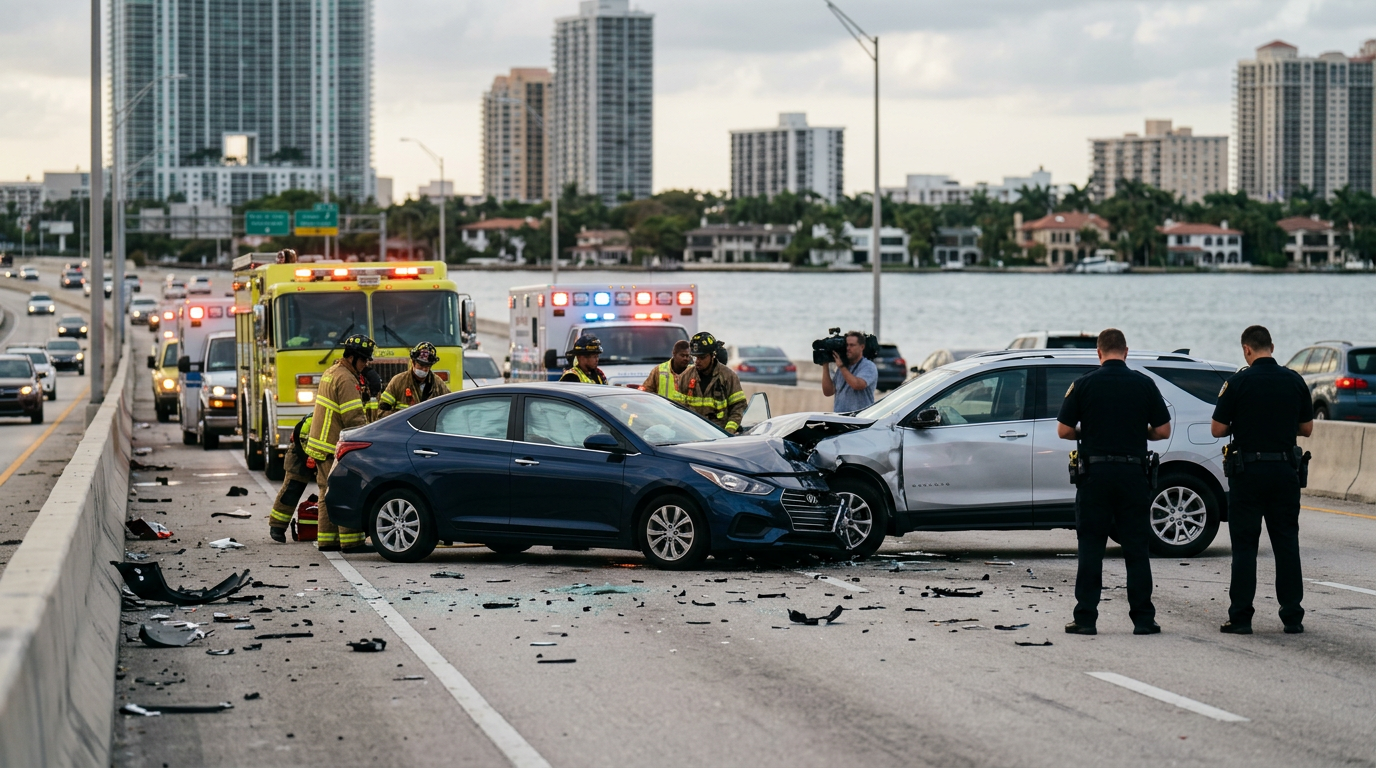
A chaotic scene unfolded Tuesday afternoon in Coconut Grove as heavy tropical downpours turned US-1 into a hazardous corridor. According to preliminary reports, a commercial tractor-trailer headed northbound near Southwest 27th Avenue reportedly lost traction while navigating a curve, causing the heavy rig to hydroplane across multiple lanes. The out-of-control vehicle eventually collided with two passenger cars, pinning one against a concrete barrier near the entrance to the Coconut Grove Metrorail station. Emergency responders from Miami Fire Rescue arrived quickly to extricate the trapped occupants, who were transported to Jackson Memorial Hospital with injuries ranging from severe lacerations to suspected spinal trauma.
Road conditions at the time of the incident were significantly degraded, with standing water accumulating due to overwhelmed drainage systems along the South Dixie Highway corridor. While the rain was undoubtedly a factor, investigators are now scrutinizing the mechanical readiness of the commercial vehicle involved. In high-speed corridors like US-1, the margin for error for heavy trucks is razor-thin during weather events. Witness accounts suggest the truck struggled to maintain its lane well before the impact, raising immediate concerns about whether the equipment was properly maintained for South Florida's notorious seasonal weather patterns and if the operator was driving at a speed appropriate for the visibility.
From a legal perspective, accidents involving commercial rigs are governed by more than just standard Florida traffic laws. The Federal Motor Carrier Safety Regulations, specifically 49 CFR § 392.14, mandate that commercial drivers exercise extreme caution when hazardous conditions such as rain or snow adversely affect visibility or traction. This federal standard is often more stringent than state-level negligence rules, requiring the driver to reduce speed or even cease operations if conditions become sufficiently dangerous. If a trucking company fails to ensure their fleet is equipped with adequate tire tread or if they pressure drivers to maintain schedules during torrential rains, they may be held strictly liable for the resulting damages.
Victims of such complex collisions must understand that evidence in trucking cases disappears quickly. Electronic logging devices, maintenance records, and onboard camera footage are essential to proving that a carrier violated federal safety protocols. For those injured in the Coconut Grove area, securing these records is the first step in ensuring that a multi-million-dollar insurance carrier does not shift the blame onto the weather. Rather than accepting an initial settlement offer, injured parties should focus on obtaining a full mechanical inspection of the commercial vehicle and a professional download of the truck's 'black box' data to confirm if speed was a contributing factor.
Were you involved in a similar Miami crash?
Talk to a Caraccidentmiami.com attorney now — free, confidential, 24/7.
305-244-5883