
Serious Left-Turn Motorcycle Crash in Coral Gables Raises Questions Regarding Florida Helmet Requirements
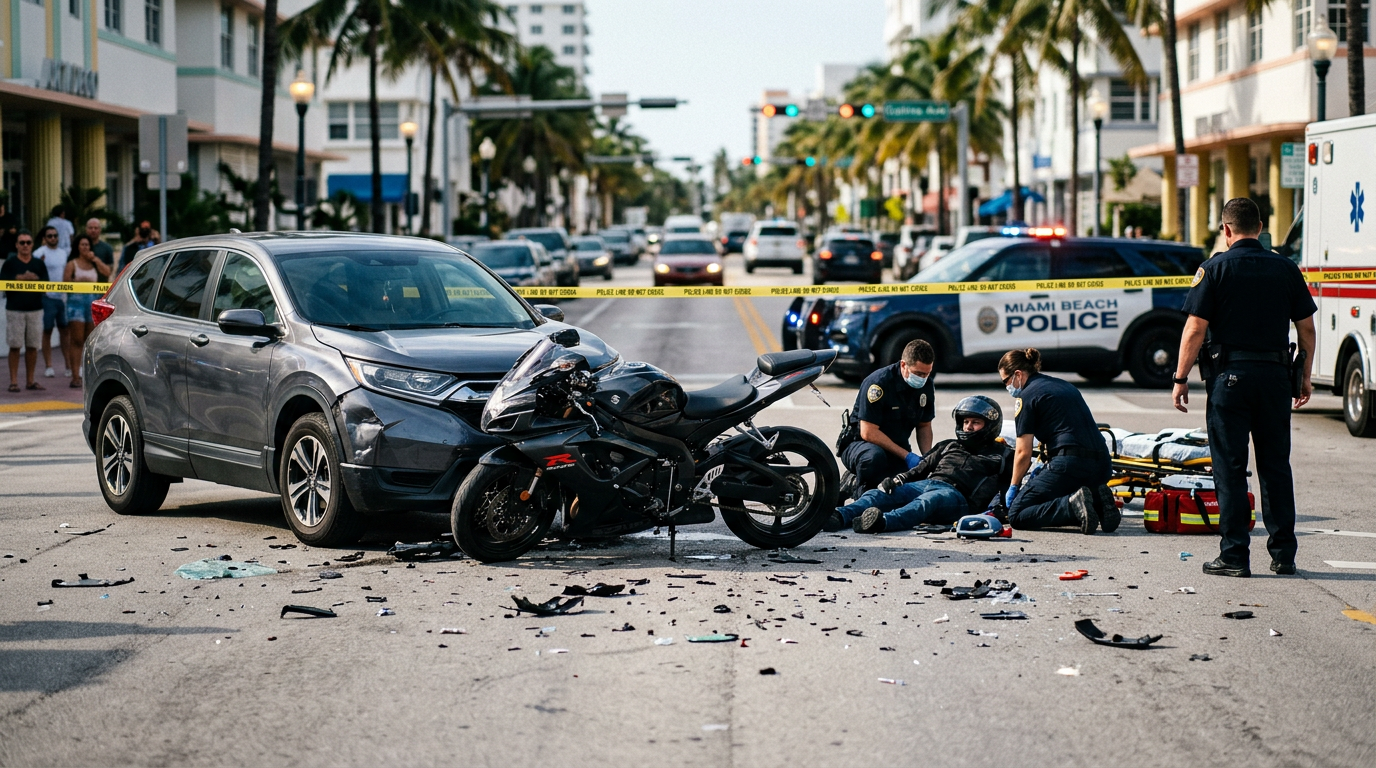
A catastrophic collision occurred Tuesday afternoon in the heart of Coral Gables when a passenger sedan attempted a left-hand turn across oncoming traffic, striking a motorcyclist traveling northbound. The impact ejected the rider, who was transported in critical condition to the Ryder Trauma Center at Jackson Memorial Hospital. Local authorities closed the intersection for several hours to conduct a forensic recreation of the crash, noting that the vehicle driver appeared to have failed to yield the right-of-way during a flashing yellow arrow. While the investigation remains ongoing, the severe nature of the rider's head injuries has brought immediate attention to the intersection of traffic safety and Florida insurance litigation.
For Miami Beach residents who commute through the Gables, this incident serves as a grim reminder of the vulnerability of motorcyclists in urban environments. In Florida, the legal landscape surrounding motorcycle accidents is distinct from standard passenger vehicle claims. When a rider is injured, the defense frequently scrutinizes every aspect of the rider's conduct and equipment to mitigate their own liability. Central to this strategy is Florida Statute 316.211, which dictates the requirements for protective headgear. While many assume that helmet use is purely a personal safety choice, the law creates specific exemptions and requirements that carry heavy weight in a courtroom during a personal injury trial.
Under Florida Statute 316.211, riders over the age of 21 are permitted to operate a motorcycle without a helmet only if they carry an insurance policy providing at least $10,000 in medical benefits for injuries. However, even if a rider is legally compliant in riding without a helmet, a defendant may attempt to use the 'helmet defense' to reduce the total compensation owed. They may argue that the plaintiff’s failure to wear a helmet constituted comparative negligence, asserting that the injuries would have been less severe had the rider been wearing headgear. This can lead to a significant percentage-based reduction in the final settlement or jury award for pain and suffering.
Successfully navigating a motorcycle injury claim requires proving that the driver’s failure to yield was the primary cause of the accident, regardless of the rider's protective gear. An experienced attorney must often employ medical experts to testify that a helmet would not have prevented the specific injuries sustained, or that the driver's negligence was so absolute that the helmet status is irrelevant to the question of liability. Victims should never assume that riding without a helmet bars them from seeking compensation. Instead, they must focus on documenting the scene and securing legal counsel that understands how to counter defense attempts to diminish the value of their recovery based on equipment choices.
Were you involved in a similar Miami crash?
Talk to a Caraccidentmiami.com attorney now — free, confidential, 24/7.
305-244-5883

