
Serious MacArthur Causeway Collision Near North Miami Raises Critical Questions Regarding Florida Motorcycle Helmet Regulations
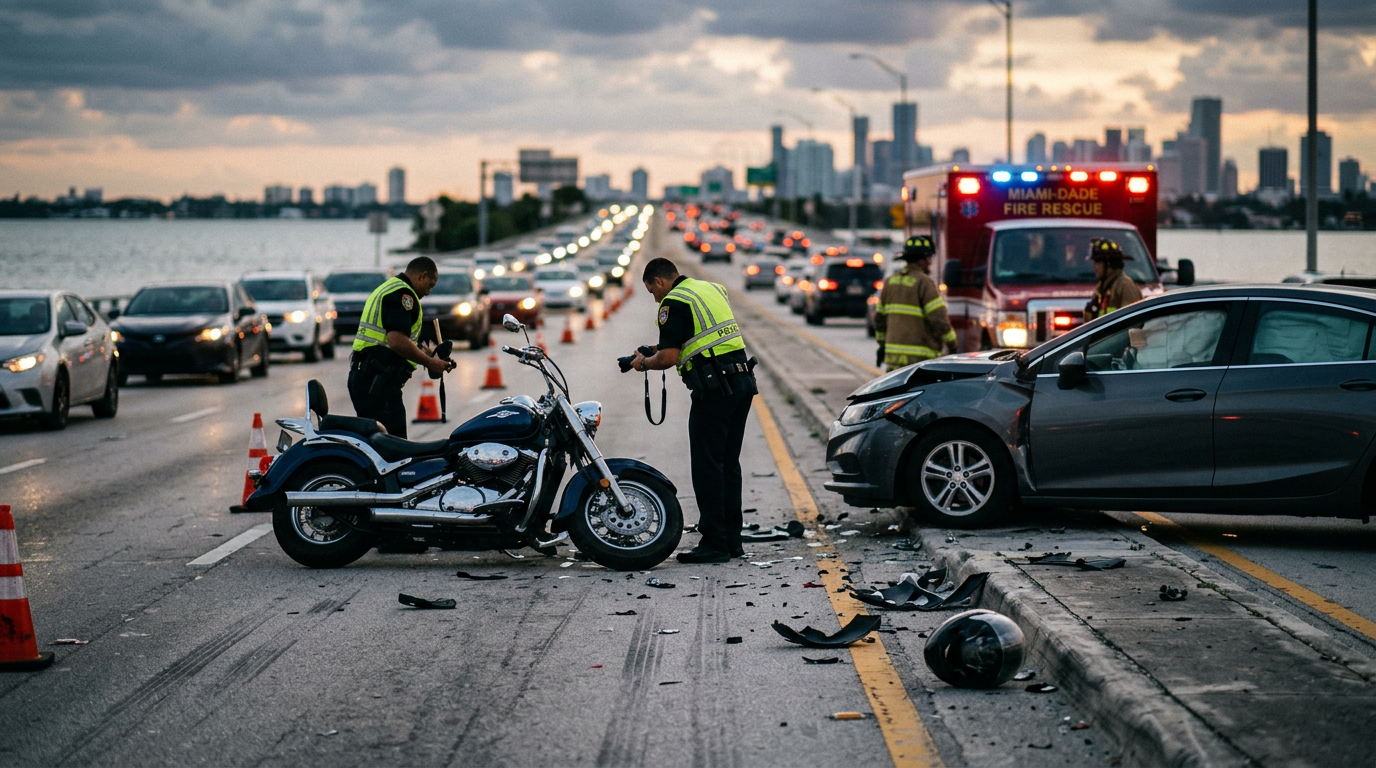
A catastrophic multi-vehicle collision disrupted traffic on the MacArthur Causeway late Saturday evening after a sedan traveling at high speeds struck a motorcyclist headed toward North Miami. Miami Police Department investigators reported that the driver of the sedan exhibited signs of impairment at the scene and was subsequently detained for further testing. The motorcyclist, a male in his early thirties, was thrown from his vehicle upon impact and transported to the Ryder Trauma Center at Jackson Memorial Hospital with life-threatening injuries. Initial reports indicate that while the driver's negligence initiated the crash, the legal proceedings will likely focus on the rider's physical protections at the time of the impact.
Witnesses at the scene stated that the motorcyclist was not wearing a helmet when the collision occurred. This detail is significant under Florida Law, as it introduces a layer of complexity regarding the recovery of damages for head and neck injuries. While the driver may be clearly at fault for the crash itself, the defense will likely argue that the rider's decision not to wear protective gear contributed to the severity of the medical complications. In Miami, where congested causeways often lead to high-velocity accidents, the physical condition of the victim and their adherence to safety standards become focal points during insurance negotiations and litigation.
Specifically, the case brings into focus Florida Statute 316.211, which governs motorcycle safety equipment. Under this law, riders over the age of 21 are permitted to operate a motorcycle without a helmet, provided they carry an insurance policy with at least ten thousand dollars in medical benefits. However, choosing to exercise this right does not provide immunity from the principle of comparative negligence. If a jury determines that a helmet would have prevented or mitigated specific injuries, the total compensation awarded to the victim can be significantly reduced by their percentage of fault for not wearing one, even if the other driver was entirely responsible for the collision.
Navigating a personal injury claim after a Causeway wreck requires a precise understanding of how these statutes interact with local traffic laws. Victims must be prepared for aggressive insurance adjusters who will attempt to use the lack of a helmet to minimize a settlement, regardless of the defendant's intoxication or reckless driving. It is essential for injured parties to document all medical treatments and secure witness testimony immediately to prove that the primary cause of the accident was the other driver's impairment. Understanding the nuances of Florida's helmet exemptions is the only way to ensure that a victim's right to full recovery remains protected after a devastating crash.
Were you involved in a similar Miami crash?
Talk to a Caraccidentmiami.com attorney now — free, confidential, 24/7.
305-244-5883

