
Serious Sideswipe Crash on Dolphin Expressway Near Kendall Highlights Importance of Stacking Underinsured Motorist Coverage
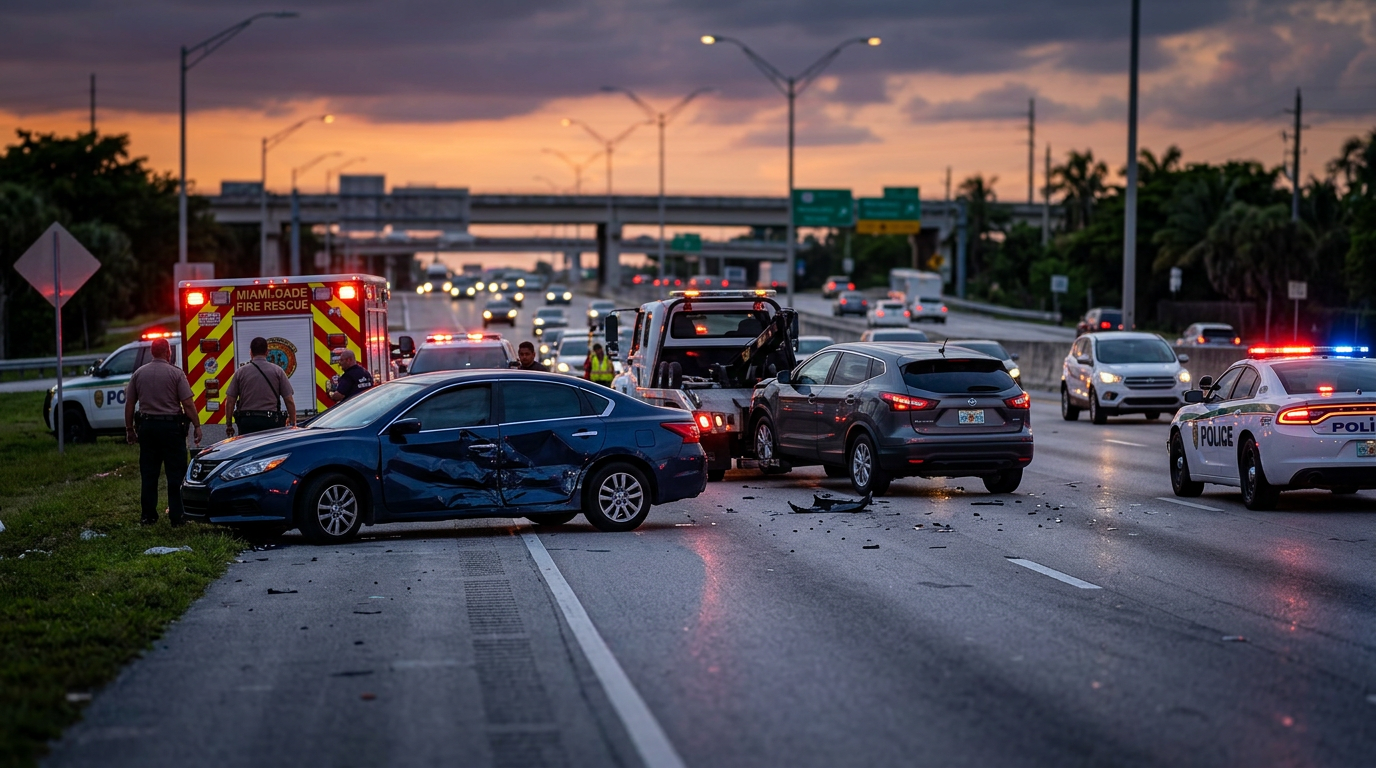
A chaotic scene unfolded during the Tuesday morning commute as a high-speed sideswipe collision sent two vehicles careening into the concrete barrier on the Dolphin Expressway near the Kendall corridor. Witnesses reported that a sedan attempting an aggressive lane change clipped a family SUV, causing both drivers to lose control amidst heavy traffic. First responders from Miami-Dade Fire Rescue arrived shortly after 8:30 a.m. to find wreckage obstructing three westbound lanes. Paramedics treated two individuals at the scene before transporting them to a local trauma center for further evaluation of spinal and soft-tissue injuries.
While the physical recovery for those involved is just beginning, the financial implications of such a crash are often immediate and overwhelming. In many Miami accidents, the at-fault driver carries only the state-mandated minimum insurance, which frequently falls short of covering extensive hospital stays or long-term rehabilitation. This creates a significant gap between the actual damages suffered and the available recovery funds. When a defendant's policy is exhausted, victims must look toward their own insurance protections to ensure their medical expenses and lost wages do not lead to personal financial ruin.
Florida law provides a critical mechanism for victims to increase their protection through the 'stacking' of Uninsured/Underinsured Motorist (UM) coverage. Under Florida Statute section 627.727, unless specifically waived in writing, UM coverage is typically stacked, meaning a policyholder can combine the limits of multiple vehicles insured under the same policy. For a Kendall resident owning two cars each with $50,000 in UM coverage, stacking allows for a total of $100,000 in available benefits. This legal provision is designed to provide a robust safety net when an at-fault party is either uninsured or carries insufficient liability limits to address the victim's total losses.
The complexity of insurance stacking requires a meticulous review of the specific policy language and the forms signed at the time of purchase. Insurance companies often attempt to limit their exposure by encouraging non-stacked policies, which can leave families vulnerable after a major highway collision. Victims should immediately secure a certified copy of their own insurance declarations page to determine if they have the right to aggregate their coverage limits. Understanding these contractual rights early in the process is the most effective way to ensure that the cost of another driver's negligence does not become a permanent burden on the injured party.
Kendall crash hotspots, hospitals & Florida law
Suburban arterials & the Turnpike — high-speed left-turn crashes and teen-driver wrecks.
Were you involved in a similar Miami crash?
Talk to a Caraccidentmiami.com attorney now — free, confidential, 24/7.
305-244-5883

