Severe Pinecrest Turnpike Rollover Involving Commercial Truck Raises Underinsured Motorist Stacking Questions
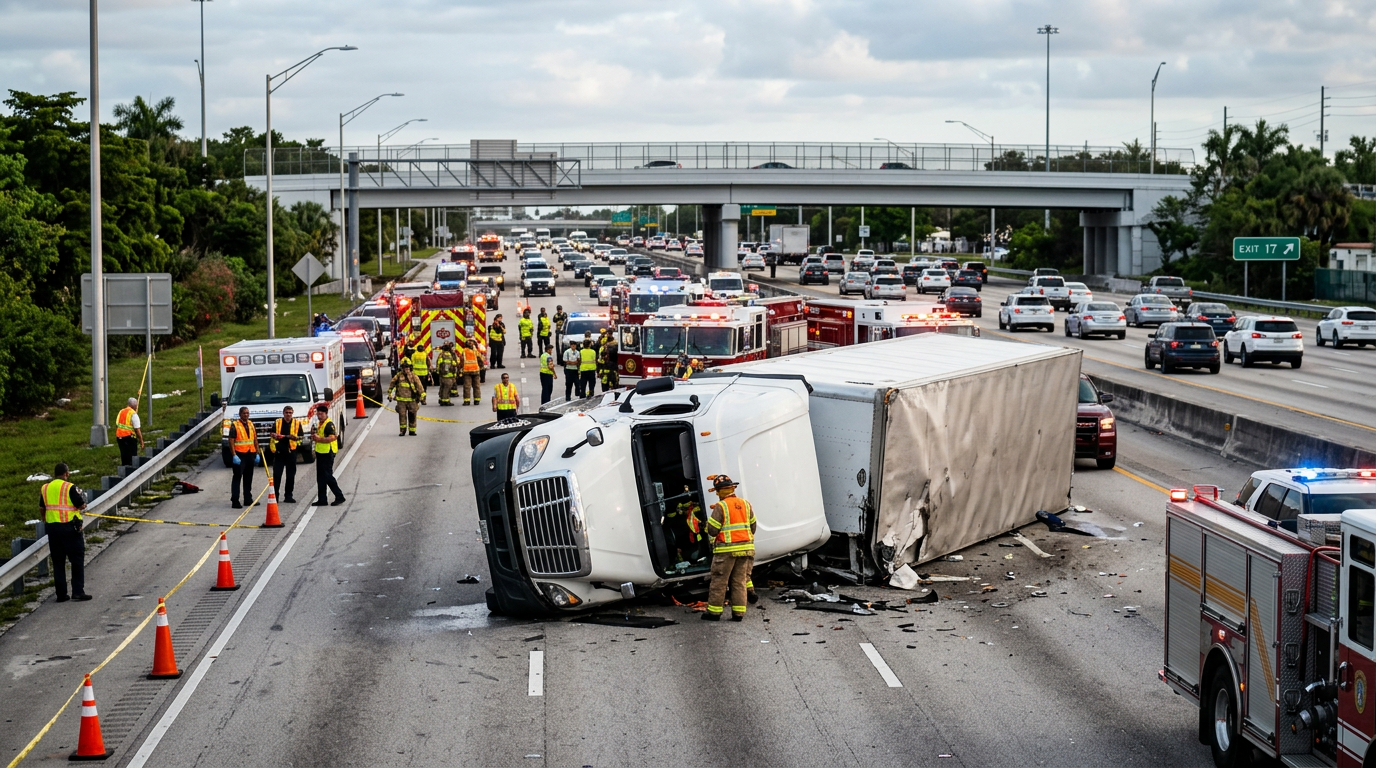
Emergency crews responded to a chaotic scene early Tuesday morning on the Florida Turnpike near the Southwest 120th Street interchange. A commercial tractor-trailer reportedly lost control while navigating the southbound lanes, causing it to overturn across three lanes of traffic. The massive vehicle crushed a late-model sedan against the concrete median, trapping the driver for nearly forty minutes. Miami-Dade Fire Rescue performed a delicate extraction before transporting the victim to the Ryder Trauma Center at Jackson Memorial Hospital with life-threatening internal injuries. The initial investigation suggests mechanical failure or driver fatigue may have contributed to the heavy truck's sudden instability.
The aftermath of the Pinecrest incident has left local authorities managing a secondary series of fender-benders as commuters attempted to avoid the debris field. While the truck driver sustained only minor abrasions, the occupant of the sedan remains in critical condition. In cases involving commercial carriers, the immediate concern often shifts from the physical wreckage to the sufficiency of the available insurance policies. Even when a trucking company carries significant liability limits, the costs associated with long-term rehabilitative care and permanent disability in a rollover accident can quickly exceed those standard policy caps, leaving the victim in a precarious financial state.
Under Florida law, victims can protect themselves from such shortfalls through the mechanism of UM/UIM coverage stacking. Pursuant to Florida Statute Section 627.727, motorists have the option to purchase 'stacked' uninsured or underinsured motorist coverage. This allow an injured party to combine the coverage limits of multiple vehicles insured under the same household policy. For example, if a Pinecrest resident has three vehicles each with a $50,000 UM limit, stacking effectively creates a $150,000 buffer. This total pool of funds becomes available if the negligent truck driver's insurance is exhausted, ensuring the victim's medical bills and lost wages are fully compensated regardless of the carrier's limits.
Navigating these insurance complexities requires an immediate assessment of one's own policy declarations page shortly after a collision occurs. Many drivers are unaware if they have elected to stack their coverage or if they signed a waiver opting for non-stacked limits, which are often sold at a lower premium. Because the statute requires specific written disclosures for a waiver to be valid, it is vital to verify that your insurer followed proper protocols. Victims should secure a full copy of their insurance contract and avoid making statements to the commercial truck's adjusters until the full scope of their own UM/UIM stacking rights has been professionally reviewed.
Were you involved in a similar Miami crash?
Talk to a Caraccidentmiami.com attorney now — free, confidential, 24/7.
305-244-5883