Evening Commute Pile-Up Near Coconut Grove Highlights Complex Florida Rideshare Insurance Coverage Gaps
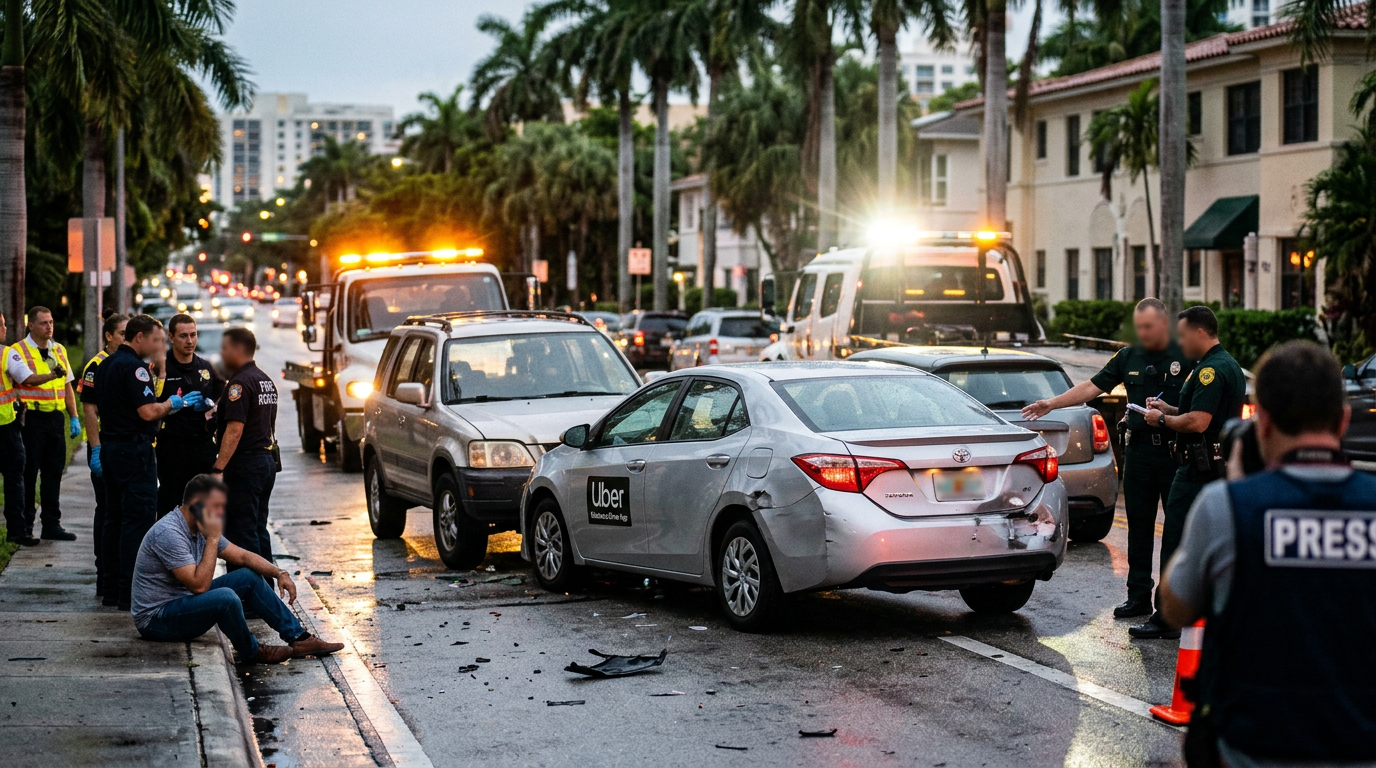
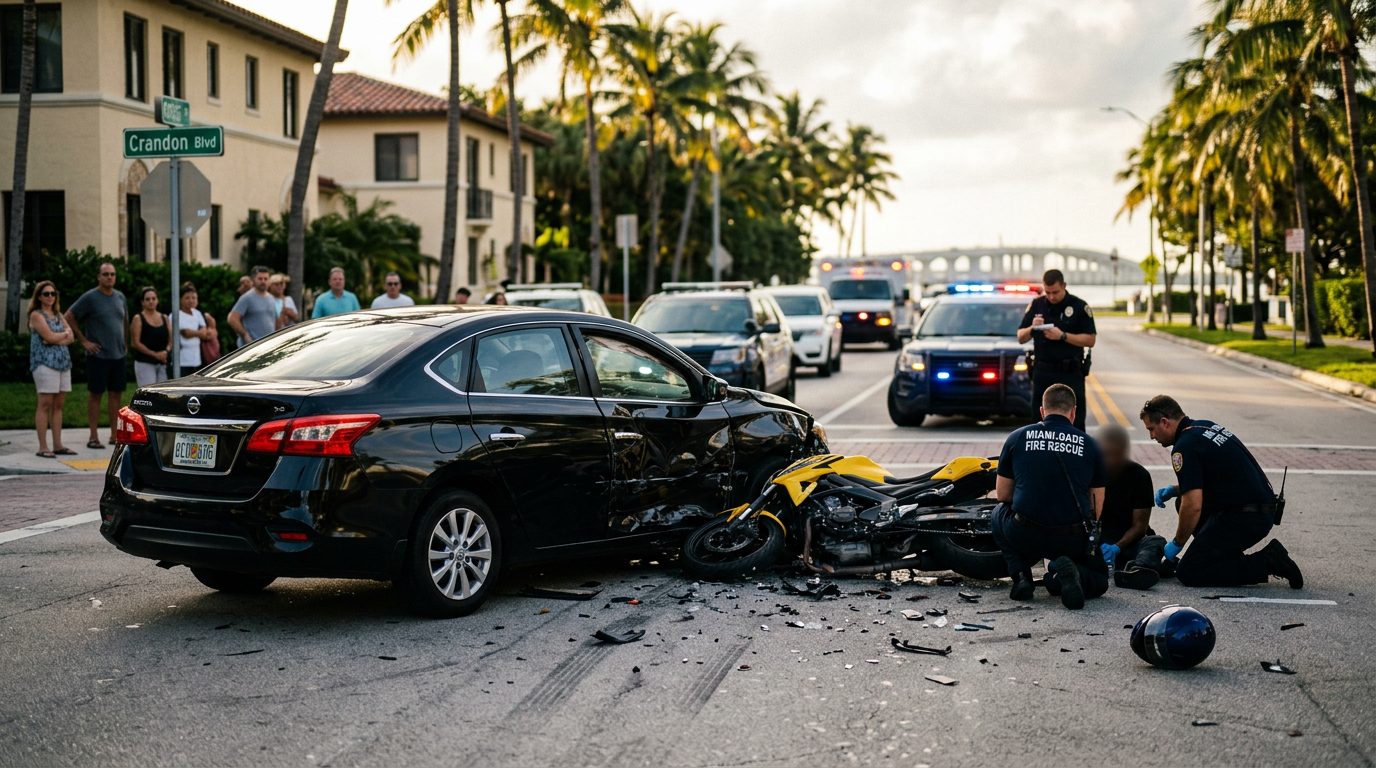
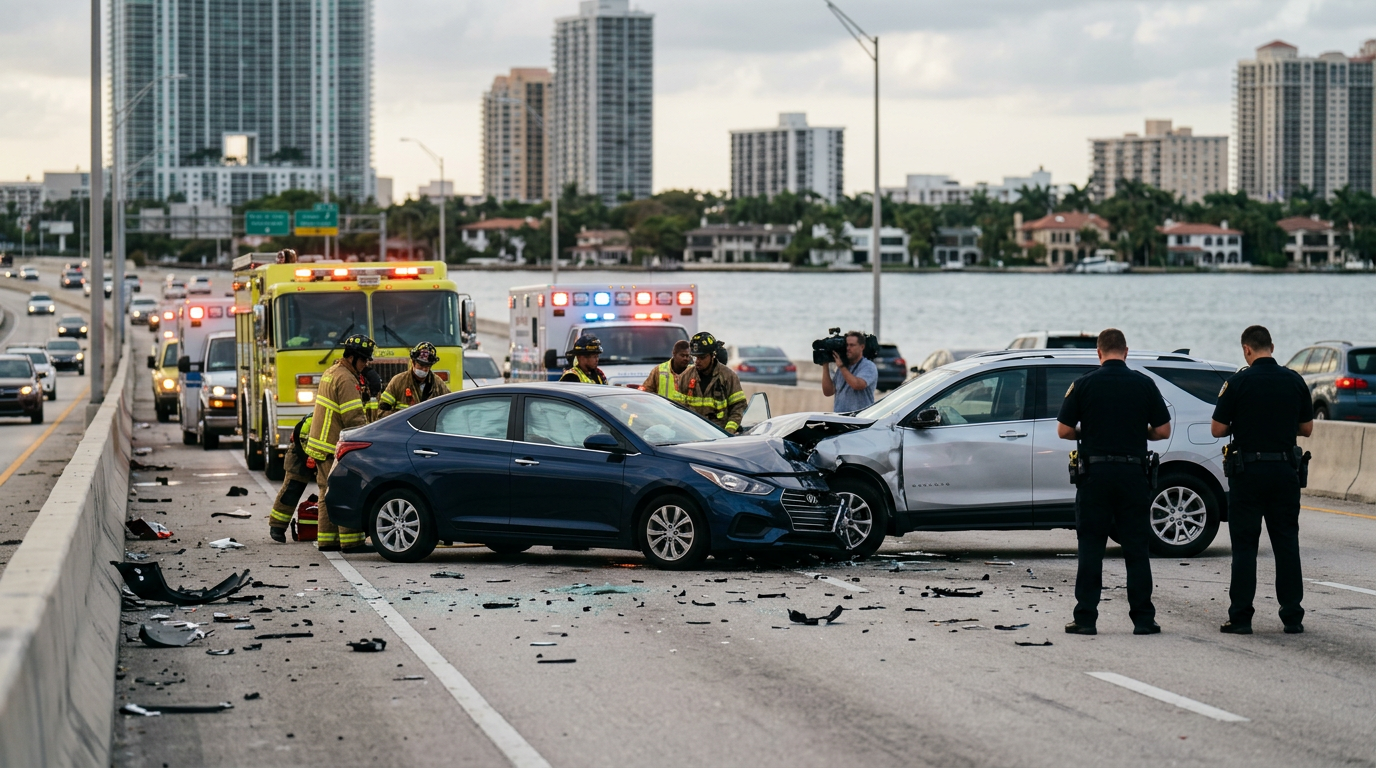
A chaotic scene unfolded Tuesday evening on the southbound lanes of I-95 near the Coconut Grove exit as a five-car pile-up brought rush-hour traffic to a standstill. Witnesses reported that the chain reaction began when a late-model sedan slowed abruptly, causing a series of rear-end impacts that pushed one vehicle into the concrete barrier. Emergency responders from Miami Fire Rescue arrived quickly to the scene, transporting two individuals to Jackson Memorial Hospital with injuries that, while serious, were not classified as life-threatening. The wreckage took nearly two hours to clear, leaving frustrated drivers to navigate a maze of debris and flashing lights.
Among the vehicles involved was a car functioning as a rideshare vehicle, a factor that complicates the recovery process for everyone involved. In Miami's dense traffic, the presence of Uber and Lyft drivers is constant, yet many victims do not realize that the available insurance coverage shifts significantly based on the driver's digital status at the precise moment of impact. Florida law dictates a tiered system of coverage that can leave gaps if not properly documented by a forensic investigation of the driver’s application logs and GPS data immediately following a crash.
Under Florida Statute section 627.748, the level of protection depends on the 'Period' the driver was in. If the driver was merely logged into the app and waiting for a request (Period 1), they carry significantly lower liability limits than if they had accepted a ride (Period 2) or had a passenger in the seat (Period 3). During Period 3, the policy must provide at least $1 million for death, bodily injury, and property damage. For victims hit by a driver who was simply cruising for a fare, navigating these 'stacked' insurance periods requires a precise legal strategy to ensure the primary carrier or the rideshare corporate policy is held responsible.
Determining which insurance period applies is rarely straightforward, as companies often rely on technicalities to deny higher-tier claims. In the aftermath of a Coconut Grove collision, a victim must act quickly to preserve evidence, such as the digital 'ping' logs from the service provider and the physical state of the driver's mobile device. Without this data, insurance adjusters may attempt to categorize the accident under the driver's personal policy, which likely contains an 'active log-on' exclusion, potentially leaving the injured party with no clear path to or means of compensation for medical bills or lost wages.
Victims of a multi-car accident involving a rideshare vehicle should prioritize a professional evaluation of the driver’s app status rather than accepting an initial settlement offer from a private insurer. It is essential to secure a copy of the official police report and request that the rideshare company preserve all electronic data from the hour surrounding the crash. This technical evidence is the only way to prove whether the $1 million statutory coverage mandate applies to your recovery, ensuring that your medical expenses and long-term rehabilitation are fully funded by the entities legally required to provide coverage.
¿Tuvo usted un choque parecido en Miami?
Hable con un abogado de Caraccidentmiami.com ahora — gratis, confidencial, 24/7.
305-244-5883