
Brickell Multi-Car Hydroplane Collision Raises Questions About Rideshare Insurance Coverage Periods on US-1
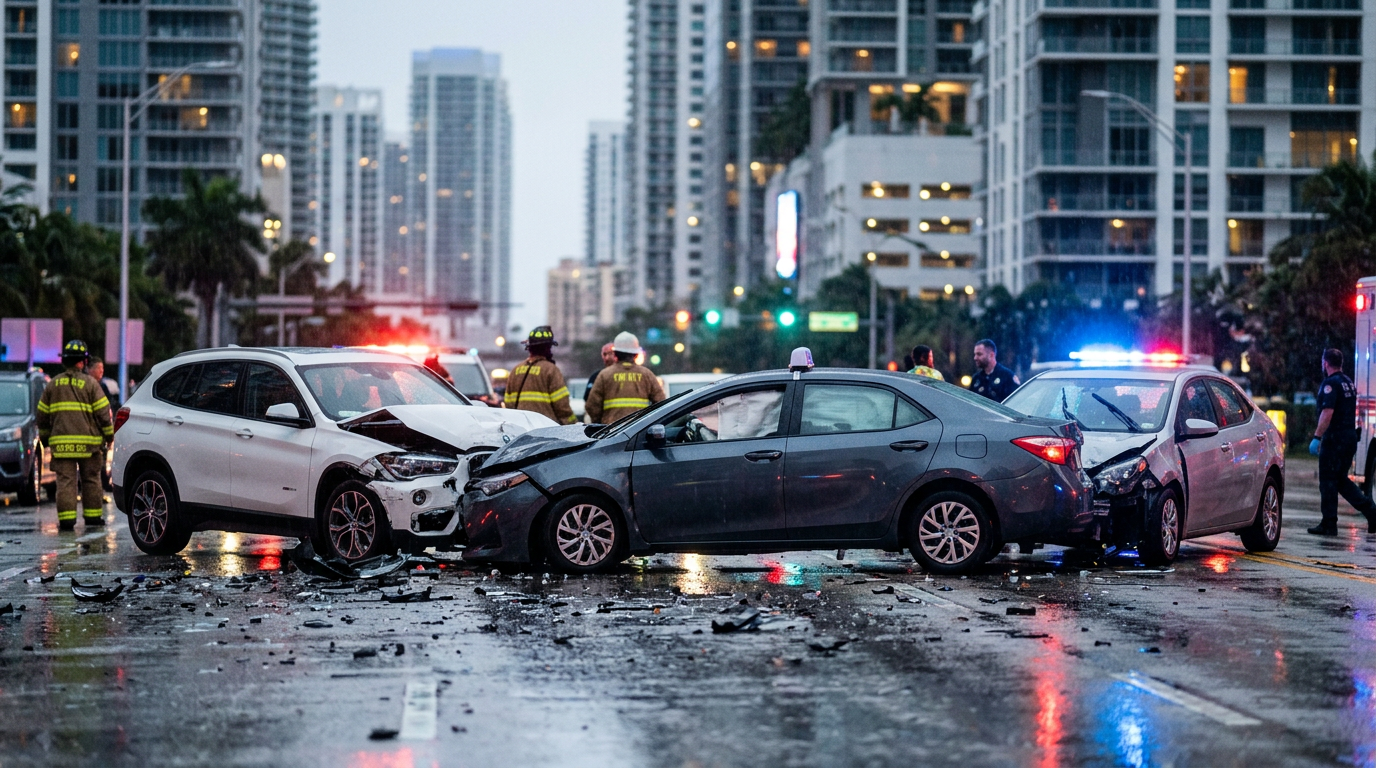
A heavy downpour typical of Miami afternoons led to a significant traffic incident yesterday on US-1 near the Brickell Metrorail station. According to preliminary reports, a late-model sedan traveling northbound lost traction on the slick asphalt, hydroplaning across two lanes before striking a concrete barrier and rebounding into oncoming traffic. The force of the impact triggered a chain reaction involving three additional vehicles, causing severe front-end damage and forcing the temporary closure of the northbound lanes. Emergency responders from Miami Fire Rescue arrived on the scene to find several motorists suffering from non-life-threatening but serious orthopedic injuries.
Two individuals were transported to Jackson Memorial Hospital for further evaluation, while others were treated at the scene for lacerations and seatbelt-related bruising. Among the vehicles involved was a vehicle active on a popular rideshare platform, though it was not immediately clear if a passenger was on board at the time of the collision. This distinction is critical in Florida car accident cases, as the source and amount of available insurance recovery depend entirely on the driver’s status at the moment the hydroplaning occurred. The rainy conditions do not absolve a driver of liability, as Florida law requires motorists to maintain control of their vehicles regardless of the weather.
The legal complexity of this Brickell crash centers on the 'Period' system governing rideshare insurance. Under Florida statutes, coverage is segmented into three distinct phases. Period 1 occurs when the driver is logged into the app but has not yet accepted a ride, typically offering lower liability limits. Period 2 begins once a ride request is accepted, and Period 3 covers the duration when a passenger is physically in the vehicle. Because the sedan in this incident was reportedly operating for hire, the victims must identify which period was active to ensure they are accessing the maximum $1 million liability policy often required for the latter stages.
Navigating these stacked insurance layers is often difficult for injured parties who are simultaneously dealing with medical recovery and vehicle repairs. While a driver may claim the weather was an 'act of God,' Florida’s comparative negligence standards and specific rideshare regulations ensure that victims have a path to compensation if the driver failed to adjust their speed for the wet road. It is essential for those involved in such collisions to secure the digital trip data from the rideshare company immediately. This data serves as the primary evidence needed to determine which insurance tier applies and ensures that the carrier cannot downplay the coverage amount based on an incorrect status report.
Brickell crash hotspots, hospitals & Florida law
Miami's downtown financial corridor — dense traffic, constant construction, rideshare-heavy.
Were you involved in a similar Miami crash?
Talk to a Caraccidentmiami.com attorney now — free, confidential, 24/7.
305-244-5883

