Evening Crash Near Coral Gables Leaves Key Biscayne Driver Weighing Florida Modified Comparative Negligence
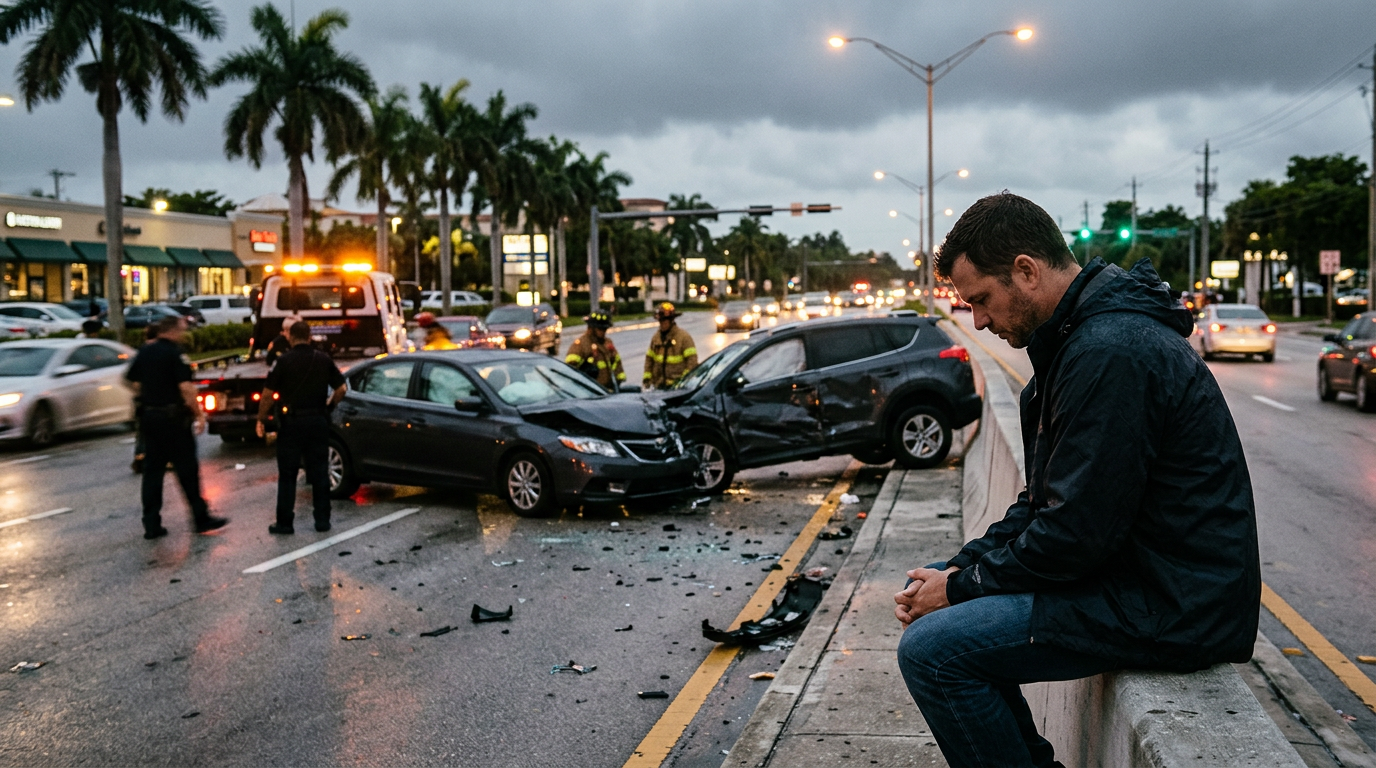
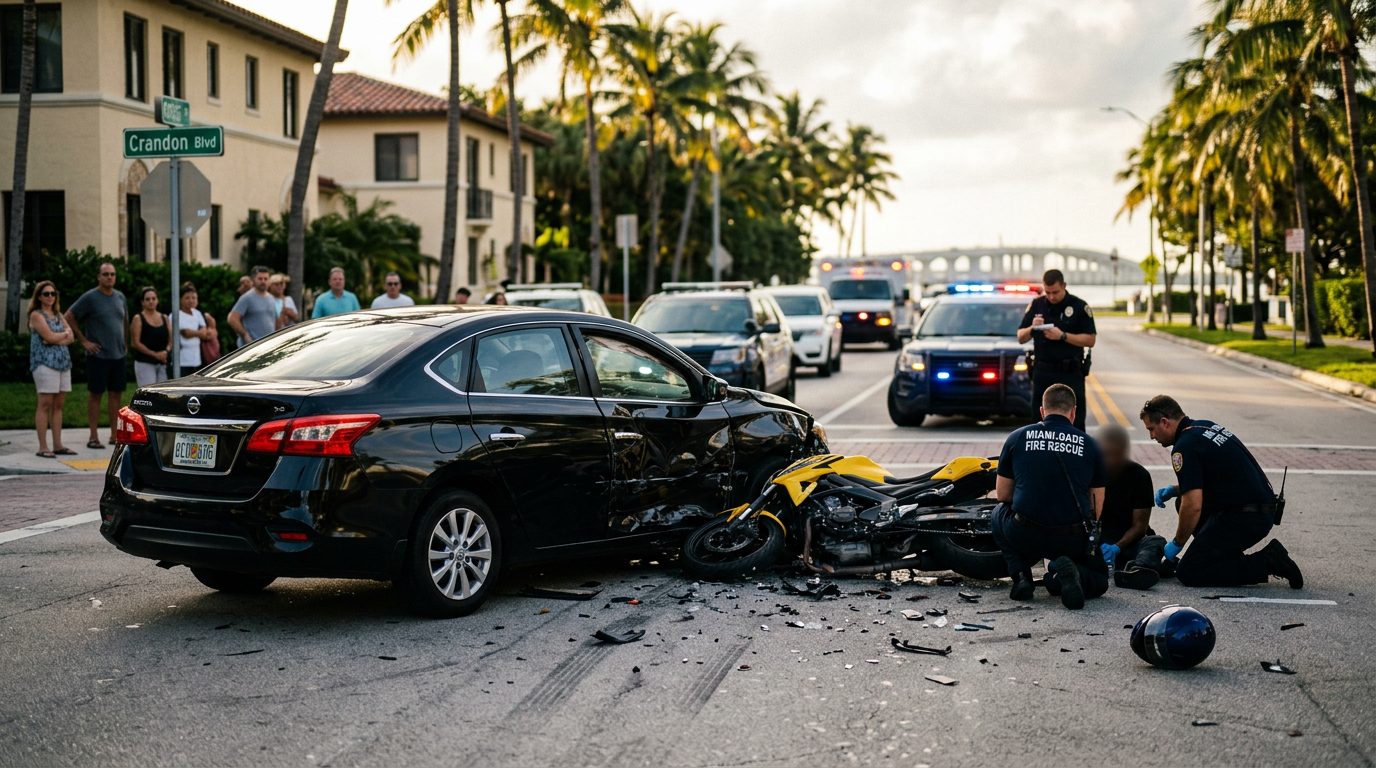
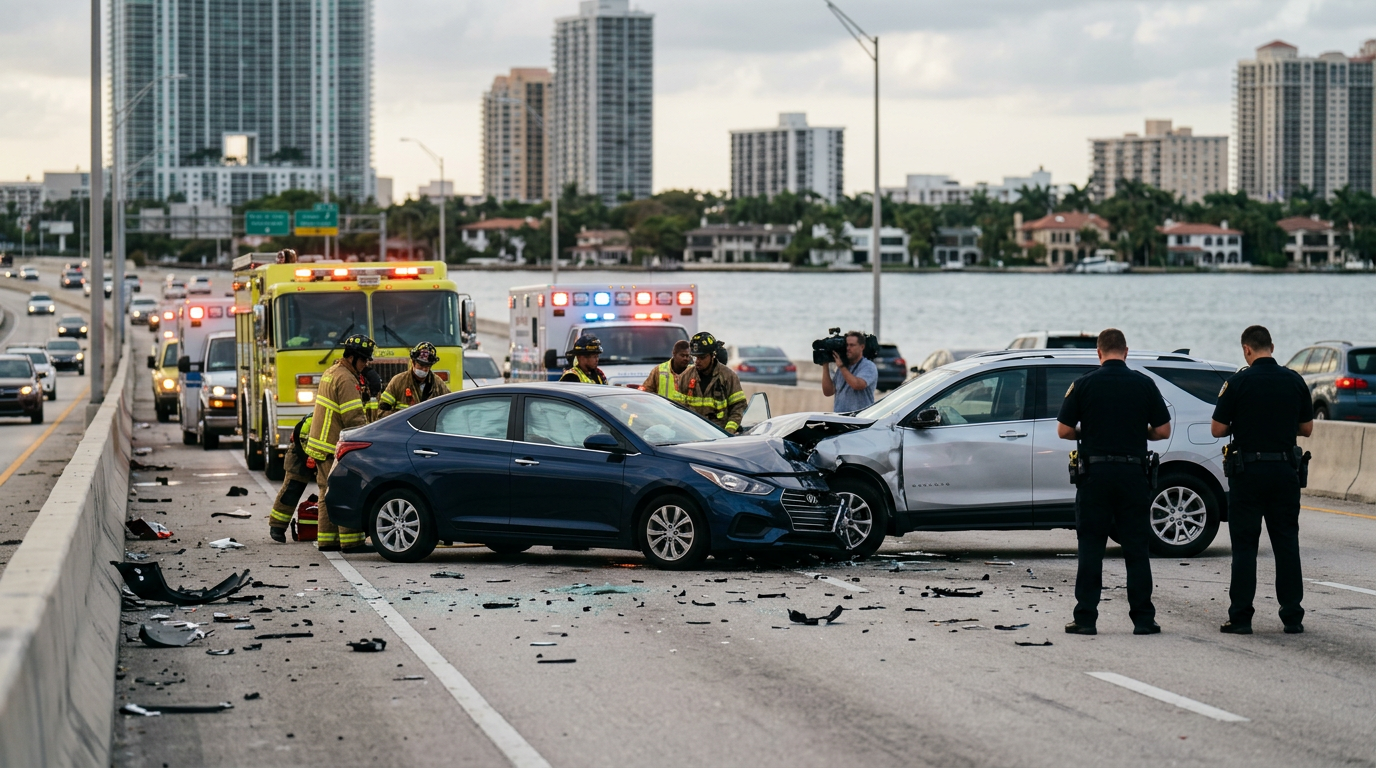
A serious two-vehicle collision occurred late Tuesday evening at a busy intersection just outside Key Biscayne, sending one motorist to Jackson Memorial Hospital with significant injuries. According to preliminary reports, a sedan was attempting a left-hand turn onto a shaded Coral Gables thoroughfare when it was struck by an oncoming SUV traveling at a high rate of speed. The force of the impact caused the turning vehicle to spin across several lanes, coming to a rest against a stone perimeter wall. Emergency responders arrived within minutes to stabilize the driver, who remains in serious but stable condition while investigators examine the traffic signal patterns at the time of the crash.
The aftermath of such an incident often leads to a complex debate over who is truly at fault. In Miami-Dade traffic law, left-turn accidents are frequently viewed as the responsibility of the turning driver, yet this assumption does not tell the whole story. Factors such as the speed of the approaching vehicle, sightline obstructions, and the timing of yellow lights play a pivotal role in determining whether the oncoming driver shared the blame. For the injured party, the path to recovering medical expenses and lost wages depends heavily on the precise allocation of fault determined by law enforcement and insurance adjusters during the initial investigation.
Victims must navigate the complexities of Florida Statutes Section 768.81, which centers on the principle of modified comparative negligence. Under this framework, an injured person can only recover damages if they are found to be 50 percent or less at fault for the incident. If a jury or investigator determines that the victim is 51 percent or more responsible for the collision, they are legally barred from seeking any financial compensation from the other party. This recent change in Florida law serves as a strict barrier for those who may have unknowingly contributed to their own misfortune, making the preservation of evidence like dashcam footage and witness statements more critical than ever.
Because the 51 percent threshold acts as a total bar to recovery, every piece of evidence regarding the other driver’s behavior is essential. If the oncoming SUV was speeding or distracted by a mobile device, that evidence can shift the percentage of fault away from the turning driver, allowing them to secure the funds needed for long-term rehabilitation. For residents of Key Biscayne and the surrounding areas, understanding that an accident is rarely 100 percent one person's fault is the first step toward legal protection. Victims should focus on securing a detailed police report and expert reconstruction of the crash site to ensure their level of responsibility is not unfairly inflated by insurance companies seeking to deny a claim.
Were you involved in a similar Miami crash?
Talk to a Caraccidentmiami.com attorney now — free, confidential, 24/7.
305-244-5883