
Little Havana Rideshare Crash Highlights Complex Insurance Period Stacking Under Florida Law
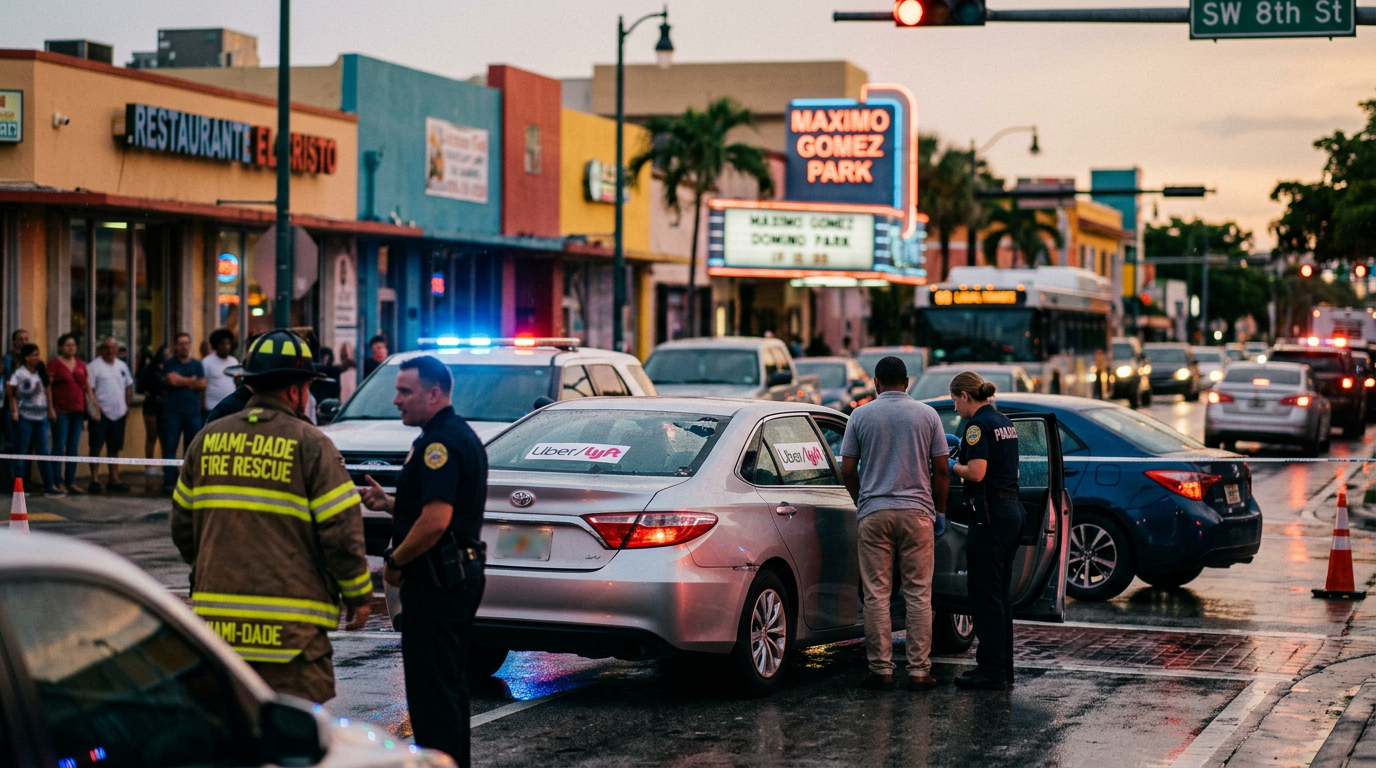
A severe multi-vehicle collision disrupted traffic in Little Havana late Tuesday afternoon as heavy seasonal rains created hazardous conditions along the US-1 corridor. Emergency responders arrived near the intersection of SW 8th Street to find a late-model sedan had lost traction, hydroplaned across three lanes, and struck a concrete divider before rebounding into oncoming traffic. Paramedics treated three individuals at the scene for soft-tissue injuries and lacerations, while one driver was transported to Jackson Memorial Hospital for further evaluation of potential spinal trauma. Initial reports suggest that one of the primary vehicles involved was operating as a rideshare vehicle at the exact moment of the impact.
The complexity of this incident stems from the specific status of the driver involved in the initial loss of control. In Miami, rainy weather frequently leads to hydroplaning, but when a rideshare vehicle is involved, the legal determination of liability becomes significantly more nuanced. Investigators are currently reviewing digital logs to determine if the driver was merely logged into a transportation network application or if they were actively transporting a fare. This distinction is not merely administrative; it dictates the level of insurance coverage available to those injured in the crash, as policy limits shift dramatically depending on the driver's current activity phase.
Under Florida Statute 627.748, insurance coverage for rideshare accidents is divided into three distinct 'periods.' Period 1 occurs when the driver is logged into the app but has not yet accepted a ride request, carrying lower liability limits. Period 2 begins the moment a driver accepts a request, and Period 3 covers the duration when a passenger is physically in the vehicle. Because this crash occurred during a period of high demand, the specific 'stacking' of these insurance layers will determine whether the victim can access the $1 million liability policy mandated for the latter periods or if they are limited to the lower requirements of Period 1.
For victims of such accidents in Little Havana, the path to recovery involves more than just filing a standard claim against an individual’s personal auto policy. Most personal insurance providers specifically exclude coverage for commercial activity, meaning an injured party could find themselves in a coverage gap if the rideshare company’s status is not properly identified. Legal experts emphasize that securing the digital activity log from the tech company is the only way to prove which period was active at the time of the hydroplaning event. Without this data, insurance carriers often default to the lowest possible coverage tier, regardless of the severity of the victim's medical bills or lost wages.
Victims must ensure they do not sign any early settlement offers from a rideshare company's corporate insurer until the specific period of operation has been legally verified. Obtaining the driver's app status at the precise minute of the US-1 collision is the only way to guarantee that the full statutory coverage limits are applied to your medical recovery. Failure to distinguish between these insurance periods often results in victims receiving only a fraction of the compensation they are entitled to under Florida law for their long-term rehabilitation needs.
Little Havana crash hotspots, hospitals & Florida law
Calle Ocho corridor — pedestrian-heavy, narrow lanes, frequent low-speed sideswipes.
Were you involved in a similar Miami crash?
Talk to a Caraccidentmiami.com attorney now — free, confidential, 24/7.
305-244-5883

