
Miami Beach Rainy Day Crash Raises Questions Over Florida Modified Comparative Negligence Laws
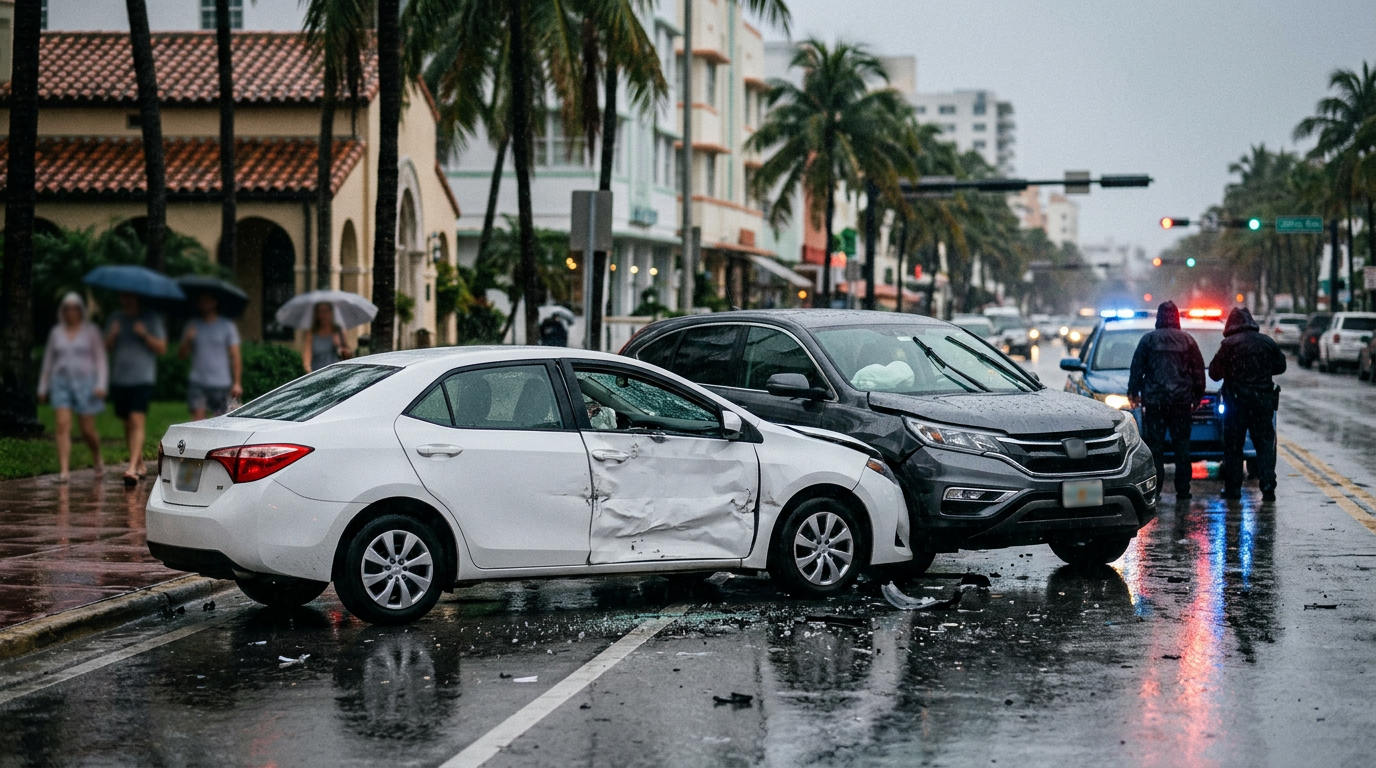
A heavy downpour turned a routine commute into a chaotic scene Tuesday afternoon as a sedan hydroplaned while merging onto US-1 near the MacArthur Causeway. According to initial reports, the driver lost traction on the rain-slicked asphalt, striking a concrete barrier before rebounding into the path of an oncoming SUV. The force of the secondary impact sent both vehicles spinning toward the shoulder, narrowly missing a group of cyclists. Miami Beach Fire Rescue arrived on the scene shortly after the 2:00 PM incident, providing immediate aid to the drivers involved before transporting one individual to Mount Sinai Medical Center for evaluation of neck and back injuries.
Investigators are currently examining whether speed or worn tire treads contributed to the loss of control during the sudden tropical squall. On Florida roadways, especially high-traffic arteries like US-1, rain creates a film of oil and water that significantly reduces friction. When a vehicle hydroplanes, the legal determination of liability often hinges on whether the driver was operating at a speed safe for the weather conditions, regardless of the posted limit. Witnesses noted that visibility was poor at the time of the crash, a factor that local authorities say frequently contributes to high-impact collisions during Miami's unpredictable rainy season.
This incident serves as a timely reminder of the significant changes to Florida's personal injury landscape following the adoption of a modified comparative negligence standard. Under the current framework of Florida Statute Section 768.81, a plaintiff is barred from recovering any damages if they are found to be more than 50 percent at fault for their own injuries. This 51-percent rule represents a major shift from previous years, meaning that an injured party in a hydroplaning accident must prove that the other involved drivers, or perhaps a road maintenance issue, carry the majority of the liability to secure a settlement.
For victims navigating the aftermath of a Miami Beach crash, the allocation of fault is no longer a sliding scale that guarantees some compensation. If a jury determines that your speed or vehicle maintenance made you 51 percent responsible for the hydroplaning event, you could be left with zero recovery for your hospital bills and lost wages. It is vital to document the scene meticulously, capturing photos of road hazards or standing water that may have triggered the loss of control. Seeking a professional evaluation of the crash dynamics is now a necessity to ensure that an insurance company does not unfairly shift the majority of the blame onto you.
Were you involved in a similar Miami crash?
Talk to a Caraccidentmiami.com attorney now — free, confidential, 24/7.
305-244-5883

