Pedestrian Struck in Little Havana School Zone Highlights Florida's Modified Comparative Negligence Standard
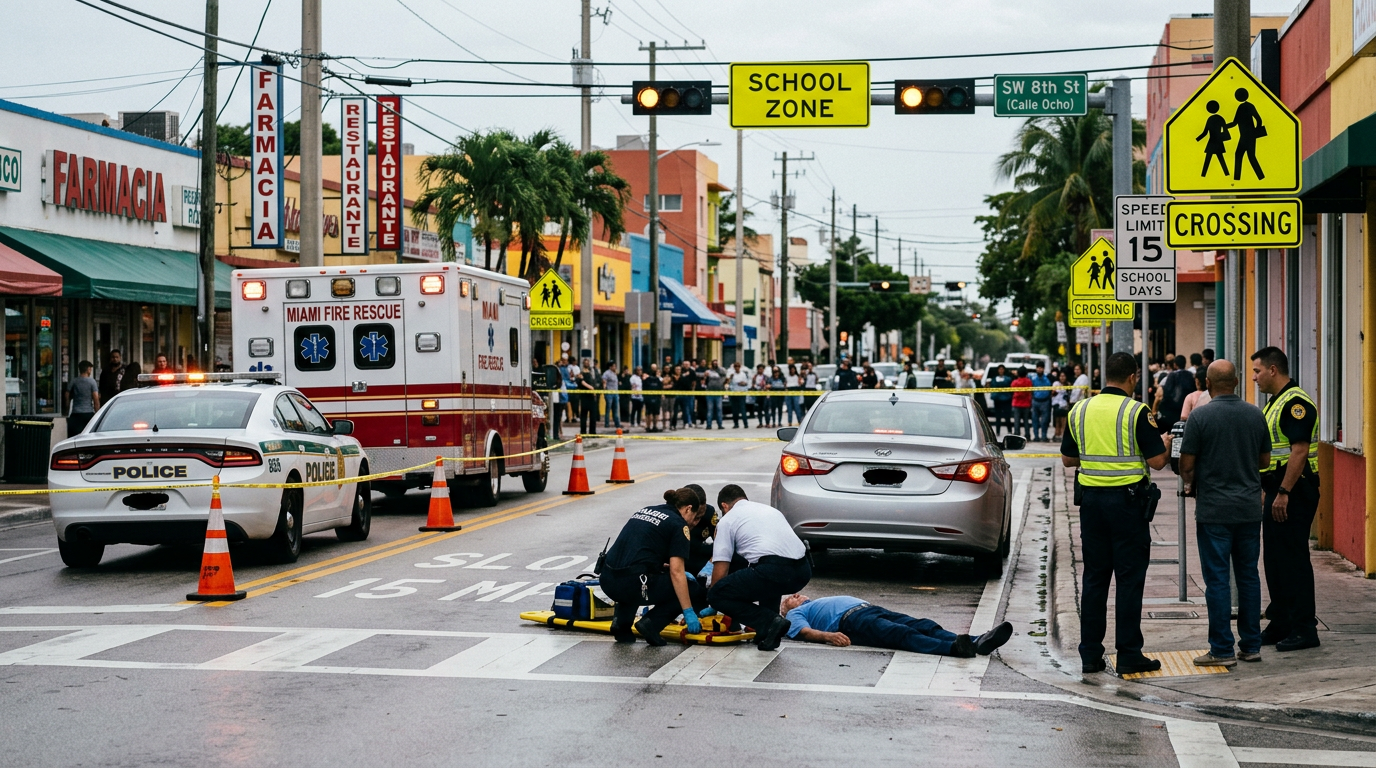
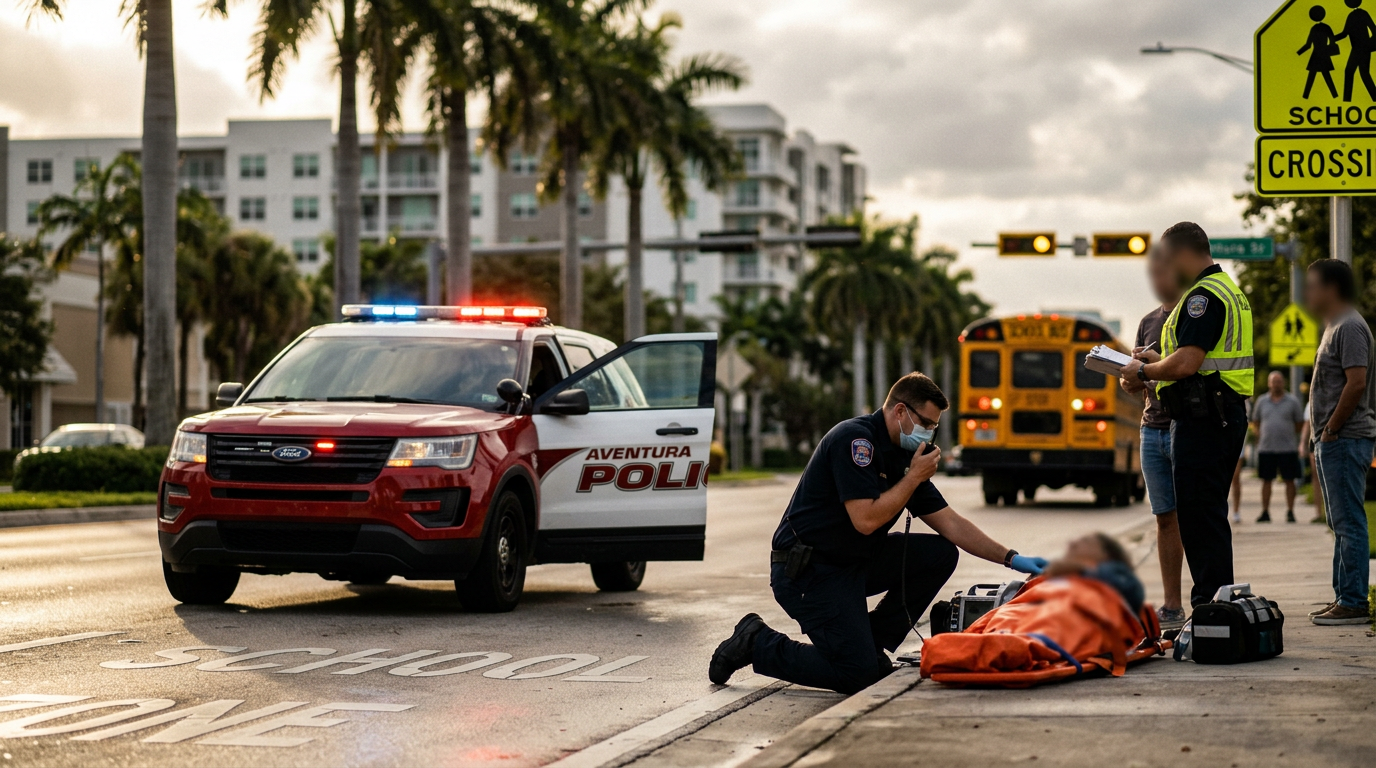
A localized emergency response was triggered Tuesday morning in Little Havana after a vehicle struck a pedestrian within a marked school zone. The incident occurred near the intersection of SW 12th Avenue and SW 7th Street, where witnesses reported a passenger sedan failed to yield while a resident was crossing the street during peak drop-off hours. Miami Fire Rescue arrived on the scene shortly after the 8:15 a.m. collision to provide stabilization. The victim was subsequently transported to the Ryder Trauma Center at Jackson Memorial Hospital with injuries described as significant but stable. Local authorities have cordoned off the area to evaluate visibility conditions and signage compliance at the time of the impact.
Investigators are currently reviewing surveillance footage from nearby businesses to determine the speed of the vehicle and whether the pedestrian was within the crosswalk. In many Little Havana traffic incidents, the initial police report focus primarily on immediate traffic violations, but the long-term legal implications revolve around the specific actions of both the driver and the pedestrian. Forensic evidence such as skid marks and vehicle data recorders will be instrumental in establishing the timeline of the crash. As the neighborhood continues to face high-density traffic, these school-zone safety protocols remain under intense scrutiny by both public safety officials and legal advocates representing the injured.
This incident brings Miami's updated legal framework into sharp focus, specifically under Florida Statute 768.81. As of 2023, Florida has transitioned to a modified comparative negligence system. This means that an injured party in a Little Havana accident is barred from recovering any damages if they are found to be more than 50 percent at fault for their own injuries. This 51 percent rule represents a significant shift from previous laws, making it essential to prove that the driver bears the majority of the responsibility. If a pedestrian is found 30 percent at fault for distracted walking, for example, their total compensation would be reduced by that percentage, but they could still recover the remaining 70 percent.
Attributing fault in a bustling area like Little Havana requires a meticulous examination of the facts to ensure a victim does not lose their right to compensation. Insurance companies often attempt to shift the majority of blame onto the pedestrian to trigger the 51 percent bar and avoid payment entirely. Because recovery hinges on whether the victim's responsibility is 50 percent versus 51 percent, the collection of witness statements and environmental data is a legal necessity. Victims should ensure that all physical evidence from the scene is preserved and that no formal statements regarding fault are made to insurance adjusters before the full investigative results are available to protect their claim under the current statute.
Little Havana crash hotspots, hospitals & Florida law
Calle Ocho corridor — pedestrian-heavy, narrow lanes, frequent low-speed sideswipes.
Were you involved in a similar Miami crash?
Talk to a Caraccidentmiami.com attorney now — free, confidential, 24/7.
305-244-5883