Serious Dolphin Expressway Sideswipe in Coral Gables Highlights Florida No-Fault Serious Injury Thresholds for Victims
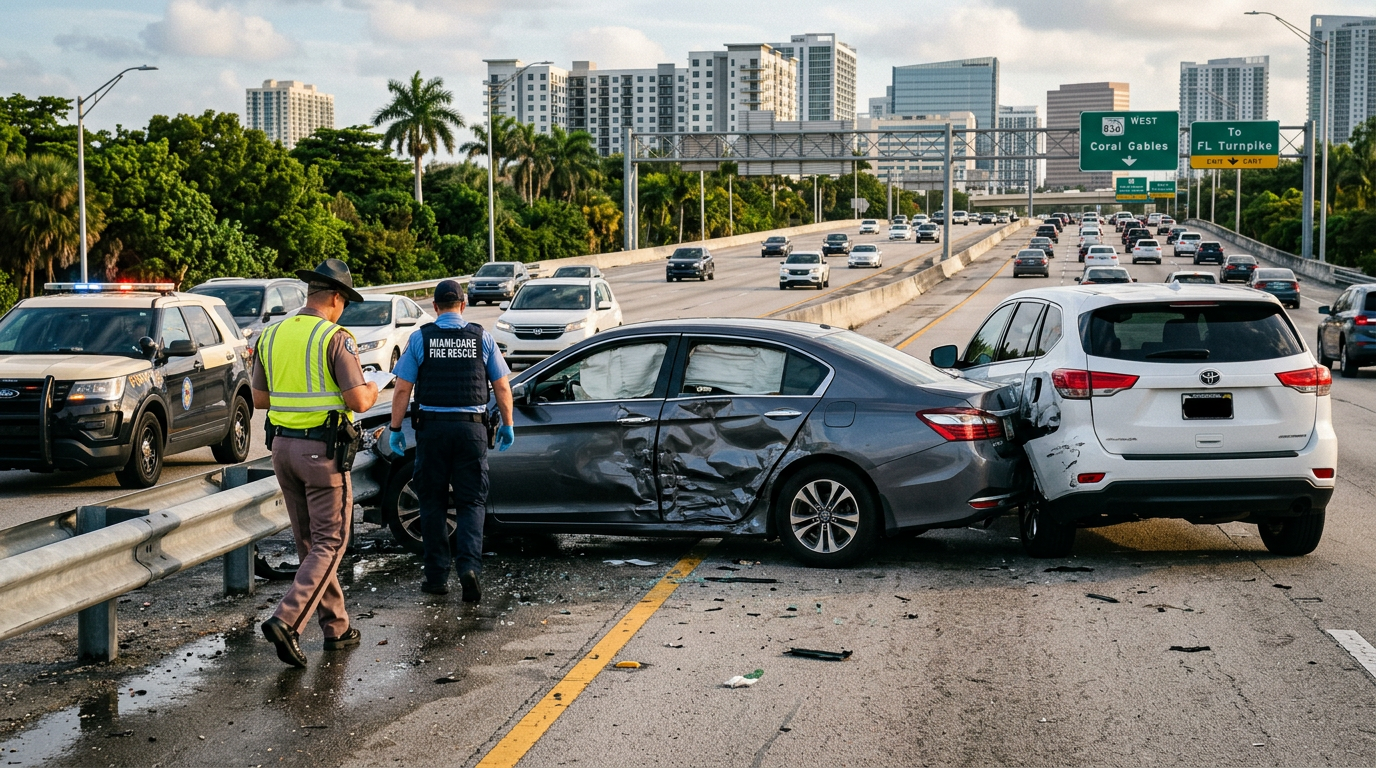
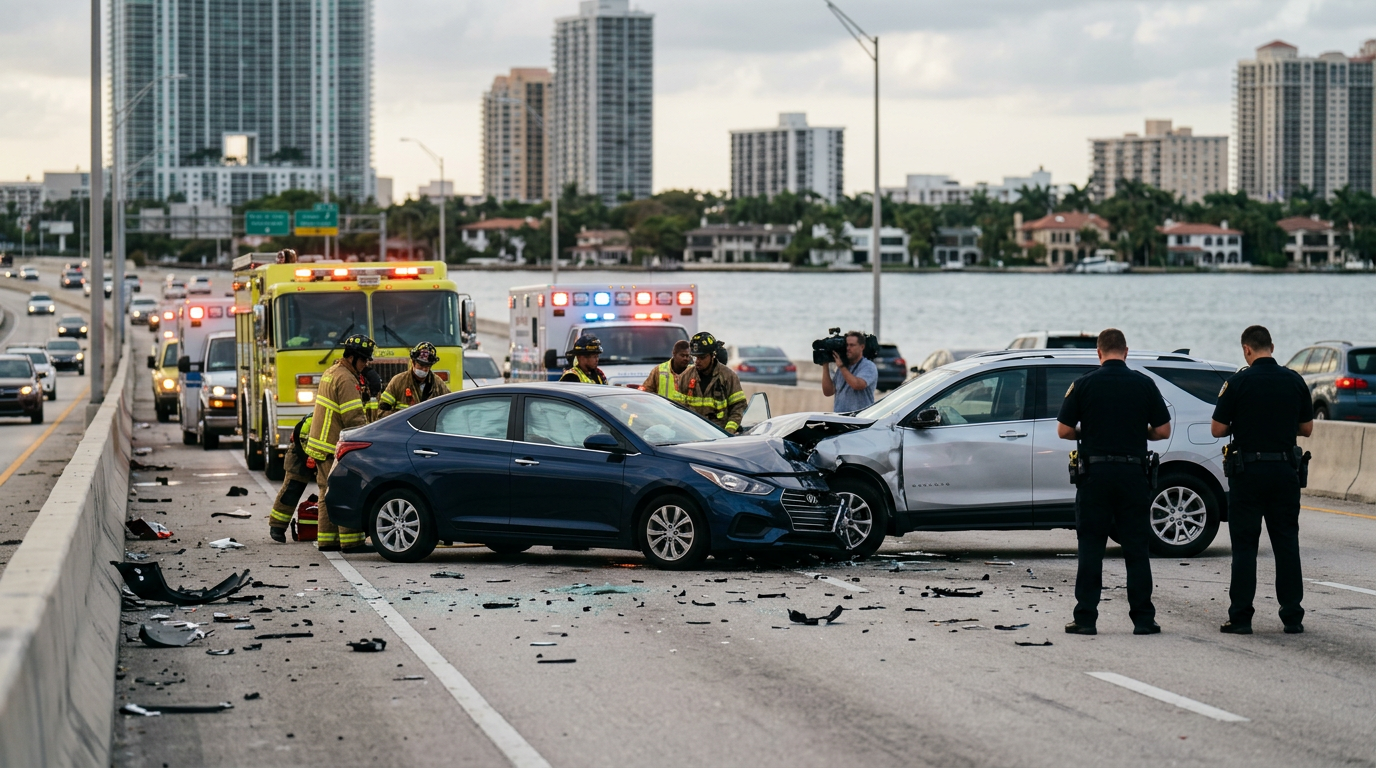
Traffic slowed to a crawl Tuesday morning on the Dolphin Expressway near the Coral Gables city limits following a violent sideswipe collision. According to preliminary reports, a late-model sedan traveling eastbound attempted a high-speed lane change, clipping a mid-sized SUV. The impact sent the SUV spinning across three lanes of traffic before it struck concrete barriers near the LeJeune Road exit. First responders arrived quickly to find the SUV driver trapped, requiring extraction tools to free the victim from the wreckage. Two lanes remained closed for several hours as investigators mapped the debris field, causing significant delays for commuters heading toward Jackson Memorial Hospital and the Miami medical district.
The injured driver was transported to the Ryder Trauma Center with injuries described as significant, including potential spinal trauma and multiple fractures. While the driver who initiated the lane change remained at the scene, the physical toll on the victim appears to be substantial. In the aftermath of such high-speed impacts on South Florida highways, the immediate medical priority is stabilization, but the long-term reality often involves grueling rehabilitation and mounting medical debt. For residents of Coral Gables and surrounding areas, these expressway incidents represent more than just traffic delays; they are life-altering events that demand a clear understanding of state recovery laws.
Under Florida's specialized insurance system, every driver carries Personal Injury Protection (PIP), but these benefits are frequently exhausted within days of a major crash. To seek compensation for pain, suffering, and mental anguish, a victim must meet the statutory threshold outlined in Florida Statutes Section 627.737. This law requires that a plaintiff prove their injury consists of significant and permanent loss of a bodily function, permanent injury within a reasonable degree of medical probability, or significant permanent scarring. Because insurance companies often argue that injuries are temporary to avoid payouts, documenting the progression of a disability from the very first day at the hospital is a critical component of any future legal claim.
Navigating the intersection of no-fault insurance benefits and a formal bodily injury lawsuit requires meticulous medical evidence. Victims should be aware that once the $10,000 PIP limit is reached, the burden of proof shifts to the injured party to demonstrate that their condition meets the legal definition of 'permanent.' Recovering damages for future loss of earning capacity and long-term care depends entirely on how these injuries are classified by medical experts early in the process. Those involved in South Florida wrecks must ensure that their medical providers are documenting the full scope of their limitations to preserve their right to hold the negligent party fully accountable for the total cost of their recovery.
Coral Gables crash hotspots, hospitals & Florida law
Roundabouts, banyan-canopied turns, US-1 spillover — left-turn and rear-end heavy.
Were you involved in a similar Miami crash?
Talk to a Caraccidentmiami.com attorney now — free, confidential, 24/7.
305-244-5883