
Serious Left-Turn Crash in Coral Gables Raises Complex Questions Regarding Rideshare Insurance Periods
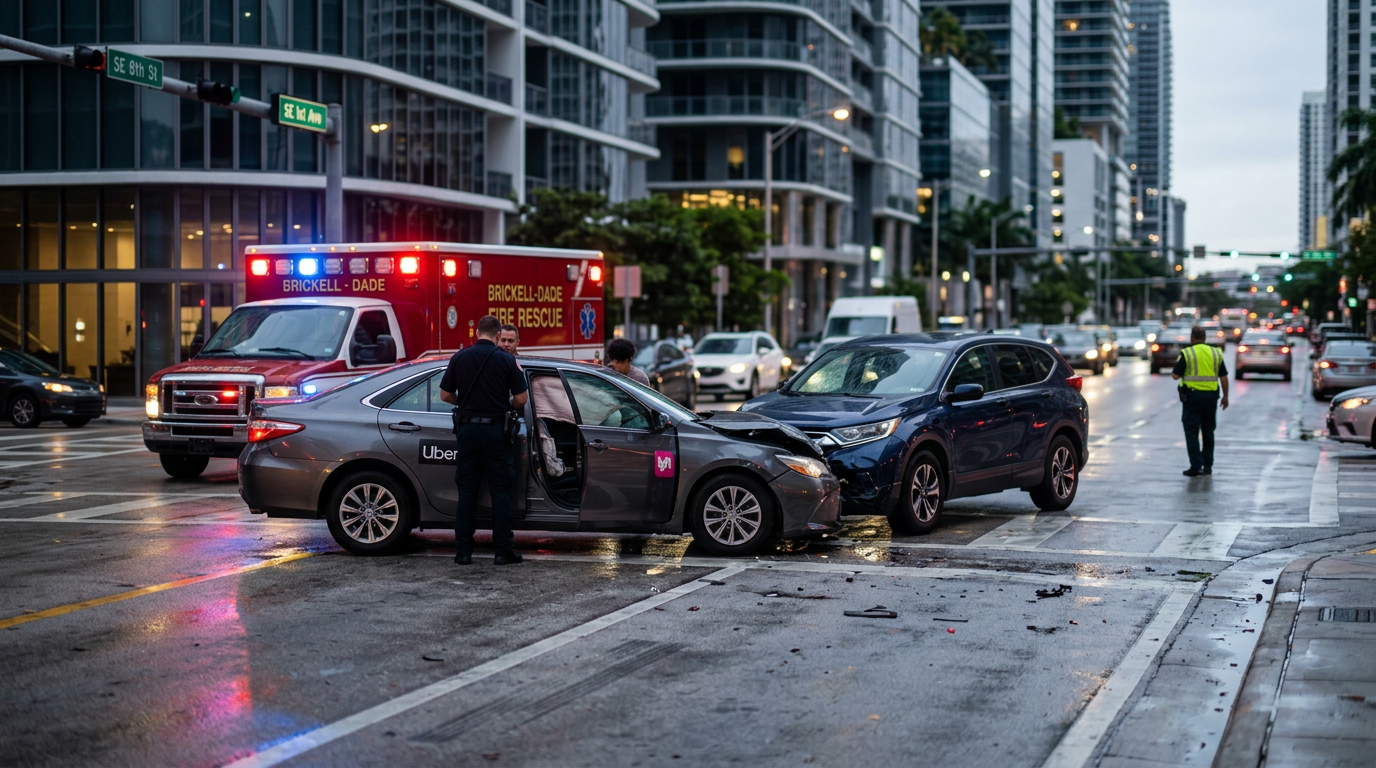
Late Tuesday evening, a late-model sedan traveling through the intersection of LeJeune Road and Miracle Mile was struck by an oncoming vehicle attempting a sharp left-turn. The force of the impact redirected both vehicles toward the sidewalk, narrowly missing pedestrians. Miami-Dade Fire Rescue arrived shortly after the 9:00 PM call, treating one driver for suspected spinal injuries before transporting them to Jackson Memorial Hospital for emergency evaluation. While the physical wreckage was cleared within hours, the legal complexities regarding the at-fault driver's employment status at the time of the crash are just beginning to surface.
Initial reports indicate the driver who initiated the turn was operating for a major rideshare platform. This detail is paramount under Florida law, as the available insurance recovery depends entirely on the driver's digital status during the impact. In Miami's congested traffic corridors, these accidents occur frequently, yet many victims are unaware that a driver’s personal insurance policy often denies coverage if the vehicle was being used for commercial purposes. Consequently, the victim must look toward the rideshare company's corporate policy, which fluctuates in value based on specific technical 'periods' defined by the app's state.
Legal recovery in these instances is governed by Florida Statute Section 627.748, which dictates a tiered insurance structure. Period 1 occurs when the app is on but no ride is accepted, offering lower liability limits. Period 2 begins when a ride is accepted, and Period 3 covers the duration when a passenger is physically in the vehicle. The latter two periods typically provide up to $1 million in third-party liability coverage. Because the driver in this Coral Gables incident was reportedly between fares, determining whether they were actively logged into the network is the difference between a capped claim and full financial restitution for the injured party.
For the injured Brickell resident, the path to recovery involves more than just medical healing; it requires an immediate forensic digital audit of the at-fault driver’s activity logs. Rideshare companies frequently attempt to classify drivers in Period 1 to limit their corporate exposure, even if the driver was actively navigating toward a new request. Victims should ensure that all electronic evidence, including GPS pings and app timestamps, is preserved immediately following a crash to ensure they are not unjustly denied the higher policy limits mandated for active commercial transit. Documentation of the driver’s 'Period' status is the single most important factor in securing a settlement that covers long-term rehabilitation costs.
Brickell crash hotspots, hospitals & Florida law
Miami's downtown financial corridor — dense traffic, constant construction, rideshare-heavy.
Were you involved in a similar Miami crash?
Talk to a Caraccidentmiami.com attorney now — free, confidential, 24/7.
305-244-5883

