Serious Left-Turn Crash Near Key Biscayne Highlights Florida Modified Comparative Negligence Laws

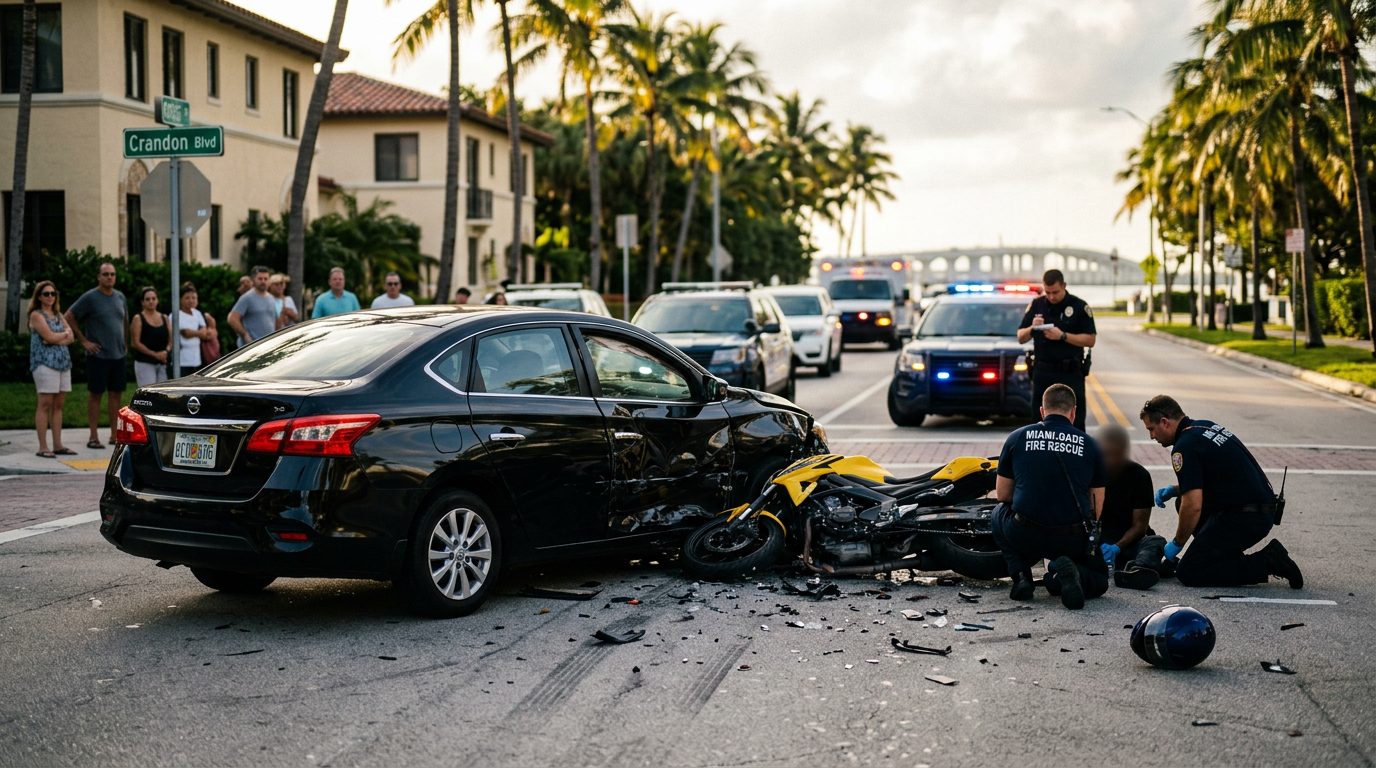
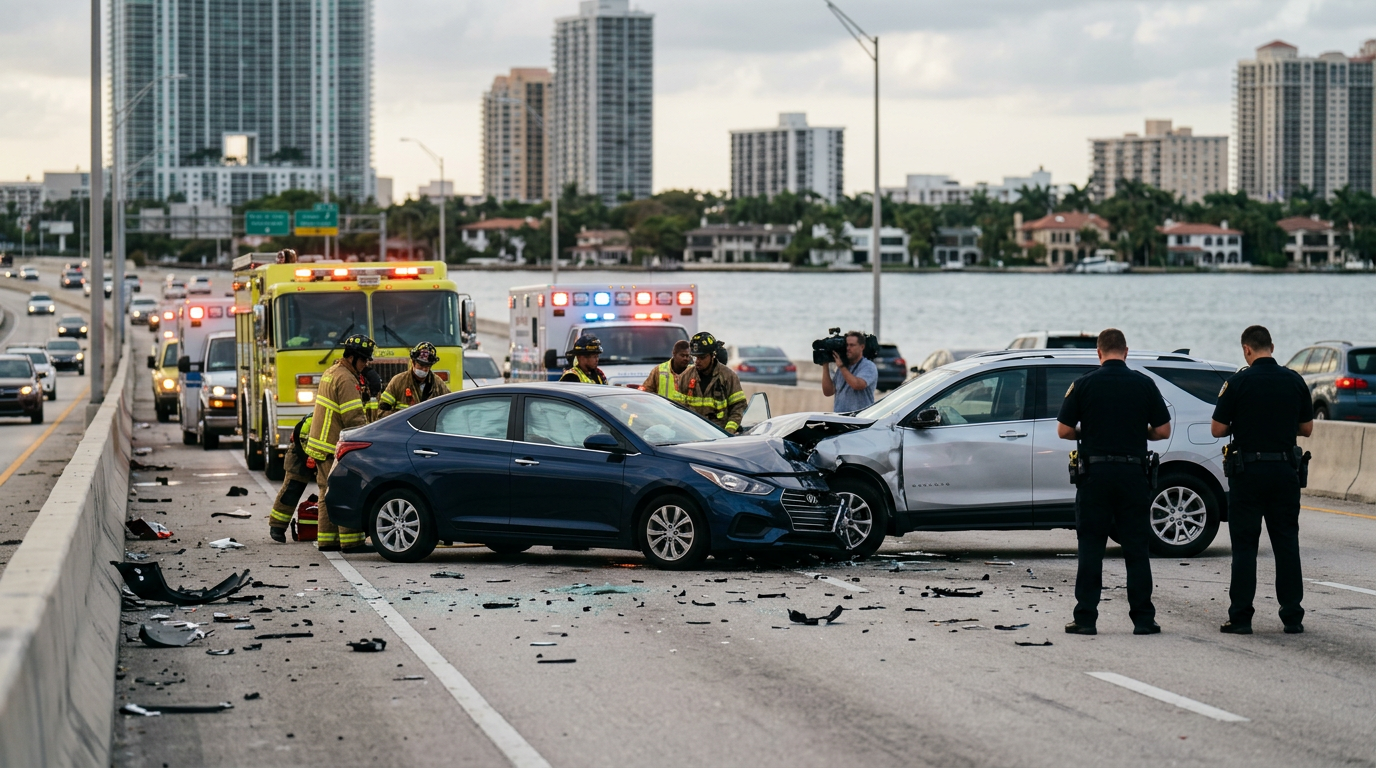
A severe traffic accident occurred Tuesday evening at a busy intersection just outside Key Biscayne, involving a sedan attempting to navigate a left turn onto the Rickenbacker Causeway. Witnesses reported that a westbound SUV struck the sedan as it crossed the path of oncoming traffic, resulting in significant front-end damage and closing several lanes for over two hours. Emergency responders from Miami Fire Rescue arrived on the scene to treat two adults for non-life-threatening injuries, eventually transporting them to Jackson Memorial Hospital for further observation. Preliminary reports suggest that while one driver failed to yield the right-of-way, other factors such as speed and visibility may have contributed to the impact.
Investigating officers spent the evening documenting skid marks and debris patterns to determine the sequence of events leading up to the crash. In any Miami-Dade County intersection collision involving a left-hand turn, the law generally presumes the turning driver is at fault for failing to clear the roadway before proceeding. However, modern investigations often reveal that the driver proceeding straight may have been distracted or traveling above the posted limit, complicating the standard determination of liability. This nuance is critical for victims who find themselves partially blamed for an incident that has resulted in high medical bills and lost wages.
Under Florida's recently updated legal framework, the state has transitioned to a modified comparative negligence system under Florida Statute 768.81. This rule dictates that any person found more than 50 percent at fault for an accident is legally barred from recovering any damages from other parties involved. This 51-percent bar represents a major shift in how local courts handle claims. If a jury determines an injured party is 51 percent responsible for the collision near the Causeway, they may receive nothing, whereas a 50 percent fault rating would still allow for a recovery reduced by their own level of negligence.
For those navigating the aftermath of a collision in the Coral Gables or Key Biscayne area, the shift to a modified comparative negligence standard means that the initial police report and evidence collection are more vital than ever. Insurance companies frequently attempt to push a victim’s fault percentage above the 50 percent threshold to avoid paying out claims entirely. Protecting a potential recovery requires a meticulous investigation into traffic light sequences, dashcam footage, and black-box data to ensure that the blame is distributed accurately and that an injured resident's right to compensation is not unfairly extinguished by the defense.
Were you involved in a similar Miami crash?
Talk to a Caraccidentmiami.com attorney now — free, confidential, 24/7.
305-244-5883