Serious Wynwood Rideshare Collision Highlights Complex Multi-Tiered Insurance Coverage Challenges for Victims
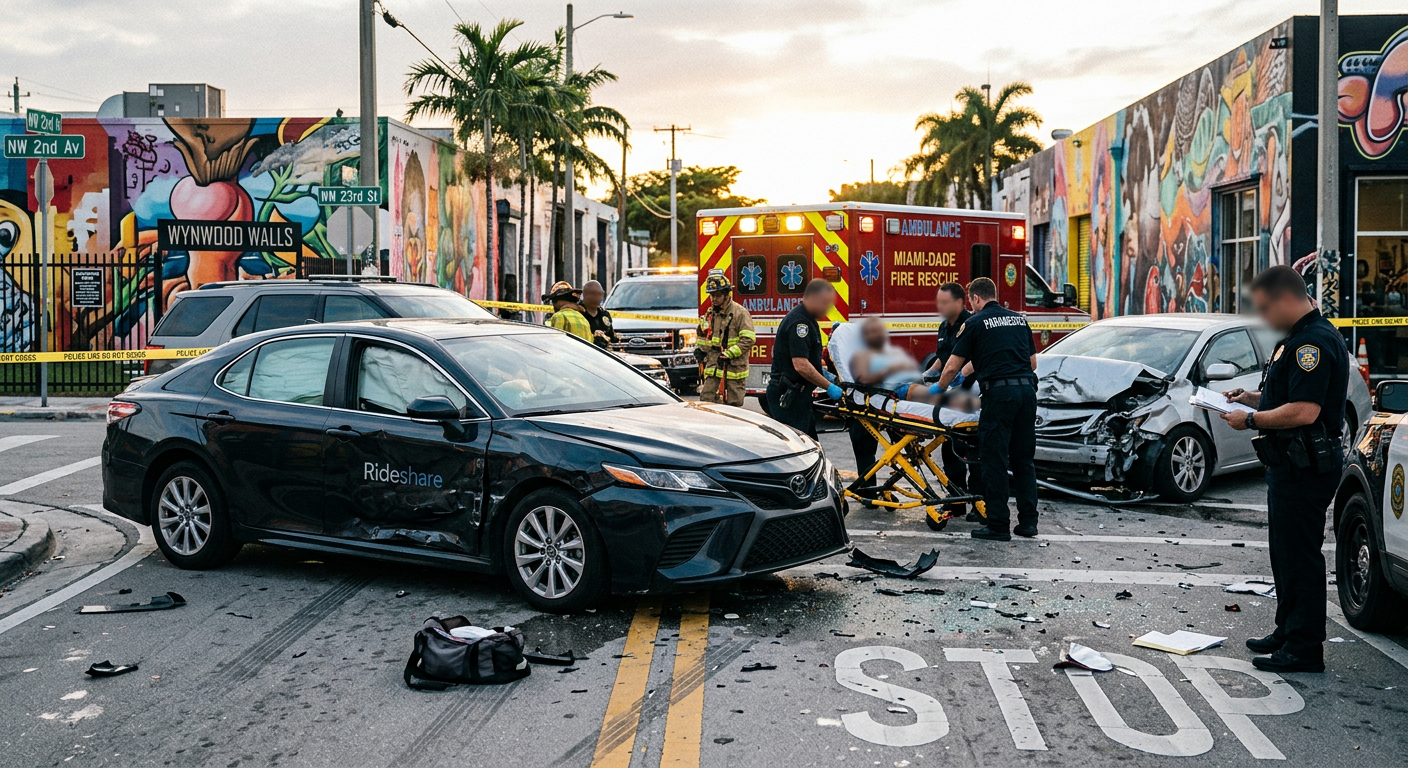
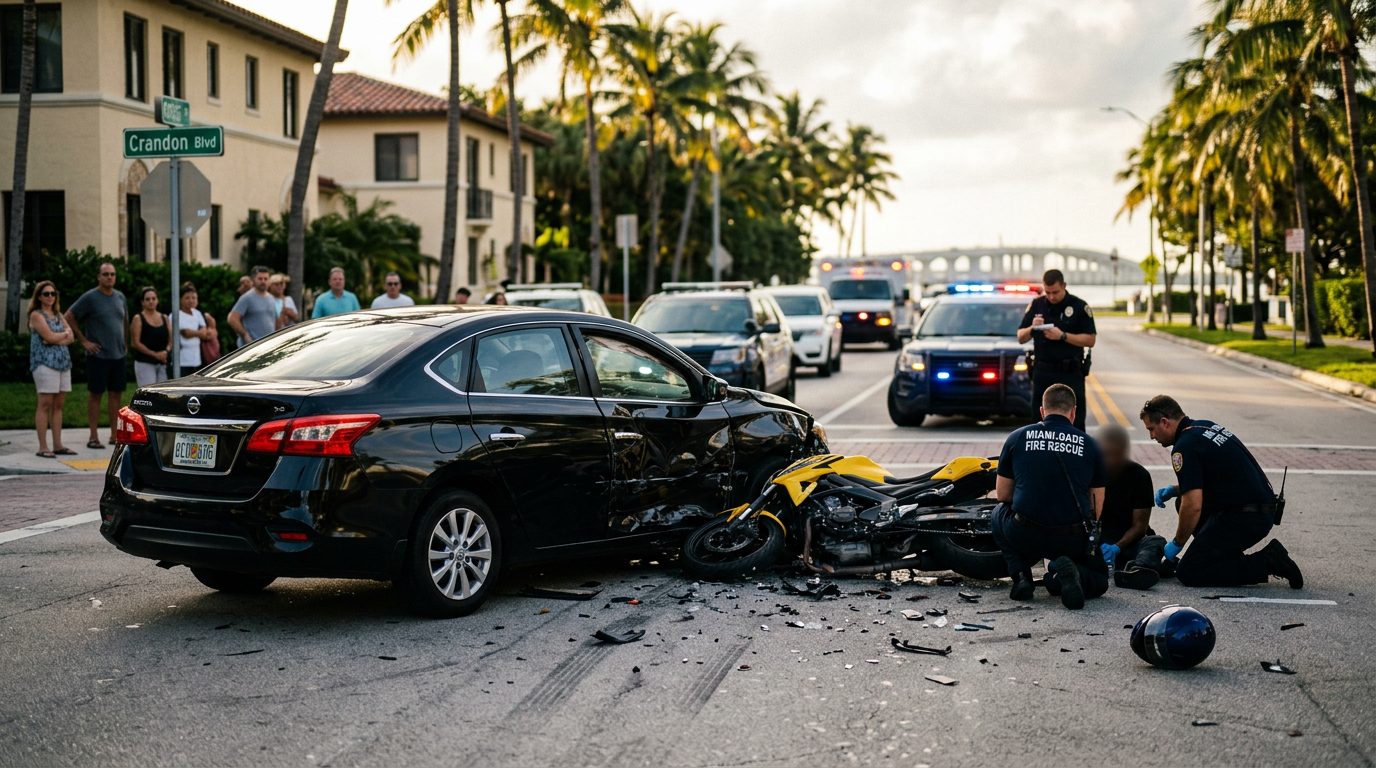
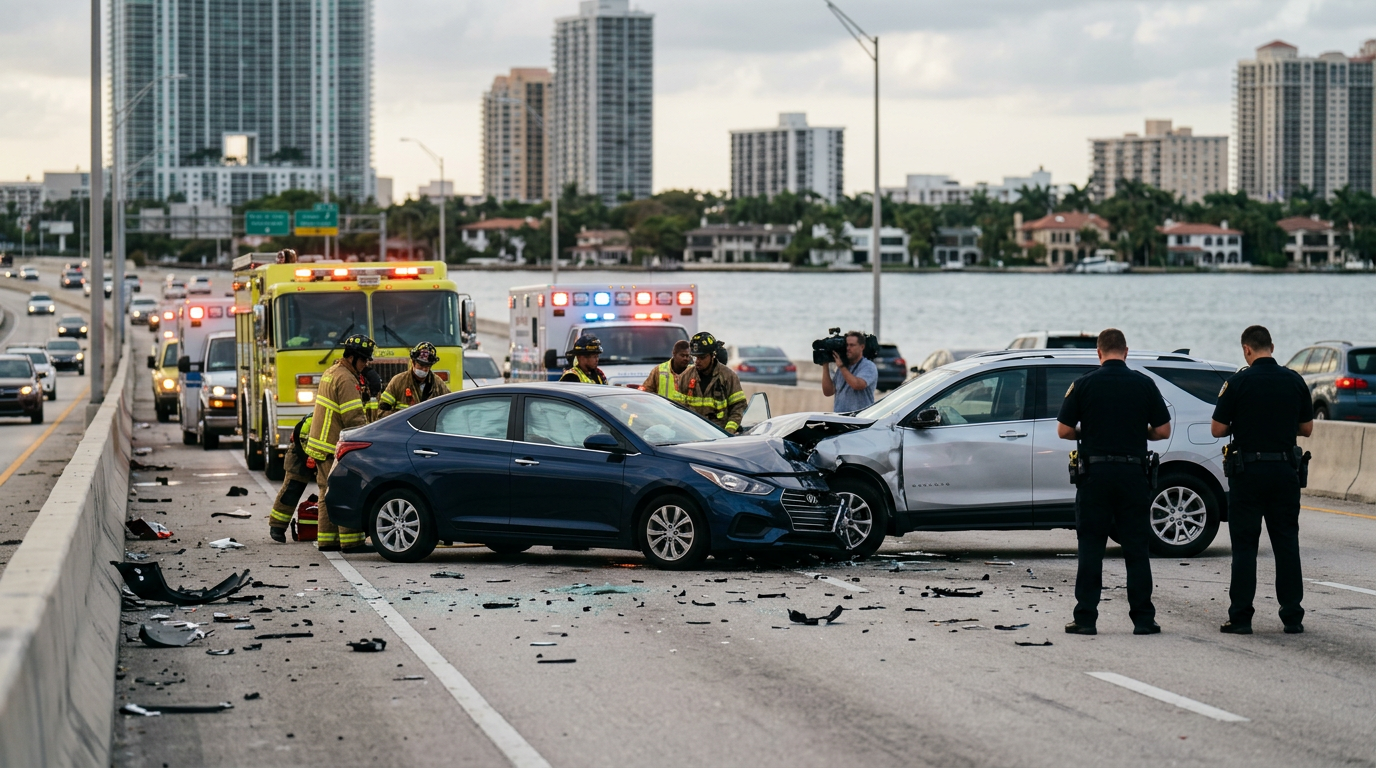
A violent T-bone collision occurred late Tuesday evening at the intersection of Northwest 2nd Avenue and 23rd Street in Wynwood. Witnesses reported that a silver sedan operating for a major rideshare platform was traveling northbound when it was struck by a distracted driver who failed to yield at a flashing signal. The impact sent the rideshare vehicle into a concrete pillar, trapping the passenger inside. Miami Fire Rescue arrived quickly to extricate the victim and transport them to the Ryder Trauma Center at Jackson Memorial Hospital for treatment of significant head and neck injuries. While the scene was cleared within hours, the legal process for the injured passenger is just beginning as investigators look into the driver's digital logs.
Liability in Miami rideshare accidents is uniquely complex compared to standard passenger vehicle claims. Under Florida Law and the specific regulatory framework for Transportation Network Companies (TNCs), the amount of available insurance coverage depends entirely on which 'Period' the driver was in at the moment of impact. If the driver had the app off, only their private policy applies. If they were logged in but awaiting a request (Period 1), coverage limits are lower. However, because this specific driver had an active passenger in the rear seat, the accident falls into Period 3. In this stage, Florida requires the TNC to provide at least $1 million in primary third-party liability coverage to protect victims from catastrophic financial loss.
Despite these high policy limits, recovering full compensation is rarely straightforward. Insurance carriers often dispute whether the driver was on the most efficient route or if the victim had pre-existing conditions that contributed to their current pain and suffering. In high-traffic districts like Wynwood, where pedestrians and heavy construction often complicate driving maneuvers, determining fault is essential to unlocking these tiered policies. Without a clear digital trail establishing the driver's exact status at the time of the crash, victims may find themselves fighting against a denial of coverage from both the driver’s personal insurer and the corporate rideshare carrier, leaving no source for medical bill reimbursement.
Navigating these insurance stacks requires immediate action to preserve digital evidence from the rideshare application. Victims must ensure that the specific period of operation is documented in the official crash report to trigger the $1 million coverage threshold rather than the lower limits found in Period 1. It is also vital to undergo a full medical evaluation within 14 days to comply with Florida’s Personal Injury Protection requirements, regardless of the rideshare company's liability. Securing the driver's log data is the only reliable way to prove which insurance tier applies, ensuring that the burden of massive medical costs near the Wynwood area falls on the corporate insurer rather than the injured party.
Wynwood crash hotspots, hospitals & Florida law
Nightlife district — rideshare T-bones, intoxicated-driver crashes, scooter strikes.
Were you involved in a similar Miami crash?
Talk to a Caraccidentmiami.com attorney now — free, confidential, 24/7.
305-244-5883