
Wynwood I-95 Multi-Car Crash Highlights New Florida Comparative Negligence Limits for Injured Drivers
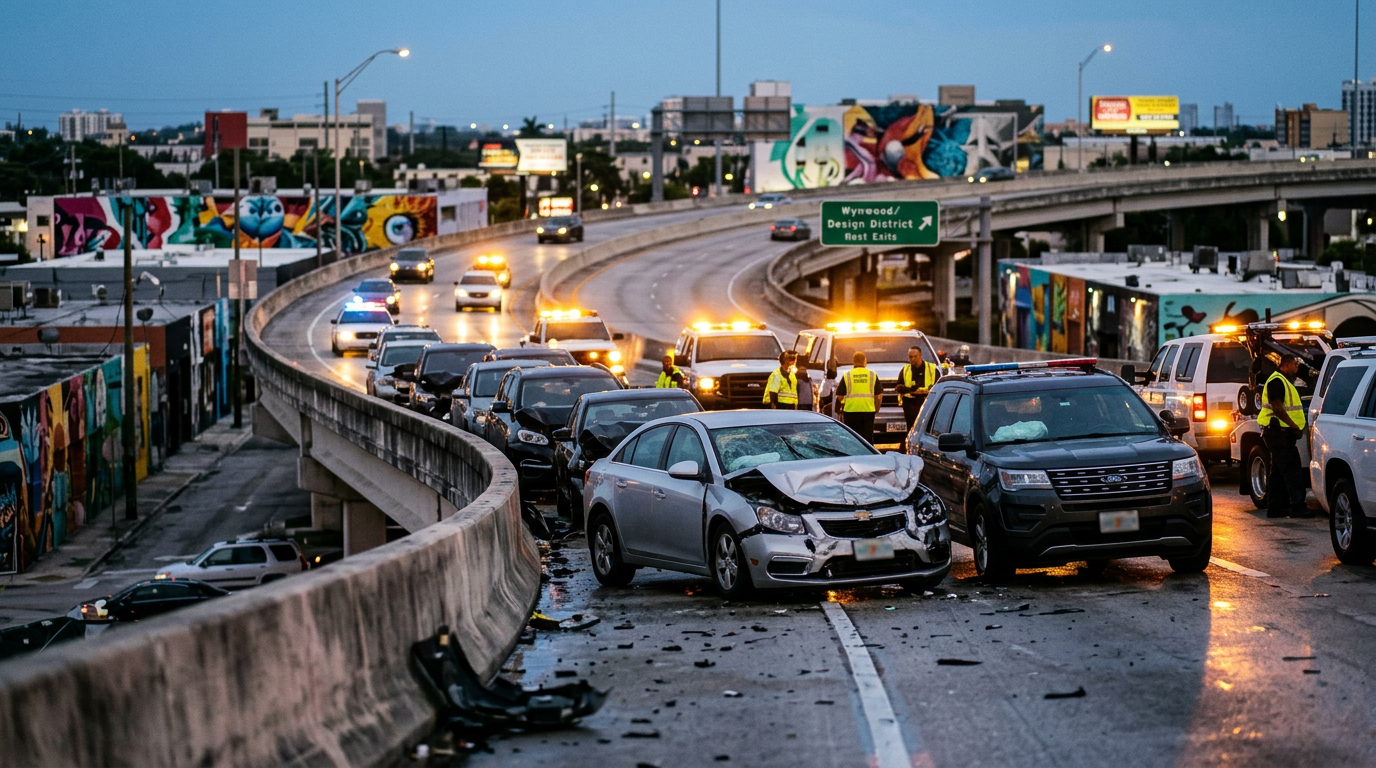
A chain-reaction collision involving four vehicles disrupted the evening commute near the Wynwood exit on Interstate 95, causing significant injuries and long delays. Local emergency responders arrived at the scene where a sedan, reportedly traveling at highway speeds, failed to slow down for merging traffic, striking a SUV from behind and pushing it into two other vehicles. Paramedics transported two individuals to Jackson Memorial Hospital’s Ryder Trauma Center with injuries described as serious but stable. The wreckage blocked three southbound lanes for several hours as investigators worked to clear the debris and interview witnesses regarding the sequence of the impact.
While the initial cause appeared to be a simple rear-end collision, the legal landscape surrounding such incidents in Miami has recently undergone a major shift. Florida has transitioned from a pure comparative negligence system to a modified comparative negligence standard. Under the current legal framework, the way fault is apportioned between the drivers involved can entirely determine whether a victim receives a settlement or walks away with nothing. This change makes the immediate collection of evidence at the scene, including dashboard camera footage and eyewitness accounts from the Wynwood area, more critical than it has ever been for those seeking to protect their financial future.
The core of this legal shift is found in Florida Statute Section 768.81, which now dictates that if a plaintiff is found to be more than 50 percent at fault for their own injuries, they are barred from recovering any damages from other negligent parties. In a multi-car pile-up on I-95, insurance companies often attempt to shift a portion of the blame onto every driver involved, citing minor infractions like lane-splitting or slightly exceeded speed limits. If an adjuster can successfully argue that your contribution to the crash crosses that 51 percent threshold, the law prevents you from collecting compensation for medical bills, lost wages, or pain and suffering.
For residents navigating the high-traffic corridors of Wynwood and Downtown Miami, understanding these new limits is essential for post-accident recovery. Because the difference between 49 percent and 51 percent fault is the difference between a successful claim and a total loss, victims must be cautious when speaking to insurance adjusters who are trained to elicit statements that imply shared liability. The most effective way to safeguard a claim is to document the scene thoroughly and consult with a professional who understands how to counter aggressive defense tactics that aim to exploit these specific statutory thresholds. Protecting your right to recovery requires a strategic approach to proving the other driver's primary negligence.
Wynwood crash hotspots, hospitals & Florida law
Nightlife district — rideshare T-bones, intoxicated-driver crashes, scooter strikes.
Were you involved in a similar Miami crash?
Talk to a Caraccidentmiami.com attorney now — free, confidential, 24/7.
305-244-5883

