
Wynwood Pedestrian Struck in Marked Crosswalk Highlights Florida's New Modified Comparative Negligence Standards
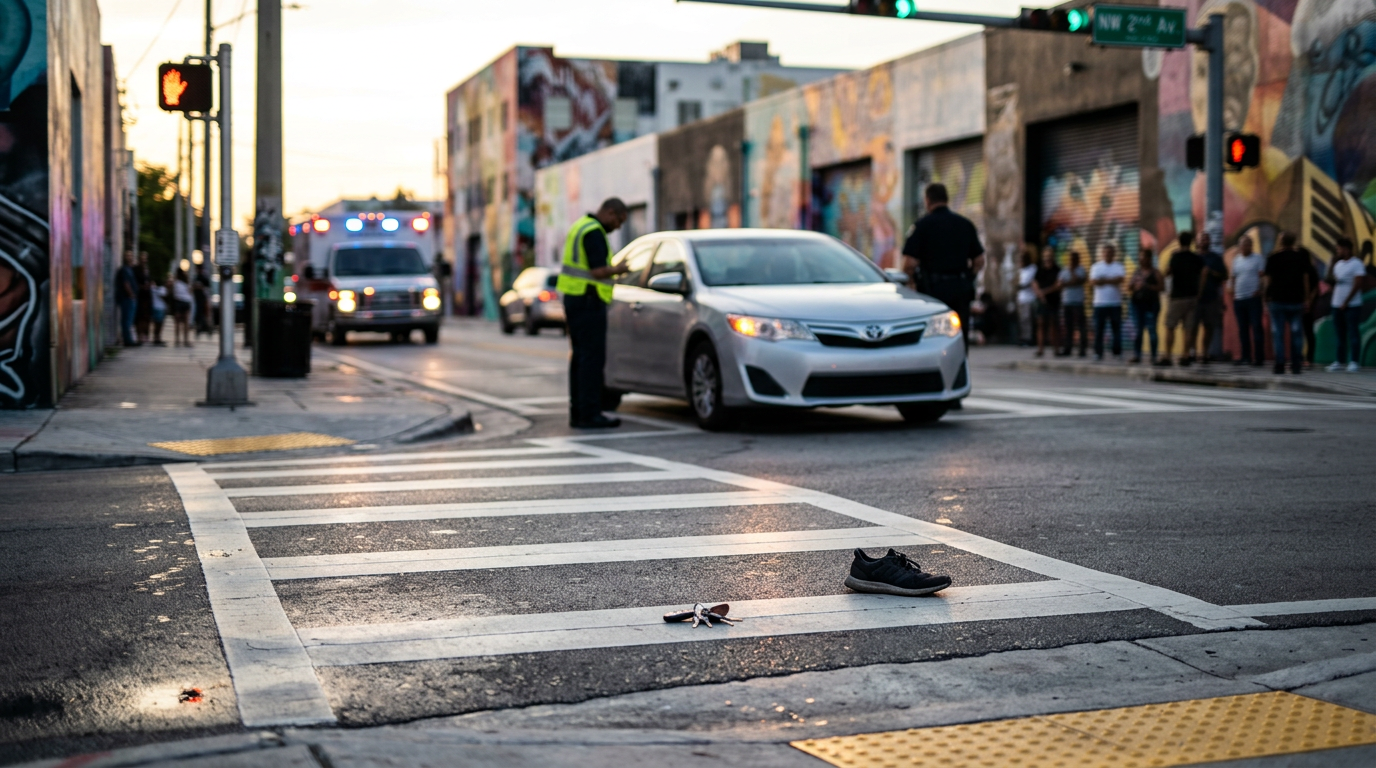
A chaotic scene unfolded late Friday evening in the Wynwood Arts District after a driver struck a pedestrian attempting to cross Northwest 2nd Avenue near a busy gallery row. Local witnesses reported that the vehicle failed to yield at a clearly marked crosswalk, sending the victim several feet onto the pavement. City of Miami Fire Rescue arrived quickly, stabilizing the injured party before transporting them to the Ryder Trauma Center at Jackson Memorial Hospital. The victim reportedly sustained significant lower-extremity fractures and a possible concussion, though they remain in stable condition as of Saturday morning.
The intersection where the incident occurred is known for heavy foot traffic and frequent congestion, particularly during weekend nightlife hours. Preliminary statements from the scene suggest that the driver may have been distracted by a mobile device, a factor that often complicates liability assessments in Miami personal injury cases. While police issued a citation for failure to yield to a pedestrian, the legal path forward for the victim involves more than just a police report. In the aftermath of such events, the determination of fault becomes the central pillar of any subsequent insurance claim or civil litigation.
Under Florida's recently updated statutes, specifically the shift to a modified comparative negligence system under Florida Statute 768.81, the legal stakes for Miami accident victims have changed significantly. Unlike the previous pure comparative negligence standard, the current law now prohibits a plaintiff from recovering any damages if they are found to be more than 50 percent at fault for their own injuries. This 51 percent bar means that if an insurance company can prove a pedestrian was not paying attention or stepped out abruptly, the victim could be entirely disqualified from receiving compensation for their medical bills and lost wages.
This shift in the law underscores the necessity of professional evidence gathering immediately following a crash. Determining whether a pedestrian was 49 percent at fault versus 51 percent at fault is now the difference between a successful settlement and a total loss of legal recourse. Victims should prioritize securing high-resolution photos of the crosswalk, obtaining contact information from surrounding business owners who may have surveillance footage, and avoiding any statements to insurance adjusters that could be construed as an admission of partial fault before their legal rights are fully evaluated by an advocate.
Wynwood crash hotspots, hospitals & Florida law
Nightlife district — rideshare T-bones, intoxicated-driver crashes, scooter strikes.
Were you involved in a similar Miami crash?
Talk to a Caraccidentmiami.com attorney now — free, confidential, 24/7.
305-244-5883

