
Wynwood Resident Injured in Rickenbacker Causeway Crash Amid Shifts in Florida Modified Comparative Negligence Laws
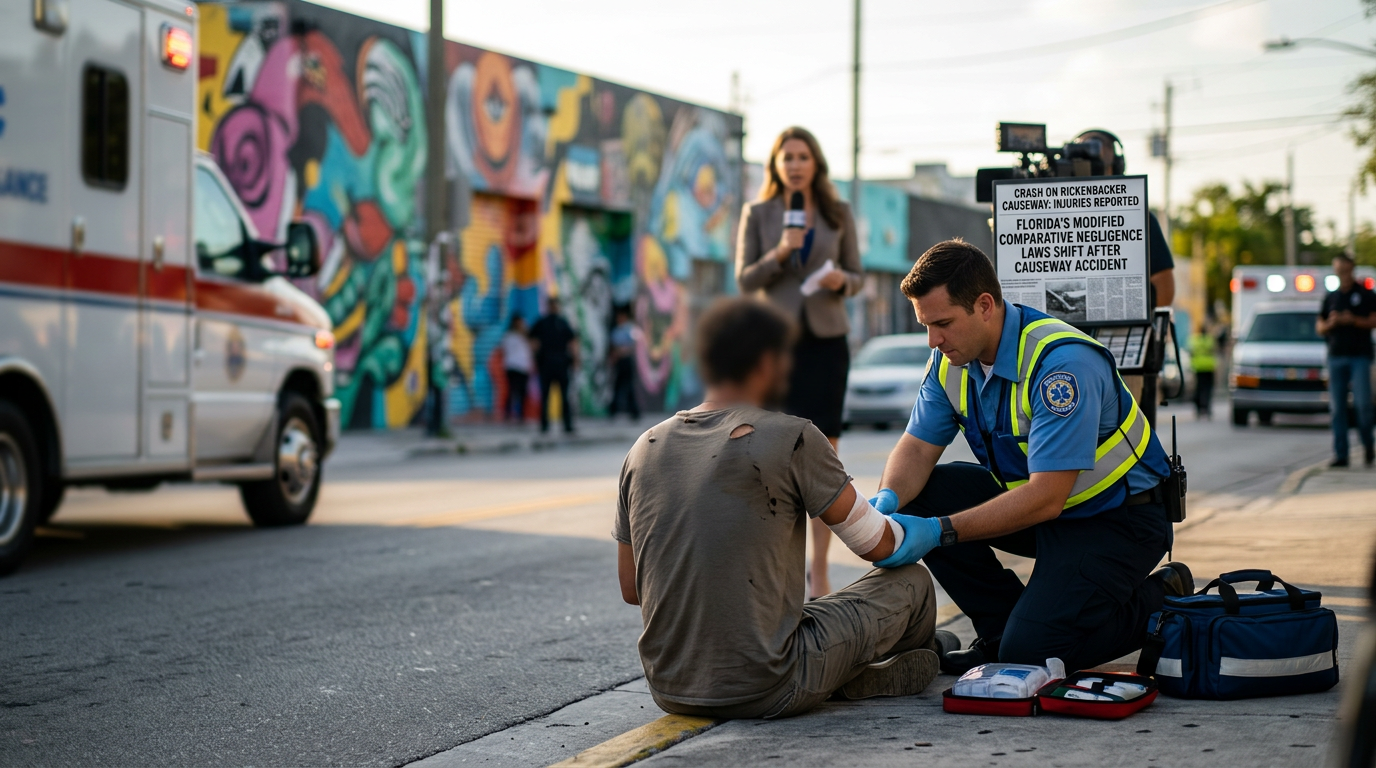
A weekend trip across the Rickenbacker Causeway turned tragic for a Wynwood motorcyclist when a passenger vehicle reportedly veered into the rider’s lane near the William Powell Bridge. The impact ejected the motorcyclist, who was subsequently transported by City of Miami Fire Rescue to the Ryder Trauma Center at Jackson Memorial Hospital. While the rider is currently listed in stable condition, the long-term recovery for spinal and orthopedic injuries often involves months of rehabilitation and significant loss of income. Preliminary reports suggest the driver of the sedan may have been distracted by a mobile device, though investigations by local traffic homicide units remain ongoing to determine the exact sequence of events.
For residents of neighborhoods like Wynwood who frequently commute via two-wheeled transport, this incident underscores the severe physical vulnerability of motorcyclists on Miami’s high-speed causeways. The legal landscape for these victims changed significantly following recent legislative updates to how fault is assessed in the courtroom. Under the new standards, the ability to secure a settlement is no longer guaranteed simply by proving the other driver was careless. Modern litigation now requires a meticulous reconstruction of the accident to ensure the victim is not unfairly barred from the compensation they need to cover their mounting medical expenses.
The core of this legal challenge lies in Florida’s modified comparative negligence rule, codified under Florida Statute 768.81. Historically, Florida followed a pure comparative negligence model, but the law now dictates that if a plaintiff is found to be more than 50 percent at fault for their own injuries, they are completely barred from recovering any damages from the other party. In the context of a Rickenbacker Causeway crash, insurance adjusters often attempt to assign a high percentage of blame to motorcyclists for lane filtering or speed, even when a larger vehicle initiated the collision. If an investigator assigns a rider 51 percent of the fault, that rider receives nothing.
Proving that a victim’s share of negligence remains below that 51 percent threshold is now the most critical component of a personal injury claim in Miami. This involves securing forensic data from vehicle black boxes, obtaining clear surveillance footage from causeway cameras, and gathering witness statements before memories fade. For those navigating the aftermath of a catastrophic wreck, the priority must be on documenting the scene and avoiding recorded statements with insurance adjusters who may use leading questions to establish a victim's fault. Protecting your right to recovery requires establishing the defendant's primary liability before the statutory window for filing a claim expires.
Wynwood crash hotspots, hospitals & Florida law
Nightlife district — rideshare T-bones, intoxicated-driver crashes, scooter strikes.
Were you involved in a similar Miami crash?
Talk to a Caraccidentmiami.com attorney now — free, confidential, 24/7.
305-244-5883

