
Wynwood I-95 Rush Hour Chain Reaction Crash Raises Critical Comparative Negligence Questions for Victims
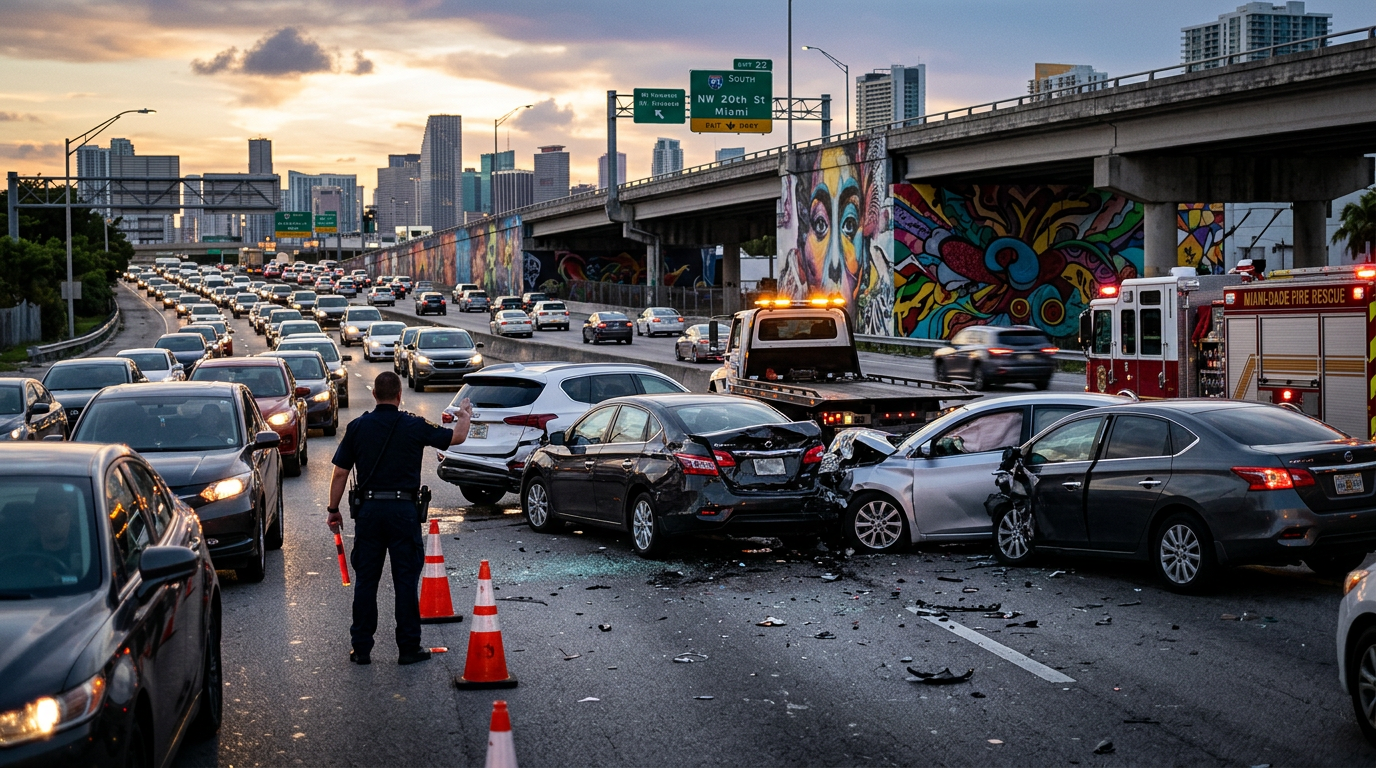
A chaotic morning commute turned into a severe emergency on Thursday when a chain-reaction collision involving five vehicles shut down several lanes of I-95 near the Wynwood exit. According to initial reports, the pile-up began when a northbound SUV swerved to avoid slowing traffic, triggering a series of high-speed impacts that sent three motorists to Jackson Memorial Hospital. First responders worked for nearly an hour to extricate one driver trapped in their vehicle, while Florida Highway Patrol redirected the morning rush through the side streets of Midtown and the Design District.
The aftermath of a highway pile-up in Miami often leads to a complex web of insurance claims where every driver's actions are scrutinized under a microscope. In these scenarios, the physical recovery is only the first hurdle; the legal battle to determine who is responsible for the mounting medical bills and lost wages can be equally grueling. Because multiple impacts occurred in rapid succession, investigators must now piece together telemetry data and witness statements to establish the exact sequence of events that led to the devastating multi-car stack.
Victims should be aware that their ability to recover damages is now governed by Florida’s modified comparative negligence standard under Florida Statute Section 768.81. This 2023 legal shift represents a significant change for Miami drivers. Under this rule, a plaintiff is barred from recovering any damages if they are found to be more than 50 percent at fault for the incident. This 'greater than 50 percent' threshold means that even a minor mistake by a victim, if interpreted as the primary cause by a jury, could result in a total loss of compensation rights.
Insurance companies frequently use the chaos of a multi-car accident to shift blame onto injured parties, hoping to push their fault percentage above the 51 percent mark to avoid payment entirely. For those injured in the Wynwood corridor, proving that another driver was the majority cause of the crash is the only way to secure the funds needed for long-term rehabilitation. Protecting your right to recovery requires gathering immediate evidence, such as dashcam footage and independent witness accounts, to ensure that the blame is placed accurately on the negligent parties who initiated the collision.
Wynwood crash hotspots, hospitals & Florida law
Nightlife district — rideshare T-bones, intoxicated-driver crashes, scooter strikes.
Were you involved in a similar Miami crash?
Talk to a Caraccidentmiami.com attorney now — free, confidential, 24/7.
305-244-5883

