Serious Hydroplane Collision on US-1 in Coral Gables Raises Questions Regarding Uber and Lyft Coverage
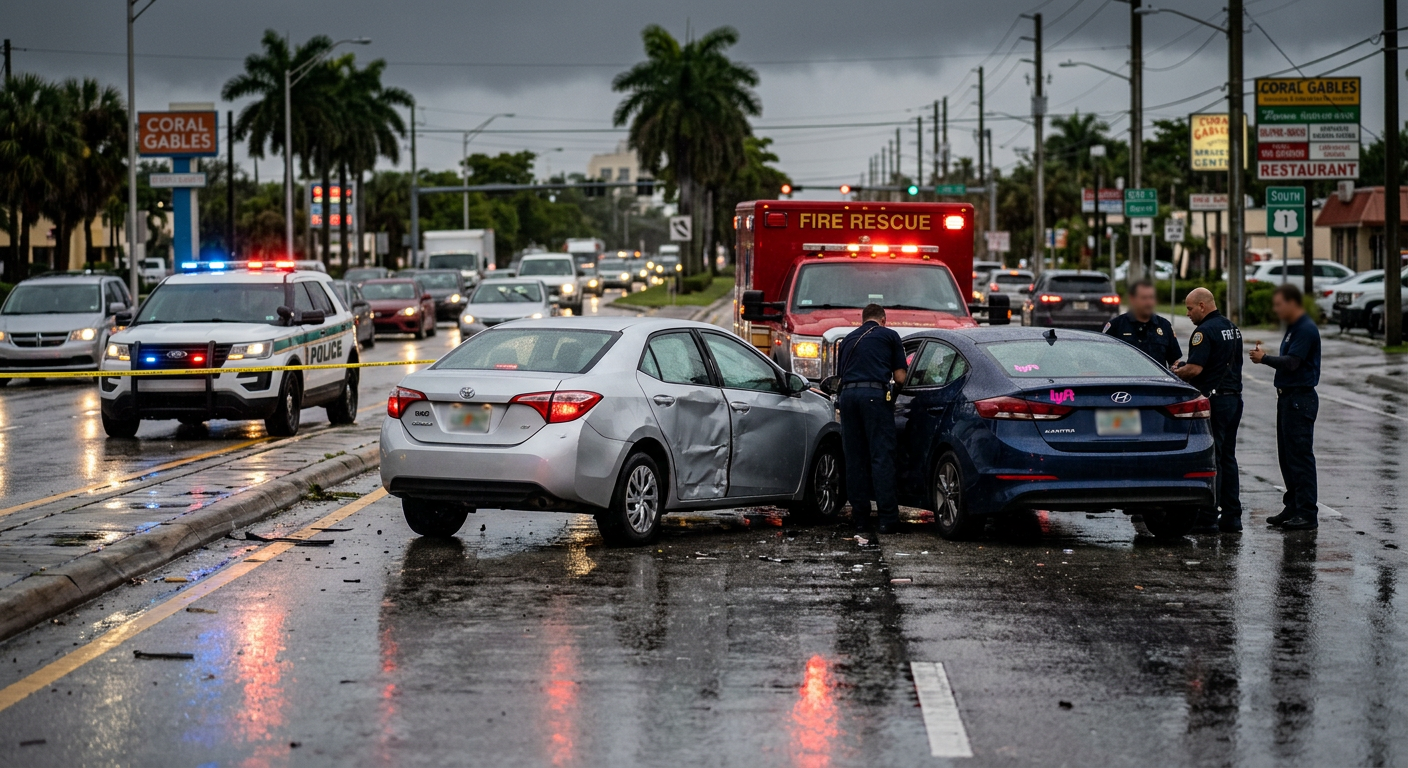
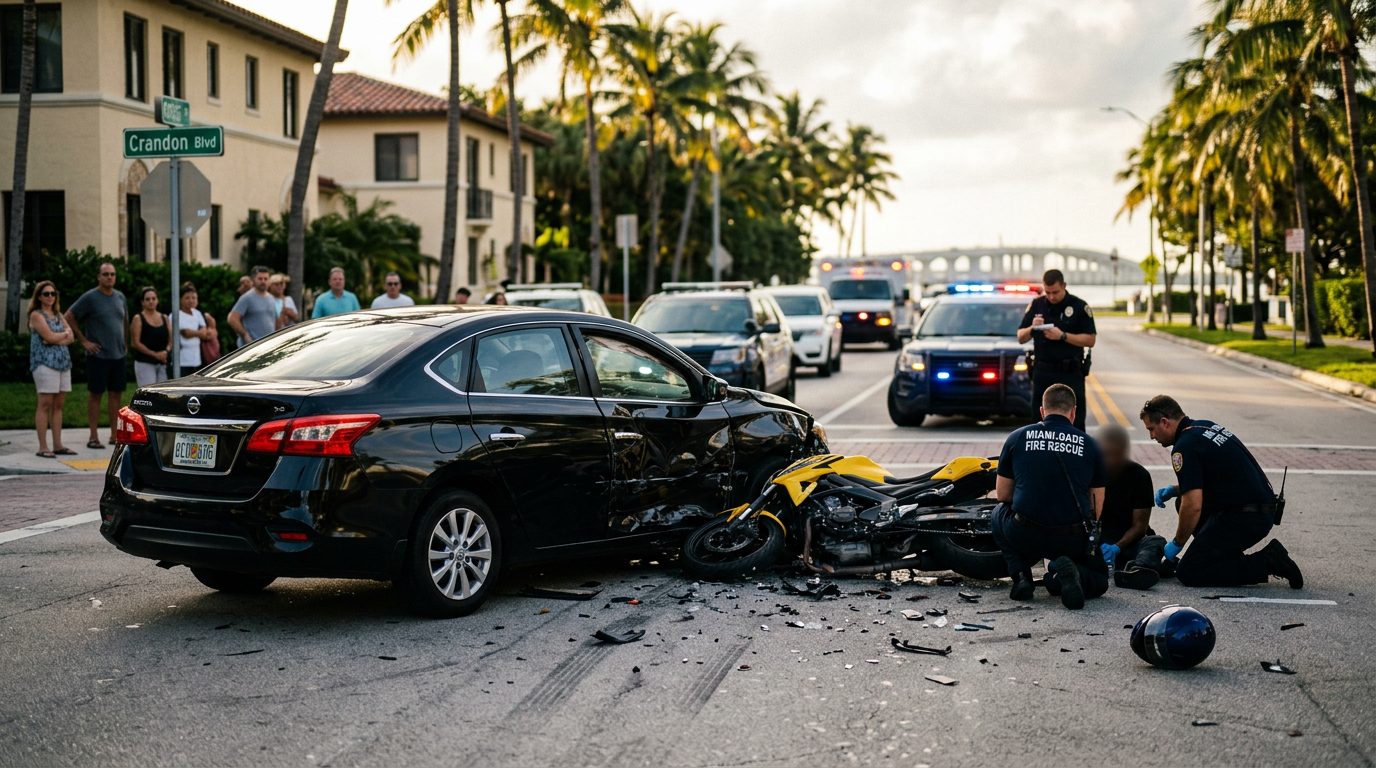
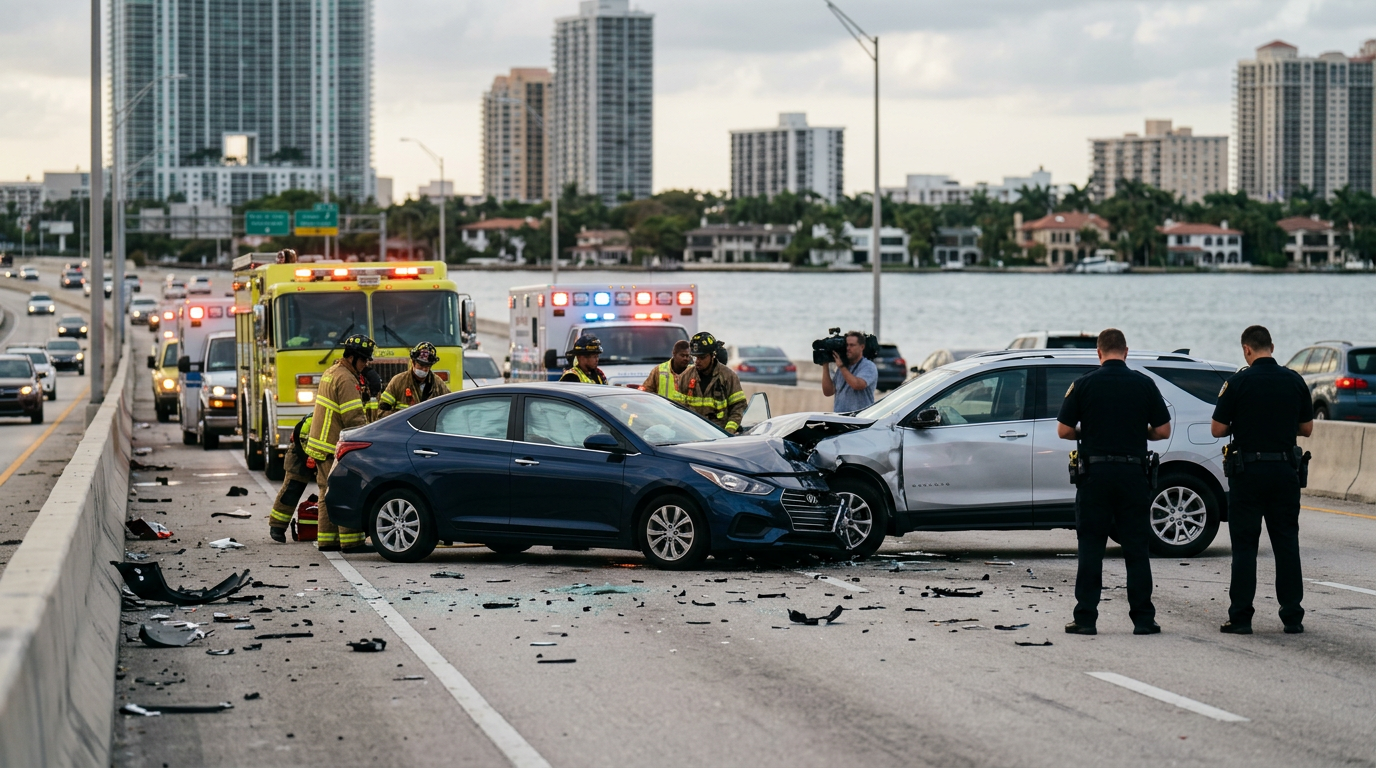
A multi-vehicle accident occurred on a treacherous stretch of US-1 near the University of Miami campus late Tuesday afternoon as heavy rain caused standing water to accumulate on the roadway. Witnesses reported a late-model sedan hydroplaned while traveling northbound, spinning across three lanes of traffic before striking an SUV. The force of the impact pushed both vehicles toward the median, causing significant structural damage and deploying multiple airbags. Local emergency responders arrived quickly to stabilize the scene, transporting those injured to Jackson Memorial Hospital for evaluation and treatment of soft-tissue injuries and potential concussions.
While the immediate cause of the crash appears to be the hazardous weather conditions common to South Florida afternoons, the legal aftermath is complicated by the fact that one driver was operating for a major rideshare platform at the time. In Coral Gables car accidents involving Uber or Lyft, determining which insurance policy is primary depends entirely on the driver's digital status during the impact. If the driver was logged into the app but had not yet accepted a ride request, the incident falls under Period 1. This phase often involves lower liability limits than when a passenger is physically in the vehicle, frequently leaving victims struggling to cover their medical bills.
The situation shifts significantly if the driver was in Period 2 or Period 3, meaning they had accepted a fare or were actively transporting a rider. Under Florida law, specifically the 'Lugo Act' mirrored in Section 627.748 of the Florida Statutes, rideshare companies are mandated to provide up to $1 million in primary third-party liability coverage once a prearranged ride is underway. This statutory requirement is designed to protect Miami residents from being underinsured when a commercial enterprise is utilizing public roads for profit. However, insurance carriers often dispute which period was active at the exact second of the collision to avoid paying out these higher-limit claims.
The rainy-day conditions do not absolve a driver of their duty to maintain control of their vehicle, nor does the presence of a rideshare app simplify the recovery process for an innocent victim. Navigating the 'stacking' of these insurance periods requires a meticulous digital audit of the driver's app activity logs and GPS data to prove which coverage tier applies. Without this evidence, an injured party might be limited to the driver's personal policy, which likely contains an exclusion for commercial activity, potentially leaving the victim with no avenue for compensation despite the clear negligence involved in the hydroplane event.
Victims of rideshare-related accidents in Coral Gables must act quickly to ensure the digital evidence from the driver's phone is preserved before it is overwritten or deleted by the platform. It is vital to document the exact time of the crash and take photographs of any visible rideshare decals on the vehicle's windshield. Understanding the specific insurance period active at the time of the crash is the only way to ensure that the full $1 million policy is available to cover long-term rehabilitation, lost wages, and the significant pain and suffering that follows a high-impact collision on US-1.
Coral Gables crash hotspots, hospitals & Florida law
Roundabouts, banyan-canopied turns, US-1 spillover — left-turn and rear-end heavy.
Were you involved in a similar Miami crash?
Talk to a Caraccidentmiami.com attorney now — free, confidential, 24/7.
305-244-5883